 January 2018 in “Hair transplant forum international”
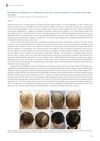
 This case report describes two twins with alopecia areata totalis who experienced noticeable hair regrowth following platelet rich plasma injections, suggesting PRP as a potential treatment alternative.
 May 2017 in “Journal of The American Academy of Dermatology”
 A woman with a skin disorder was found to have hepatitis C, which may be linked, and was safely treated with methotrexate.
 March 2017 in “Open access journal of surgery”
 This review discusses the historical development of platelet-rich fibrin from fibrin glue to platelet-enriched formulations and reports no new clinical results.
 January 2013 in “Otorhinolaryngology clinics : an international journal”
 This review examines platelet-rich plasma's applications in aesthetic surgery and reports no new clinical results; the authors highlight its growing use and potential as a therapeutic modality.
 June 2020 in “Journal of Investigative Dermatology”
 This study found that leukocyte-rich platelet-rich plasma appeared safe and may offer some benefits to patients with scarring alopecia, though further research is needed due to the small sample size.
5 citations
,
January 2020 in “Acta dermatovenerologica Alpina, Pannonica et Adriatica (Tiskana izd.)” This study found that PRP was effective for treating alopecia areata with similar improvement across groups, while topical delivery via fractional CO2 laser or microneedling reduced injection pain.
 28 citations
,
August 2018 in “Dermatologic Surgery”
28 citations
,
August 2018 in “Dermatologic Surgery” This abstract is a listing of affiliations and funding, with no new study or results reported.
 20 citations
,
September 2019 in “Journal of Cosmetic Dermatology”
20 citations
,
September 2019 in “Journal of Cosmetic Dermatology” This study found that combining stromal vascular fraction with PRP injections significantly improved hair density and reduced hair loss more effectively than PRP alone in patients with androgenetic alopecia.
 8 citations
,
May 2017 in “Singapore Medical Journal”
8 citations
,
May 2017 in “Singapore Medical Journal” A Korean woman with complete hair loss regrew her hair after taking tofacitinib, with no side effects.
 1 citations
,
April 2020 in “Plastic and Aesthetic Nursing”
1 citations
,
April 2020 in “Plastic and Aesthetic Nursing” This review discusses platelet-rich plasma therapy for nonscarring alopecia and reports no new clinical results; the author recommends more large-scale controlled studies, particularly for scarring alopecia and symptom control.
This study systematically reviewed androgenetic alopecia's clinical features, mechanisms, and treatments, highlighting that current drugs have limitations but emerging therapies and personalized treatment strategies could enhance efficacy and outcomes.
 December 2025 in “ADMET & DMPK”
 This review synthesizes recent research to propose a precision framework for treating androgenetic alopecia and alopecia areata based on genetic insights and pathway biology, highlighting the roles of androgen-receptor signaling, immune dysregulation, and emerging therapies like regenerative medicine and AI-assisted diagnostics.
 January 2019 in “Springer eBooks”
 PRP may help with hair loss and improve hair quality with few side effects, but more research is needed.
 September 2018 in “Facial Plastic Surgery Clinics of North America”
 Biologicals are increasingly used in medicine and cosmetics, especially for skin and hair treatments, but more research is needed.
PRP therapy at Ethos Spa improves hair growth and quality with minimal maintenance.
 December 2023 in “PubMed”
 This study found that both single- and double-spin PRP preparation methods significantly increased thrombocyte counts and improved hair parameters in males with androgenetic alopecia, with the single-spin method showing a more significant increase in thrombocyte count.
 348 citations
,
July 2017 in “Skin appendage disorders”
348 citations
,
July 2017 in “Skin appendage disorders” This review discusses the use of platelet-rich plasma in dermatology for various applications such as tissue regeneration and wound healing, but it reports no new clinical results and calls for clearer guidance on suitable treatments.
 164 citations
,
January 2014 in “Journal of Cutaneous and Aesthetic Surgery”
164 citations
,
January 2014 in “Journal of Cutaneous and Aesthetic Surgery” This study found that PRP injections may improve hair density and reduce hair loss in patients with androgenetic alopecia without significant side effects, but further research is needed to confirm efficacy.
 136 citations
,
May 2019 in “Cells”
136 citations
,
May 2019 in “Cells” This review discusses the advancements in intraoperative stem cell therapies and highlights their potential to improve hair regrowth, but it reports no new clinical results.
 115 citations
,
January 2014 in “Journal of Cutaneous and Aesthetic Surgery”
115 citations
,
January 2014 in “Journal of Cutaneous and Aesthetic Surgery” In this study, PRP injections increased hair count and reduced hair loss in patients with androgenic alopecia not responding to minoxidil and finasteride, with high patient satisfaction reported.
 107 citations
,
August 2014 in “Dermatologic Surgery”
107 citations
,
August 2014 in “Dermatologic Surgery” This pilot study suggests injecting platelet-derived growth factors into the scalp may offer some clinical benefits for androgenetic alopecia, though further randomized trials are needed for confirmation.
 87 citations
,
March 2020 in “Australian Dental Journal”
87 citations
,
March 2020 in “Australian Dental Journal” This review discusses different preparation and application methods of platelet-rich plasma in dental regenerative medicine and reports no new results, highlighting its potential and associated controversies.
 79 citations
,
October 2015 in “Journal of Dermatological Treatment”
79 citations
,
October 2015 in “Journal of Dermatological Treatment” This review assesses the use of platelet-rich plasma in dermatology and concludes that while there may be modest benefits for certain conditions, more evidence is needed before it can be widely recommended.
 70 citations
,
February 2021 in “International Journal of Molecular Sciences”
70 citations
,
February 2021 in “International Journal of Molecular Sciences” This review provides an overview of current research on AD-MSCs, PRP, and biomaterials, highlighting their safety and efficacy in treating soft tissue defects and chronic wounds without major side effects.
 60 citations
,
September 2016 in “Dermatologic Surgery”
60 citations
,
September 2016 in “Dermatologic Surgery” This article proposes a mechanistic model for how platelet-rich plasma therapy may stimulate hair growth in androgenetic alopecia by promoting vascularization and activating specific signaling pathways, but it reports no new experimental results.
 56 citations
,
November 2016 in “Aesthetic surgery journal”
56 citations
,
November 2016 in “Aesthetic surgery journal” This review discusses the varied use and inconsistent reporting of platelet rich plasma in aesthetic surgery, finding that current studies lack consistent methodologies and objective evidence, and reports no new clinical results.
 55 citations
,
September 2017 in “Journal of Cosmetic Dermatology”
55 citations
,
September 2017 in “Journal of Cosmetic Dermatology” This review discusses the diverse applications of platelet-rich plasma in aesthetic dermatology and assesses the existing literature on its effectiveness, reporting no new clinical results.
 54 citations
,
May 2018 in “Journal of The European Academy of Dermatology and Venereology”
54 citations
,
May 2018 in “Journal of The European Academy of Dermatology and Venereology” This study found that low-level laser therapy was the most effective non-surgical treatment for androgenetic alopecia, although the overall quality of evidence supporting various therapies was generally low.
 48 citations
,
April 2013 in “Expert Opinion on Investigational Drugs”
48 citations
,
April 2013 in “Expert Opinion on Investigational Drugs” This article reviews emerging treatments for androgenetic alopecia, including topical 5-alpha-reductase inhibitors and prostaglandin modulators, but reports no clinical results and calls for further efficacy evidence, especially for PRP.
 39 citations
,
July 2021 in “Stem Cell Research & Therapy”
39 citations
,
July 2021 in “Stem Cell Research & Therapy” This study found that combining platelet-rich plasma with adipose-derived mesenchymal stem cells significantly improved diabetic wound healing in rats by enhancing angiogenesis and modulating the Notch signaling pathway.