 October 2007 in “Journal of Investigative Dermatology”
 The document suggests a bacteria plays a significant role in acne rosacea and that white hair can regain color after transplant, meriting more research on reversing grey hair.
 August 2025 in “Indian Dermatology Online Journal”
 This review discusses how metaphorical language in dermatology, particularly terms like "butterfly" and "moth," aids in diagnosing and understanding skin conditions by highlighting their distinctive clinical presentations and underlying pathophysiology.
2 citations
,
October 2022 in “Hop and Medicinal Plants” This review discusses the traditional and potential therapeutic uses of lavender, highlighting its possible anxiolytic and neuroprotective effects, but notes a lack of strong scientific evidence for many claimed benefits.
January 2000 in “DOAJ (DOAJ: Directory of Open Access Journals)” This case report describes a middle-aged woman diagnosed with black piedra of the scalp, confirmed by potassium hydroxide examination and fungal culture.
June 2026 in “Discover Chemistry.” This review highlights the diverse pharmacological activities of Blumea eriantha DC., observed to have antioxidant, anti-inflammatory, anticancer, antibacterial, and larvicidal potential, while also noting the need for further research into its mechanisms, clinical validation, and standardization.
 1 citations
,
December 2023 in “Cutis”
1 citations
,
December 2023 in “Cutis” This systematic review found that toluidine blue may be valuable for diagnosing and treating specific skin tumors in the context of Mohs micrographic surgery, though literature on its use is limited and mostly qualitative.
2 citations
,
April 2024 in “International Wound Journal” Combining UV therapy with PRP heals chronic wounds faster and reduces pain.
January 2024 in “SSRN Electronic Journal” January 2016 in “INTAS POLIVET” In this study, Persian cats treated with weekly Fipronil spray showed no detectable ear mites after four weeks, suggesting the spray's effectiveness against ear mites.
 2 citations
,
May 2018 in “Australasian Journal of Dermatology”
2 citations
,
May 2018 in “Australasian Journal of Dermatology” This article is a letter to the editors about a novel observation regarding chemotherapy-induced alopecia and does not include an abstract with new research results.
20 citations
,
February 2023 in “Biology” This review highlights the possibility of safely altering hair color through innovative cosmetics by targeting key biological processes in hair follicles, using insights from mammalian pigmentation studies and drug-induced hair color changes as potential pathways.
 August 2025 in “Biomacromolecules”
 This study presents a novel composite hydrogel dressing with berberine-loaded silk fibroin microspheres and Calotropis gigantea fibers, demonstrating enhanced antibacterial activity, mechanical strength, and wound healing capabilities in treating chronic and infected wounds.
 January 2017 in “Bulletin of Pharmaceutical Research”
 This study developed chemical fingerprints to differentiate Eclipta prostrata and Wedelia calendulacea, two plants often confused and adulterated in the Indian herbal market, identifying distinct chemical profiles that can prevent such adulteration.
 January 2008 in “대한피부과학회지”
 This study found that micropigmentation effectively improved the cosmetic appearance of scalp and eyebrow scars in 94% of patients, with the pigments remaining safely in the superficial dermis after one year.
1 citations
,
August 2004 in “Veterinary Dermatology” In this study, three closely related Siamese cats were diagnosed with feline psychogenic alopecia, indicating the disorder may have a hereditary component.
 3 citations
,
January 2015 in “Journal of clinical and diagnostic research”
3 citations
,
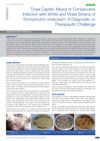
January 2015 in “Journal of clinical and diagnostic research” This case report described a seven-year-old with tinea capitis, which improved clinically after six weeks of griseofulvin treatment, changing the fungal strain from Trichophyton violaceum white variant to violet strain.
15 citations
,
January 2009 in “Indian journal of dermatology, venereology, and leprology” This case report describes two instances of white piedra, a fungal hair infection, and notes successful treatment with oral itraconazole and topical ketoconazole in one patient.
 March 2021 in “Research Society and Development”
 This case study described a Staffordshire Bull Terrier diagnosed with alopecia by color dilution, characterized by gradual hair loss and confirmed through clinical examination and histopathology.
 February 2023 in “Materials Express”
 This study demonstrated that pine pollen extract may enhance wound healing by promoting antioxidant and anti-inflammatory activity, collagen formation, and tissue regeneration, particularly at a concentration of 1 mg/mL.
 July 2026 in “Zenodo (CERN European Organization for Nuclear Research)”
 This study evaluated a polyherbal shampoo enriched with pomegranate peel extract, reporting good cleansing ability, stable foam, scalp-friendly pH, and no irritation, suggesting it could be a safe, effective alternative for protecting hair from pollution-related damage.
 1 citations
,
January 2023 in “International Research Journal of Ayurveda & Yoga”
1 citations
,
January 2023 in “International Research Journal of Ayurveda & Yoga” This review discusses Ayurvedic perspectives on premature greying of hair and reports no new clinical results, suggesting Ayurveda as a natural approach to this condition.
6 citations
,
January 2024 in “Frontiers in Bioengineering and Biotechnology” This study developed a smart PVA-TPE/HA-AMP/SF/ALG wound dressing that shows promise in infected wound healing by providing bacterial resistance, promoting cell proliferation, and modulating inflammation through various signaling pathways, potentially reducing scar formation.
 1 citations
,
January 2020 in “Research Square (Research Square)”
1 citations
,
January 2020 in “Research Square (Research Square)” This study found that inherited color dilution in Rex rabbit hair follicles is associated with DNA methylation changes, contributing to understanding the epigenetic regulation of rabbit pigmentation.
 November 2024 in “Journal of Cosmetic Dermatology”
 This study found that valproic acid-loaded microemulsion formulations enhanced skin penetration pathways in guinea pigs compared to an aqueous solution, with composition elements like oil content and surfactant ratios significantly affecting drug delivery performance.
 61 citations
,
May 2015 in “Planta”
61 citations
,
May 2015 in “Planta” Certain fungi and bacteria help orchid seeds germinate and plants grow better.
 November 2025 in “Zenodo (CERN European Organization for Nuclear Research)”
 In this study, researchers formulated a herbal hair dye using natural ingredients like indigo and henna, finding that it provides excellent color, better dye retention, and is more environmentally friendly compared to conventional chemical hair dyes, without side effects.
 15 citations
,
January 2015 in “Pharmaceutical Biology”
15 citations
,
January 2015 in “Pharmaceutical Biology” In a study on nude mice, topical application of Chrysanthemum zawadskii extracts stimulated hair growth and increased hair follicle numbers, suggesting potential for alopecia therapy.
March 2026 in “Current Bioactive Compounds” In a rat model, this study observed that applying high-concentration (100%) P. europaea root extract topically significantly enhanced hair growth by increasing the number of hair follicles, hair shaft diameter, and hair length compared to controls, suggesting its potential as a treatment for alopecia.
June 2023 in “Clinical Cosmetic and Investigational Dermatology” This report describes a 60-year-old female with pretibial pruritic papular dermatitis who showed significant improvement of skin lesions after one month of treatment with oral pentoxifylline. The authors highlight the unique clinical and histological features of PPPD and propose pentoxifylline as a potential therapy.
 June 2026 in “Zenodo (CERN European Organization for Nuclear Research)”
 In this study, Clitoria ternatea (Sangu Poo) was noted for its potential roles in health and skincare, with lab tests showing antioxidant, antimicrobial, liver-protective, and cancer-related activities; however, human trial evidence is lacking, impacting consistent quality and progress.