 4 citations
,
September 2018 in “Rendiconti lincei. Scienze fisiche e naturali”
4 citations
,
September 2018 in “Rendiconti lincei. Scienze fisiche e naturali” This study concluded that spikenard specimens in Renaissance Italian herbaria are attributed to Nardostachys jatamansi, a plant used in traditional medicine and cosmetics.
 November 2021 in “bioRxiv (Cold Spring Harbor Laboratory)”
 This study found that 4-aminopyridine, a potassium channel blocker, greatly improves skin wound healing by accelerating wound closure, enhancing tissue regeneration, and promoting hair follicle neogenesis.
 20 citations
,
October 2018 in “American Journal of Clinical Dermatology”
20 citations
,
October 2018 in “American Journal of Clinical Dermatology” This article reviews drug-induced pigmentation and reports no new clinical findings, highlighting difficulty in confirming drug associations due to factors like delayed onset and polypharmacy.
 12 citations
,
March 2016 in “Life Sciences”
12 citations
,
March 2016 in “Life Sciences” This review discusses the potential of combined therapy with WP 631 and epothilone B for ovarian cancer, but reports no new clinical results.
 March 2022 in “Research Square (Research Square)”
 This study found that 4-aminopyridine significantly improved skin wound healing by enhancing wound closure, tissue regeneration, and cellular interactions involved in repair processes.
 1 citations
,
May 2025 in “Natural Products and Bioprospecting”
1 citations
,
May 2025 in “Natural Products and Bioprospecting” In this study, PEVIII, a nanocomposite chitosan-coated vesicle containing both α-hederin and hederacoside C, demonstrated notable antibacterial activity against Pseudomonas aeruginosa in a keratitis model, showing significant lesion reduction, tissue improvement, and decreased bacterial load and inflammatory markers compared to other treatments.
 November 2020 in “Black Sea scientific journal of academic research”
 This review summarizes recent advancements in the use of wild plants and topical medications for treating skin diseases, reporting no new clinical results.
 June 2026 in “Zenodo (CERN European Organization for Nuclear Research)”
 This study reviews the traditional and emerging medicinal uses of Clitoria ternatea Linn., highlighting its extensive chemical composition and potential health benefits, but notes the lack of human trial evidence and the need for better testing methods to ensure consistent quality and efficacy.
 3 citations
,
October 2019 in “Pharmaceutics”
3 citations
,
October 2019 in “Pharmaceutics” This study suggests that newly developed micro-pigment-encapsulated biodegradable microneedles accurately implant pigments in pig cadaver skin, potentially advancing scalp micro-pigmentation methods.
15 citations
,
August 2014 in “Journal of dermatological science” This study found that puerarin, derived from Pueraria thunbergiana, may stimulate melanogenesis and prevent follicular depigmentation in a hair graying mouse model.

This review discusses how permanent micropigmentation can restore eyebrow appearance and potentially improve psychosocial well-being in cancer survivors experiencing alopecia after chemotherapy, but it reports no new clinical results.
3 citations
,
February 2024 in “International journal of molecular sciences” This review highlights the potential of valorizing citrus by-products, particularly hesperidin from orange peels, as sustainable ingredients in skincare for antiaging, pigmentation, wound healing, and UV damage protection, emphasizing hesperidin's role in a circular economy approach.
 6 citations
,
September 2013 in “Advanced materials research”
6 citations
,
September 2013 in “Advanced materials research” This study found that non-ionic silicone emulsion best protected hair color from UV-induced fading, outperforming honeysuckle extract and benzophenone-3, with significant effects in both dyed and virgin hair.
1 citations
,
June 2025 in “Pharmacognosy Research” This study found that a polyherbal sunscreen cream, F4, containing Camellia sinensis, Vitis vinifera, and Silybum marianum extracts demonstrated strong antioxidant and photoprotective properties, similar to synthetic sunscreens.
August 2025 in “OPAL (Open@LaTrobe) (La Trobe University)” In this study, PA-011 extract was reported to promote hair growth and alleviate alopecia areata symptoms in mice by reducing skin inflammation and modulating skin microbiota.
 October 2025 in “Scientific Reports”
 This study found that grape leaves, especially from the 'Razaki' white cultivar, are rich in phenolic compounds and flavonols, suggesting potential use in developing functional products.
 June 2023 in “Small animal advances”
 In this case report, a 2-month-old Chippiparai pup in Puducherry, India, successfully received treatment for concurrent scabies and dermatophytosis using ivermectin, a topical acaricide solution, a dewormer, and an herbal immunostimulant, with no signs of toxicity.
July 2025 in “Dermatologic Surgery”  1 citations
,
June 2023 in “International journal of basic science in medicine”
1 citations
,
June 2023 in “International journal of basic science in medicine” In this review, the potential medicinal benefits of Adiantum capillus-veneris L. (a plant used in traditional medicine) were highlighted, particularly its antioxidant, antimicrobial, and anti-inflammatory effects, although the authors noted the need for more research on its impact on respiratory diseases.
March 2021 in “Annals of palliative medicine” This meta-analysis found that plum-blossom needling, as an add-on therapy, provided moderate beneficial effects on hair regrowth in alopecia areata patients compared to conventional treatment alone.
1 citations
,
October 2010 in “JDDG Journal der Deutschen Dermatologischen Gesellschaft” This review discusses the effectiveness of various plant extracts, including Vitis vinifera and Aesculus hippocastanum, in treating dermatological conditions like venous insufficiency and actinic keratoses but reports no new clinical results.
December 2025 in “Biomolecules” In this study, the synthesis and testing of new pyrroloquinoline derivatives identified compound 7p, which showed low micromolar cytotoxic activity against MCF-7 and HeLa cells, highlighting its potential for development into a potent anticancer agent.
1 citations
,
August 2018 in “Dermatologic Surgery” This overview describes the Dermatologic Surgery journal's comprehensive coverage of dermatologic surgery, including cosmetic and reconstructive procedures, but it presents no new research findings.
 January 2025 in “Cellular and Molecular Biology”
 This study found that in Liaoning cashmere goats, overexpression of the PIP5K1A gene enhances skin fibroblast proliferation, while interference with this gene reverses melatonin-induced proliferation, and PIP5K1A regulates certain miRNA expressions, suggesting a role in improving cashmere yield and quality.
 March 2026 in “Food Science and Biotechnology”
 In this study, oral administration of blue honeysuckle fruit extract was found to promote hair growth in mice by enhancing dermal papilla cell proliferation and activating β-catenin signaling, suggesting its potential use as a food or cosmetic product for hair regeneration.
5 citations
,
April 2019 in “Ege Tıp Dergisi” This study found that applying Hypericum perforatum methanol extract-containing gel to experimental burns in rats reduced collagen discoloration and vascular damage while preserving hair follicles and epidermal thickness compared to treatment with silver sulfadiazine cream.
11 citations
,
May 1998 in “Acta agriculturæ Scandinavica. Section A, Animal science” This study observed that pelage development in male blue foxes born in early June was more synchronized than those born in early May, with differences likely influenced by melatonin levels.
 13 citations
,
August 2019 in “Biological & Pharmaceutical Bulletin”
13 citations
,
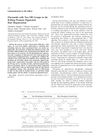
August 2019 in “Biological & Pharmaceutical Bulletin” This study found that flavonoids with two hydroxyl groups in their B-ring, such as sterubin and luteolin, supported the regeneration of pigmented hair after skin injury, unlike those with one hydroxyl group.
 1 citations
,
January 2014 in “International Journal of Trichology”
1 citations
,
January 2014 in “International Journal of Trichology” This case report describes a 35-year-old woman with diffuse partial woolly hair occurring alongside epidermolysis bullosa with mottled pigmentation.