5 citations
,
July 2016 in “Experimental Dermatology” This article reviews the limitations in current research on photobiomodulation for hair regrowth and suggests that optimal wavelengths and dosing have not yet been identified, noting that recommending these devices may be premature.
 205 citations
,
March 2012 in “Science Translational Medicine”
205 citations
,
March 2012 in “Science Translational Medicine” PGD2 stops hair growth and is higher in bald men with AGA.
 235 citations
,
January 2011 in “Journal of Clinical Investigation”
235 citations
,
January 2011 in “Journal of Clinical Investigation” This study found that androgenetic alopecia may involve a defect in the conversion of hair follicle stem cells to progenitor cells, as demonstrated by a reduced presence of progenitor cells in bald scalp samples.
 41 citations
,
September 2010 in “Journal of dermatological science”
41 citations
,
September 2010 in “Journal of dermatological science” This study suggests that mesenchymal stem cell-induced dermal papilla-like tissues can generate new hair follicles in mice, indicating potential for developing hair cell therapy using stem cells.
 64 citations
,
June 2010 in “Journal of The European Academy of Dermatology and Venereology”
64 citations
,
June 2010 in “Journal of The European Academy of Dermatology and Venereology” This study suggests that 5 mg/day oral finasteride may increase hair density and thickness in normoandrogenic Asian women with female pattern hair loss over 12 months.
 92 citations
,
June 2010 in “Journal of The American Academy of Dermatology”
92 citations
,
June 2010 in “Journal of The American Academy of Dermatology” This study found that 0.5 mg of dutasteride significantly improved hair growth compared to placebo and was well tolerated over six months in men with male pattern hair loss.
 17 citations
,
May 2010 in “Journal of Dermatological Science”
17 citations
,
May 2010 in “Journal of Dermatological Science” This study found that erythropoietin promotes hair growth by stimulating dermal papilla cells with functional erythropoietin receptors, enhancing hair shaft elongation and anagen phase in cultured human hair follicles and in mice.
 28 citations
,
March 2010 in “Histochemistry and cell biology”
28 citations
,
March 2010 in “Histochemistry and cell biology” Skin cells can help create early hair-like structures in lab cultures.
 42 citations
,
March 2010 in “Endocrinology”
42 citations
,
March 2010 in “Endocrinology” This study reports the development of the first rodent model for androgenetic alopecia, demonstrating that overexpression of androgen receptors in mice delays hair regeneration and can be used to test new treatments.
 54 citations
,
August 2009 in “Dermatologic Surgery”
54 citations
,
August 2009 in “Dermatologic Surgery” This review outlines the steps of contemporary hair transplantation surgery, including the roles of medications and nonsurgical options, but it reports no new clinical findings.
 90 citations
,
January 2009 in “Journal of cosmetic and laser therapy”
90 citations
,
January 2009 in “Journal of cosmetic and laser therapy” In this study, low-level laser therapy showed no statistically significant improvements in hair growth measures, despite some patients experiencing increases in terminal hairs and shaft diameter.
 160 citations
,
January 2009 in “Clinical Drug Investigation”
160 citations
,
January 2009 in “Clinical Drug Investigation” This study found that the HairMax LaserComb® significantly increased hair density and was safe and well tolerated for treating androgenetic alopecia in men compared to a sham device.
 27 citations
,
November 2008 in “Facial Plastic Surgery”
27 citations
,
November 2008 in “Facial Plastic Surgery” This article outlines the technical aspects, benefits, and challenges of follicular unit extraction for hair transplantation, but it reports no new clinical findings.
140 citations
,
October 2008 in “Nature Genetics”  82 citations
,
April 2008 in “Journal of Investigative Dermatology”
82 citations
,
April 2008 in “Journal of Investigative Dermatology” EDA2R gene linked to hair loss.
 18 citations
,
March 2008 in “British Journal of Dermatology”
18 citations
,
March 2008 in “British Journal of Dermatology” This study found that finasteride 1 mg daily decreased 5alpha-dihydrotestosterone levels and improved hair growth in younger men with androgenetic alopecia, with higher initial hormone levels predicting better response.
 62 citations
,
March 2008 in “American Journal of Human Genetics”
62 citations
,
March 2008 in “American Journal of Human Genetics” This study located a potential genetic link for androgenetic alopecia on chromosome 3q26, marking an early step in identifying new susceptibility genes for male pattern baldness.
49 citations
,
December 2007 in “Fertility and Sterility” This case report describes two infertile patients who experienced significant improvements in sperm concentrations six months after stopping finasteride.
 142 citations
,
August 2007 in “Journal of The American Academy of Dermatology”
142 citations
,
August 2007 in “Journal of The American Academy of Dermatology” This study found that a new 5% minoxidil foam formulation significantly increased hair counts and improved hair loss condition in men with androgenetic alopecia over 16 weeks compared to placebo.
 41 citations
,
June 2007 in “British Journal of Dermatology”
41 citations
,
June 2007 in “British Journal of Dermatology” This study found that men with Kennedy disease have a significantly lower risk of androgenetic alopecia, likely due to androgen receptor gene alterations from the disease's polyglutamine expansion.
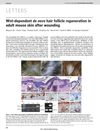 829 citations
,
May 2007 in “Nature”
829 citations
,
May 2007 in “Nature” Hair follicles can regrow in wounded adult mouse skin using a process like embryo development.
 195 citations
,
February 2007 in “The Journal of Clinical Endocrinology and Metabolism”
195 citations
,
February 2007 in “The Journal of Clinical Endocrinology and Metabolism” In this study, administering 5alpha-reductase inhibitors reduced dihydrotestosterone levels and was associated with mild, reversible decreases in semen parameters in healthy men.
 89 citations
,
December 2006 in “Lancet Oncology”
89 citations
,
December 2006 in “Lancet Oncology” In this study, 1 mg/day finasteride lowered serum PSA concentration in men aged 40–60, suggesting that PSA adjustment recommendations for prostate cancer screening using 5 mg/day finasteride should also apply to this lower dose for hair loss treatment.
 108 citations
,
March 2006 in “Archives of Dermatology”
108 citations
,
March 2006 in “Archives of Dermatology” This study observed that 62% of premenopausal women with female pattern hair loss reported improvement when treated with oral finasteride and an oral contraceptive containing drospirenone and ethinyl estradiol.
 23 citations
,
November 2005 in “Journal of Investigative Dermatology Symposium Proceedings”
23 citations
,
November 2005 in “Journal of Investigative Dermatology Symposium Proceedings” Finasteride works better for baldness in people with shorter gene repeats.
 23 citations
,
October 2005 in “Dermatologic Surgery”
23 citations
,
October 2005 in “Dermatologic Surgery” This study found that finasteride 1 mg daily, taken before and after hair transplant surgery, significantly improved scalp hair coverage and density in men with androgenetic alopecia compared to placebo.
 5 citations
,
September 2005 in “Dermatologic Surgery”
5 citations
,
September 2005 in “Dermatologic Surgery” This study reports that using LED polarized magnification in hair transplant recipient sites can reduce eye strain and improve ease of site creation, but offers no graft placement advantage over traditional methods.
 195 citations
,
June 2005 in “American Journal of Human Genetics”
195 citations
,
June 2005 in “American Journal of Human Genetics” Genetic variation in the androgen receptor gene mainly causes early-onset hair loss, with maternal inheritance playing a key role.
 76 citations
,
April 2005 in “Cancer Epidemiology, Biomarkers & Prevention”
76 citations
,
April 2005 in “Cancer Epidemiology, Biomarkers & Prevention” This study found that the AR-E211 A allele is associated with a lower risk of both metastatic prostate cancer and androgenetic alopecia in an Australian population.
 137 citations
,
July 2004 in “Journal of The American Academy of Dermatology”
137 citations
,
July 2004 in “Journal of The American Academy of Dermatology” This study observed that triple horizontal scalp biopsies provided a more accurate diagnosis of female pattern hair loss in women than a single horizontal biopsy, especially for those with advanced hair loss.
 105 citations
,
April 2004 in “Dermatologic Therapy”
105 citations
,
April 2004 in “Dermatologic Therapy” This review discusses medical and surgical therapies for alopecias in Black women, focusing on the impact of hair-care practices and the importance of patient education, but reports no new clinical results.
 149 citations
,
March 2004 in “Journal of Dermatological Science”
149 citations
,
March 2004 in “Journal of Dermatological Science” This study found that minoxidil stimulates hair follicle growth by promoting dermal papilla cell survival and activating ERK and Akt pathways, which leads to increased proliferation and reduced cell death.
 397 citations
,
February 2004 in “British Journal of Dermatology”
397 citations
,
February 2004 in “British Journal of Dermatology” This article reviews the mechanisms by which minoxidil stimulates hair growth and reports no new clinical findings.
 1 citations
,
October 2002 in “Dermatologic Surgery”
1 citations
,
October 2002 in “Dermatologic Surgery” This review summarizes expert opinions on the use of approved pharmacologic treatments alongside hair transplantation, highlighting their potential to enhance hair density and regrowth speed while reducing further hair loss, but reports no new clinical trial results.
299 citations
,
March 2001 in “Journal of Investigative Dermatology” This study found that specific genetic markers near the androgen receptor gene are significantly more common in men with male pattern baldness, suggesting a genetic component in its development.
 239 citations
,
November 2000 in “Journal of The American Academy of Dermatology”
239 citations
,
November 2000 in “Journal of The American Academy of Dermatology” In this study, finasteride 1 mg/day for 12 months did not improve hair growth or slow hair thinning in postmenopausal women with androgenetic alopecia compared to placebo.
 104 citations
,
October 1999 in “The Journal of Urology”
104 citations
,
October 1999 in “The Journal of Urology” This study concluded that daily treatment with 1 mg finasteride did not affect spermatogenesis or semen production in young men and had small, reversible effects on prostate volume and serum PSA.
 187 citations
,
June 1999 in “Journal of The American Academy of Dermatology”
187 citations
,
June 1999 in “Journal of The American Academy of Dermatology” This study reported that finasteride 1 mg/day significantly increased hair growth and slowed hair loss in men with frontal scalp hair thinning over one year, and these benefits continued or improved in the second year.
 83 citations
,
April 1999 in “Dermatologic Surgery”
83 citations
,
April 1999 in “Dermatologic Surgery” This study found that hair transplant surgeons can use a new model to predict the number and distribution of follicular units in donor scalp areas based on patient hair density.
 125 citations
,
January 1999 in “Drugs”
125 citations
,
January 1999 in “Drugs” This study found that oral finasteride 1 mg/day promotes hair growth and prevents further hair loss in a significant proportion of men with male pattern hair loss over two years.
 581 citations
,
October 1998 in “Journal of The American Academy of Dermatology”
581 citations
,
October 1998 in “Journal of The American Academy of Dermatology” In male pattern hair loss, this study found that finasteride 1 mg daily significantly slowed hair loss and increased hair growth over two years compared to placebo.
 186 citations
,
July 1998 in “Journal of Cutaneous Medicine and Surgery”
186 citations
,
July 1998 in “Journal of Cutaneous Medicine and Surgery” This study found that shorter CAG-repeat lengths in the androgen receptor may be associated with the development of androgen-mediated skin disorders like androgenetic alopecia, acne, and hirsutism in both men and women.
 3 citations
,
February 1997 in “Annals of Plastic Surgery”
3 citations
,
February 1997 in “Annals of Plastic Surgery” This paper discusses the application of artistic and anthropometric principles in hairline reconstruction, emphasizing their role in enhancing facial balance and personal appearance in trauma or burn patients, but provides no new clinical results.
172 citations
,
December 1994 in “The Journal of Dermatologic Surgery and Oncology” This study introduces a hair transplantation method combining elliptical excision and micrografting, suggesting it provides significant cosmetic improvements for androgenetic alopecia.
