 53 citations
,
August 2019 in “American journal of human genetics”
53 citations
,
August 2019 in “American journal of human genetics” This study found that FOXN1 haploinsufficiency is a significant genetic factor causing T cell lymphopenia at birth, linked to reduced thymic function in both humans and mice.
 12 citations
,
September 2021 in “PLoS ONE”
12 citations
,
September 2021 in “PLoS ONE” In this study, researchers found that interaction between transcription factor EBF1 and gene WNT10A, influenced by a genetic variant, may play a role in hair shaft formation and anagen shortening in male pattern baldness.
December 1963 in “Medical Entomology and Zoology” This study found that Wnt1a overexpression from bone marrow mesenchymal stem cells enhanced hair follicle regeneration in mice by promoting the dermal papilla's role in hair cycling and gene expression recovery.
70 citations
,
August 2006 in “Cancer Research” This study found that inhibiting AP-1 activity in mice modified tumor development, leading to transdifferentiation between squamous and sebaceous tumors, with molecular analysis suggesting AP-1's role in maintaining tumor cell identity.
 1 citations
,
March 2022 in “Journal of Dermatological Science”
1 citations
,
March 2022 in “Journal of Dermatological Science” This study concluded that overexpressing TERT and BMI1 in cultured human dermal papilla cells extended their lifespan and enhanced their ability to induce hair growth in mice.
578 citations
,
April 1993 in “Cell” This study found that mice with a disrupted TGFα gene display a curly whisker-coat phenotype, similar to waved-1 mice, suggesting TGFα's crucial role in skin architecture and hair development.
July 2026 in “Journal of Investigative Dermatology” This study found that deleting the Twist1 gene in skin keratinocytes significantly reduced UVB-induced skin cancer and hyperproliferation in mice and suggested Twist1 as a target for skin cancer prevention.
May 2025 in “Experimental Dermatology” In this study, researchers developed a novel genetic tool using Wif1-CreER knock-in mice for precise labeling and manipulation of dermal papilla cells, which could enhance understanding of hair biology and aid in developing targeted therapies for hair-related disorders.
 August 2012 in “Nature Cell Biology”
 This study provides direct evidence that the Wnt-β-catenin pathway promotes TERT expression in stem and cancer cells, linking tumorigenesis with pluripotency.
 56 citations
,
February 2010 in “PLOS ONE”
56 citations
,
February 2010 in “PLOS ONE” This study demonstrates that canonical Wnt signaling is crucial for maintaining thymic epithelial microenvironments in postnatal thymus, possibly by affecting TEC progenitor cells.
9 citations
,
July 2022 in “Journal of Biological Chemistry” This study in mice found that WWP2 facilitates odontoblast differentiation and dentin formation by targeting PTEN for degradation, thereby enhancing KLF5 activity, which may suggest its crucial role in dental development.
1 citations
,
April 2018 in “Journal of Investigative Dermatology” The Trichodysplasia spinulosa virus protein can cause abnormal hair growth in mice.
1 citations
,
November 2020 This study found that a pro-fibrotic Wnt1/βcatenin injury response is crucial for maintaining cardiac function following acute ischaemic cardiac injury by activating the epicardium and cardiac fibroblasts.
 8 citations
,
November 2013 in “PLOS ONE”
8 citations
,
November 2013 in “PLOS ONE” In this study, researchers found that a subset of mammary cells with active Wnt signaling in mice does not develop tumors upon ErbB2 activation and instead undergoes apoptosis, potentially protecting against carcinogenesis.
 9 citations
,
January 2023 in “International Journal of Biological Sciences”
9 citations
,
January 2023 in “International Journal of Biological Sciences” This study suggests that CTHRC1, a protein expressed in cardiac fibroblasts, may improve wound repair and prevent cardiac rupture after myocardial infarction by activating a specific signaling pathway.
 September 2024 in “Genes”
 This study found that overexpressing CRABP1 in dermal papilla cells promotes their proliferation and influences key genes in the Wnt/β-catenin signaling pathway, which may offer insights into mechanisms controlling hair follicle development.
 April 2019 in “Journal of Investigative Dermatology”
 In this study, researchers found that canonical Wnt/β-catenin signaling and Wnt-ligand expression are distinctly regulated during wound healing across different cell populations and immunity conditions, particularly under type 2 immunity.
January 2015 in “DukeSpace (Duke University)” This study found that deleting transferrin receptor 1 in specific mouse tissues led to varied lethal outcomes, demonstrating its diverse roles beyond iron uptake.
14 citations
,
February 2022 in “The Journal of clinical investigation/The journal of clinical investigation” This study found that the development of Merkel cell carcinoma from hair follicles in mice can be driven by in vivo reprogramming with ATOH1 and relies on p53 loss for progression.
 16 citations
,
October 2014 in “Cell death and disease”
16 citations
,
October 2014 in “Cell death and disease” This study found that over- and ectopic-expression of FoxN1 in early life negatively affected the development of thymic epithelial cells, T and B cells, and skin epithelial cells.
36 citations
,
February 2006 in “Biochemical and Biophysical Research Communications” Wnt-10b helps skin cells develop into hair-related structures.
 25 citations
,
November 2017 in “Molecular Medicine Reports”
25 citations
,
November 2017 in “Molecular Medicine Reports” This study found that PlncRNA‑1 may enhance the proliferation and differentiation of hair follicle stem cells by upregulating the TGF‑β1-mediated Wnt/β-catenin signaling pathway.
 June 2024 in “Research Square (Research Square)”
 This study demonstrated that in mice, the absence of Jagged-1 expression in skin-resident regulatory T cells significantly delays wound healing by reducing the accumulation of neutrophils, highlighting the role of Jagged-1 in coordinating immune cell recruitment during injury.
39 citations
,
April 2019 in “The journal of immunology/The Journal of immunology” This study found that Malt1, particularly its protease activity, plays a crucial role in maintaining Treg cell function and homeostasis, with its inactivation leading to autoimmune diseases and altered immune responses in mice.
 29 citations
,
January 2013 in “International Journal of Medical Sciences”
29 citations
,
January 2013 in “International Journal of Medical Sciences” This study found that Wnt10b promotes melanocyte maturation and pigmentation in the hair bulbs of mice by activating canonical Wnt signaling.
 6 citations
,
October 2012 in “Journal of Heredity”
6 citations
,
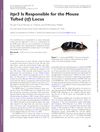
October 2012 in “Journal of Heredity” This study identified the Itpr3 gene as responsible for the tufted hair loss phenotype in the BTBR mouse strain.
April 2010 in “The journal of immunology/The Journal of immunology” This study found that deleting the FoxN1 gene in mice disrupted the 3D thymic epithelial structure and led to 2D epithelial cysts, revealing its crucial role in thymus organization but not causing athymia.
 March 2024 in “BMC cancer”
 This study reports that high expression of proteins ST14 and TMEFF1 in ovarian cancer correlates with higher tumor malignancy and worse prognosis, and reveals an interaction where ST14 regulates TMEFF1 to promote cancer cell proliferation, migration, and invasion.
 33 citations
,
September 2017 in “Journal of clinical immunology”
33 citations
,
September 2017 in “Journal of clinical immunology” This review summarizes recent findings on FOXN1's essential role in thymus and skin biology and discusses emerging therapeutic approaches for immune disorders with athymia, but reports no new clinical results.