3 citations
,
October 2018 in “Journal of cosmetic dermatology” This study found that intralesional pentoxifylline injections were effective for localized alopecia areata, with the best results observed when combined with triamcinolone acetonide.
5 citations
,
November 2015 in “Journal of Enzyme Inhibition and Medicinal Chemistry” This study found that aliphatic ester moieties in 16-formyl-17-methoxy dehydroepiandrosterone derivatives increased their potency as 5α-reductase type 2 inhibitors in vitro compared to finasteride.
15 citations
,
June 1961 in “Archives of Dermatology” This report details observations from four patients with alopecia areata who received intralesional triamcinolone injections to assess its effectiveness for promoting hair regrowth in localized areas.
January 2002 in “Chinese Journal of Pharmaceuticals” This study reports the preparation of a key intermediate for finasteride and epristeride with a 69% overall yield from pregnenolone acetate.
14 citations
,
May 2005 in “Steroids” This study describes the synthesis of finasteride from 4-androstene-3,17-dione in a seven-step process with an overall yield of 18.6%.
25 citations
,
June 2002 in “Steroids” This study examined 4-azasteroids using 13C-NMR spectroscopy, detailing the NMR spectrum assignments and reporting a new molecular complex of finasteride with dioxane.
 January 2017 in “Nasza Dermatologia Online”
 This study found that both new and old formulas of DCP for treating alopecia areata resulted in similar hair regrowth, but tolerance was significantly better with DCP in isopropanol.
 8 citations
,
March 2002 in “Archiv Der Pharmazie”
8 citations
,
March 2002 in “Archiv Der Pharmazie” In this study, 4-(4-(phenylaminocarbonyl)benzoyl) benzoic acid exhibited the strongest inhibitory activity against the human type 2 steroid 5α-reductase isozyme among the compounds tested.
![Benzo[c]quinolizin-3-ones: A Novel Class of Potent and Selective Nonsteroidal Inhibitors of Human Steroid 5α-Reductase 1](/images/assets/ff6e6cbe-cb9c-4d11-87ef-671d28ffd4fa/small/15506.jpg) 28 citations
,
September 2000 in “Journal of Medicinal Chemistry”
28 citations
,
September 2000 in “Journal of Medicinal Chemistry” This study identified novel compounds as selective inhibitors of the type 1 isoenzyme of 5α-reductase, displaying promising potential for treating DHT-dependent disorders such as acne and androgenic alopecia.
21 citations
,
September 2013 in “Current medicinal chemistry” This study found that co-drugs synthesized from hydroquinone and tranexamic acid improved skin targeting and deposition, with reduced irritation and enhanced efficacy for treating hyperpigmentation.
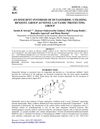 January 2017 in “Rasayan journal of Chemistry”
 This paper describes a new scalable synthesis method for Dutasteride, highlighting its potential for large-scale commercial production.
 February 2025 in “Revista Eletrônica Acervo Saúde”
 This integrative review found that triamcinolone hexacetonide remains the primary treatment for mild to moderate alopecia areata but noted its significant side effects with prolonged use, while emerging therapies like PRP and minoxidil offer promising alternative benefits with fewer risks.
 September 2024 in “International Journal For Multidisciplinary Research”
 This study highlights the significant pharmacological potential of Tridax procumbens, a plant with various therapeutic properties such as liver protection, immune modulation, and wound healing, though it notes that more research is needed to identify its active compounds and mechanisms for drug discovery.
 January 2025 in “Journal of Cutaneous Medicine and Surgery”
 In this clinical trial, adding topical calcipotriol to intralesional triamcinolone acetonide significantly increased hair regrowth efficacy in scalp alopecia areata patches compared to steroids alone, but not in beard patches, with a lower incidence of atrophy observed.
September 2024 in “Actas Dermo-Sifiliográficas” This study discusses trichodynia, a painful scalp condition often linked to various forms of alopecia and psychiatric comorbidities, highlighting its clinical diagnosis, lack of specific treatments, and suggesting the need for more research to explore effective therapies.
June 2022 in “Zenodo (CERN European Organization for Nuclear Research)” This study evaluated a hydrogel containing extracts from azadirachta indica and tridax procumbens for treating seborrheic dermatitis, finding it passed various tests, including skin irritation and stability, suggesting potential future applications in herbal formulations.
 10 citations
,
October 2018 in “Dermatologic Therapy”
10 citations
,
October 2018 in “Dermatologic Therapy” In this study, researchers tested lotions containing DGLA, S-equol, and propionyl-l-carnitine on individuals with androgenic alopecia, noting a significant increase in hair count for women and a marginal increase for men after 6 months, along with improved hair cycle dynamics.
 1 citations
,
July 2017 in “International Journal of Advanced Research”
1 citations
,
July 2017 in “International Journal of Advanced Research” This study evaluated the phytochemical properties and in-vitro anti-fungal activity of Tridax procumbens but reports no new clinical results.
This study introduces a novel pro-drug formulation of all-trans retinoic acid that reduces skin inflammation and achieves sustained drug release over several days compared to traditional methods.
 June 2023 in “International Journal of Clinical Research and Reports”
 This study found that higher concentrations of topical diphenylcyclopropenone, especially when prepared with acetone, showed better stability over 6 months compared to lower concentrations.
 March 2025 in “Journal of Science Natural Science”
 This study successfully synthesized acetyl tetrapeptide-3 on a laboratory scale with over 56% yield and 100% purity, supporting its use in developing hair loss and scalp care products.
2 citations
,
March 1964 in “Archives of Dermatology” This study found no significant difference in the therapeutic response to intralesional triamcinolone acetonide at concentrations of 2.5, 5, and 10 mg/mL for various dermatologic conditions.
 16 citations
,
November 2023 in “Scientific Reports”
16 citations
,
November 2023 in “Scientific Reports” This study developed a niosomal delivery system loaded with tretinoin and bicalutamide, optimized for follicular targeting in acne management, showing promising accumulation in hair follicles in animal models.
 13 citations
,
October 2017 in “Bioorganic & Medicinal Chemistry”
13 citations
,
October 2017 in “Bioorganic & Medicinal Chemistry” This study found that compound 3, a tetrahydropyridoindole carboxymethylated at position 5, significantly inhibited sorbitol accumulation in both rat eye lenses and tissues affected by diabetes, indicating its potential as a lead compound for ALR2 inhibition.
3 citations
,
November 2020 in “Dermatologic Therapy” This study found that intralesional triamcinolone acetonide was more effective than saline for hair regrowth in scalp alopecia areata, with 10 mg/mL showing the best response but more side effects.
50 citations
,
July 2015 in “Journal of the American Academy of Dermatology” This study found that 2.5 mg/mL triamcinolone acetonide injections were as effective as higher doses for treating limited, patchy alopecia areata, while minimizing side effects like skin atrophy.
8 citations
,
June 2017 in “Steroids” This study evaluated novel steroid compounds for their ability to inhibit 5α-reductase, showing that compound 16a significantly reduced rat prostate weight more than epristeride and exhibited excellent in vitro inhibitory potency, indicating its potential as a lead candidate for further benign prostatic hyperplasia drug research.
 9 citations
,
February 2011 in “Revista Brasileira de Farmacognosia”
9 citations
,
February 2011 in “Revista Brasileira de Farmacognosia” This study reported that phytochemicals SA-4 and SA-6 from Tridax procumbens exhibited a dose-related immunostimulatory effect on mice, suggesting their potential as immunostimulators.
 16 citations
,
August 2004 in “Tetrahedron”
16 citations
,
August 2004 in “Tetrahedron” In this study, all stereoisomers of cyoctol were synthesized and tested, revealing that contrary to initial patent claims, cyoctol does not function as an anti-androgen.
 59 citations
,
October 2012 in “Pharmaceutical Research”
59 citations
,
October 2012 in “Pharmaceutical Research” This study found that nanostructured lipid carriers with more soybean phosphatidylcholine provided better skin retention and follicular targeting for diphencyprone compared to other formulations and controls.