
In this observational study, researchers found that acute telogen effluvium, a form of temporary hair loss, occurred in 80 patients following COVID-19 infection, with 70 showing a significant decrease in hair density and trichoscopic signs like peripilar sign and yellow dots.
 July 2024 in “Berkala Ilmu Kesehatan Kulit dan Kelamin”
 This study highlights the importance of identifying the various causes of hair loss in children to enable accurate diagnosis and management, emphasizing that proper treatment, including psychosocial support, can prevent a decline in their quality of life.
 June 2024 in “British Journal of Dermatology”
 In this study, researchers described cases of traction alopecia in young Sikh boys due to hair tying practices, emphasizing the importance of early intervention and education to prevent progression and support hair regrowth, using strategies like changing hair tying methods and topical treatments when appropriate.
 June 2024 in “Annals of Medicine and Surgery”
 This case report highlights the rare co-occurrence of Pili Annulati and Trichorrhexis Nodosa in a Syrian woman, underlining the need for further research into their relationship and treatment.
 June 2024 in “Al- Anbar Medical Journal”
 This review discusses the mechanisms, causes, and treatment options for telogen effluvium, noting acute cases often resolve by addressing causative factors, while chronic forms remain challenging to treat; recent causes include post-hair transplantation, vitamin D deficiency, and COVID-19.
 May 2024 in “Indian Dermatology Online Journal”
 This study reports a case of trichobacteriosis pubis, a rare bacterial infection causing malodour in the pubic region, which improved with hair trimming and topical clindamycin, subsequently enhancing the patient's sexual relationship.
May 2024 in “Journal of Fungi” This review reports that tinea capitis is uncommon in adults, with postmenopausal African American or Black women at higher risk, and emphasizes the importance of prompt antifungal treatment to prevent complications.
 May 2024 in “International Seven Journal of Multidisciplinary”
 This review discusses fibrosing frontal alopecia, including its causes, mechanisms, and treatments, and emphasizes the need for further research to improve understanding and treatments; it reports no new clinical results.
 April 2024 in “Diagnostics”
 In this study, researchers found that 68% of orthodontic patients with oligodontia displayed hair disorders, such as hypotrichosis and androgenetic alopecia, highlighting trichoscopy and trichogram as valuable diagnostic tools to distinguish between isolated and syndromic forms of the condition.
 April 2024 in “Frontiers in medicine”
 This Delphi study found that moderate-to-severe alopecia areata in Poland, Czechia, Russia, and Türkiye significantly impacts quality of life and highlights an unmet need for more effective treatments.
 April 2024 in “Dermatovenerologiâ, kosmetologiâ”
 In this study, telogen effluvium, a common form of hair loss linked to changes in the hair cycle, is examined with a focus on diagnostic methods and effective treatment options, noting that 34.2% of patients experience trichodynia.
 April 2024 in “Dermatology and therapy”
 This study surveyed dermatologists in Greece and Italy and found significant variability and challenges in the diagnosis and treatment of alopecia areata, including limited use of severity scores and diverse treatment approaches, particularly for special site involvement and chronic cases.
 April 2024 in “Clinical dermatology review (Print)”
 In this study, trichoscopy was found to be an effective noninvasive tool for diagnosing female pattern hair loss at early stages, potentially eliminating the need for scalp biopsies.
 March 2024 in “International journal of pharmaceutical sciences and drug research”
 In this review, the authors explored current and novel treatment options for androgenetic alopecia, noting both FDA-approved pharmacologic treatments like Minoxidil and Finasteride and various non-pharmacologic and surgical methods, including hair transplantation and scalp micro-pigmentation.
In this case study, treatment with terbinafine effectively resolved symptoms of tinea capitis in an eight-year-old male, highlighting trichoscopy as a valuable diagnostic tool for this common fungal scalp infection and proposing its integration with clinical data for quicker diagnosis in settings lacking mycological facilities.
 February 2024 in “Acta dermato-venereologica”
 This study reports that folliculitis decalvans and lichen planopilaris phenotypic spectrum is an underdiagnosed form of cicatricial alopecia, potentially treatable with anti-inflammatory drugs used for lichen planopilaris.
 January 2024 in “Journal of Cosmetic Dermatology”
 This study suggests that male androgenetic alopecia and female pattern hair loss follow distinct progression pathways, characterized by different trichoscopic patterns related to hair diameter and follicular unit changes.
This study outlines treatment strategies for autoimmune alopecia areata, detailing that while mild cases may resolve on their own, severe cases often require intervention, with new JAK inhibitors like baricitinib and ritlecitinib emerging as promising treatments for those not responding to traditional therapies.
 January 2024 in “International journal of homoeopathic sciences”
 This abstract discusses alopecia areata, highlighting its complex autoimmune pathogenesis involving immune cells and signaling molecules, and underscores the importance of accurate diagnosis and tailored management strategies, noting the need for further research to improve treatments.
This review discusses the diagnosis and treatment options for androgenetic alopecia, including trichoscopy and therapies like minoxidil and hair transplantation, but reports no new clinical results.
January 2024 in “Muller Journal of Medical Sciences and Research” This study found that trichoscopy was 73.77% concordant with histopathology in diagnosing patchy alopecia, highlighting its usefulness as a diagnostic tool for conditions like alopecia areata, lichen planus pigmentosus, and discoid lupus erythematosus.
December 2023 in “International Journal of Dermatology” This study reports that trichoscopy and histopathology can effectively diagnose alopecia areata incognito and differentiate it from telogen effluvium or androgenetic alopecia, aiding clinicians in better hair regrowth management.
 October 2023 in “Dermatology practical & conceptual”
 This study observed that among 120 patients recovering from COVID-19, severe diffuse hair loss typically began less than two months post-infection, with the majority of patients experiencing a severe degree of hair loss and positive hair pull tests, often alongside vitamin D deficiency.
 October 2023 in “European medical journal. Dermatology”
 This review outlines a systematic approach for dermatologists to accurately diagnose hair loss disorders, emphasizing the importance of differentiating between scarring and non-scarring alopecia to guide appropriate treatment decisions.
October 2023 in “University of Zadar Institutional Repository” This paper describes androgenic alopecia as a hereditary form of hair loss influenced by androgens, outlining its diagnosis, treatment options like minoxidil and finasteride, and the importance of psychological support due to its impact on quality of life.
 October 2023 in “Case Reports”
 This case report identified a new isotype of male androgenetic alopecia (inverse-MAGA) in a man successfully treated with finasteride and minoxidil, suggesting the need for future studies to evaluate this variant widely.
 September 2023 in “Zenodo (CERN European Organization for Nuclear Research)”
 In this study, researchers examined trichoscopic features in 80 patients with androgenetic alopecia and found that hairshaft thickness heterogeneity was the most common feature, highlighting trichoscopy as a useful, non-invasive diagnostic tool for assessing this condition.
 September 2023 in “Irish Journal of Medical Science (1971 -)”
 In this study, 61.4% of females infected with COVID-19 reported hair problems, such as telogen effluvium and increased gray hair, with most cases starting or worsening post-infection as confirmed by trichoscopy.
 September 2023 in “Cutis”
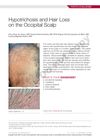
 This study presents a case of a 6-month-old infant girl with hypotrichosis and an alopecic plaque in the occipital region, characterized by broken and dystrophic hairs with follicular papules and perifollicular hyperkeratosis, suggesting a diagnostic consideration.
 August 2023 in “GLOBAL JOURNAL FOR RESEARCH ANALYSIS”
 This article discusses various hair loss disorders such as scarring and nonscarring alopecia and emphasizes the importance of diagnosis through patient interviews and trichoscopy, while highlighting existing treatments like minoxidil, finasteride, and emerging therapies from ongoing research.