 22 citations
,
January 1968 in “THE JOURNAL OF VITAMINOLOGY”
22 citations
,
January 1968 in “THE JOURNAL OF VITAMINOLOGY” This study found that α-tocopheryl acetate is well absorbed through healthy skin, with absorption occurring through specific pathways and showing high affinity for small blood vessels.
 49 citations
,
May 2018 in “Journal of the American Academy of Dermatology”
49 citations
,
May 2018 in “Journal of the American Academy of Dermatology” This letter discusses the limited treatment options for pediatric alopecia areata and the lack of controlled studies for therapies like systemic and off-label immunosuppressive drugs, without reporting new clinical results.
45 citations
,
March 1997 in “Journal of Investigative Dermatology” TCDD changes skin gene expression and may harm skin health.
 139 citations
,
November 2016 in “Journal of the American Academy of Dermatology”
139 citations
,
November 2016 in “Journal of the American Academy of Dermatology” In this retrospective review, tofacitinib treatment was associated with clinically significant hair regrowth in most adolescent patients with alopecia areata, though limitations suggest further studies are needed to confirm these findings.
 May 2023 in “International Journal of Trichology”
 This case report details the successful use of oral tofacitinib for six months, which led to significant hair regrowth in an adult male Indian patient with extensive and refractory alopecia areata, highlighting tofacitinib's potential in managing resistant cases within this population.
 March 2025 in “Indian Journal of Dermatology Venereology and Leprology”
 In this study, tofacitinib showed significant efficacy in treating alopecia totalis and universalis over a 6-month period, with notable hair regrowth outcomes, while younger age of onset and shorter treatment duration were linked to less effectiveness.
1 citations
,
December 2025 in “Journal of the American Academy of Dermatology” 24 citations
,
November 2015 in “Frontiers in Genetics” This review discusses the development and potential therapeutic effects of nitroxide small molecule agents for age-related macular degeneration and cardiovascular disease, but reports no new clinical results.
 March 2022 in “International Journal of Trichology”
 In this case report, a young female Indian patient with alopecia areata saw hair regrowth within 2 months of treatment with oral tofacitinib, with continued improvements over a 5-month period and no reported side effects.
16 citations
,
June 2018 in “JAAD case reports” This article reviews the differences in inflammatory processes between alopecia universalis and atopic dermatitis, focusing on type 1 and type 2 immune responses, but it reports no new results.
 October 2024 in “International Journal of Research in Dermatology”
 In this retrospective study, tofacitinib showed promise as a treatment for alopecia areata, with 46.5% of patients experiencing a very good response and minimal adverse effects, suggesting it could be a primary option for moderate to severe cases.
 79 citations
,
September 2018 in “Dermatologic therapy”
79 citations
,
September 2018 in “Dermatologic therapy” This study found that treatment with oral tofacitinib, alone or with other therapies, was associated with clinical improvement in most patients with recalcitrant lichen planopilaris.
 May 2024 in “Journal of cosmetic dermatology”
 In this retrospective study, oral tofacitinib treatment for at least 6 months improved scalp hair loss in 69.1% of alopecia areata patients, with patchy AA cases responding better compared to other subtypes, and no significant adverse effects were reported.
5 citations
,
September 2020 in “Proceedings - Baylor University. Medical Center” In this case report, a 39-year-old woman's symptoms from dermatomyositis–systemic lupus erythematosus overlap syndrome improved only after she was treated with tofacitinib.
 6 citations
,
November 2022 in “Journal of autoimmunity”
6 citations
,
November 2022 in “Journal of autoimmunity” This case report discusses a successful treatment of Alopecia Areata with tofacitinib and includes a literature review on the condition's pathophysiology and the mechanism of JAK inhibitors, though it notes the high failure rate of available treatments and absence of FDA-approved options.
 2 citations
,
September 2022 in “Dermatologic Therapy”
2 citations
,
September 2022 in “Dermatologic Therapy” In this study, tofacitinib showed a mixed response in treating refractory alopecia areata, with some patients experiencing complete or partial hair regrowth and others showing no response, particularly those with alopecia universalis.
 2 citations
,
June 2019 in “Boletín médico del Hospital Infantil de México”
2 citations
,
June 2019 in “Boletín médico del Hospital Infantil de México” This study in Mexican adolescents with severe alopecia areata reported that oral tofacitinib treatment resulted in hair growth and reduced alopecia severity without serious adverse effects.
The authors concluded that capecitabine and high-dose toremifene may be an effective treatment option for patients unable to undergo anthracycline or taxane therapies, based on one woman's cancer management.
13 citations
,
February 2017 in “Clinical rheumatology” This report suggests that tofacitinib may be beneficial for patients with nail disease unresponsive to other treatments.
3 citations
,
July 2025 in “International Immunopharmacology” 
In this six-year study of a Saudi cohort, oral tofacitinib showed favorable long-term effectiveness for patients with AA, with manageable adverse events requiring regular monitoring.
 27 citations
,
September 2017 in “Archives of Dermatological Research”
27 citations
,
September 2017 in “Archives of Dermatological Research” In this study, topical tofacitinib significantly increased hair regrowth in mice compared to minoxidil or vehicle, potentially due to elevated VEGF levels and reduced inflammation.
 April 2023 in “Journal of the American Academy of Dermatology”
 This study aimed to evaluate the outcomes of switching between two JAK inhibitors, tofacitinib and baricitinib, in treating alopecia areata, due to the lack of data on their comparative efficacy.
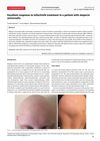 16 citations
,
January 2017 in “Acta dermatovenerologica Alpina, Pannonica et Adriatica (Tiskana izd.)”
16 citations
,
January 2017 in “Acta dermatovenerologica Alpina, Pannonica et Adriatica (Tiskana izd.)” This case study reports that a 23-year-old woman with alopecia universalis experienced complete hair regrowth after six months of treatment with tofacitinib, a JAK-3 inhibitor.
July 2022 in “British Journal of Dermatology” 22 citations
,
July 2006 in “Annals of The Royal College of Surgeons of England” This case report aims to raise physician awareness about 'toe-tourniquet' syndrome, which can lead to digit loss if not promptly treated, and to prevent its misdiagnosis as child abuse.
 August 2022 in “Dermatology Online Journal”
 Oral and topical tofacitinib can effectively treat severe hair loss with minimal side effects.
 2 citations
,
November 2017 in “Biotechnology Letters”
2 citations
,
November 2017 in “Biotechnology Letters” This study developed a high-throughput method that identifies bioactive chemicals influencing DHT production in prostate cancer cells, with potential nutraceutical candidates including fucoxanthin, phenethyl caffeate, and Curcuma longa L. extract.
 33 citations
,
September 2007 in “Veterinary dermatology”
33 citations
,
September 2007 in “Veterinary dermatology” In this study, proliferative and necrotizing feline otitis externa in four domestic shorthair cats improved with topical 0.1% tacrolimus treatment, despite previous ineffective therapies.
 3 citations
,
April 2016 in “Journal of Investigative Dermatology”
3 citations
,
April 2016 in “Journal of Investigative Dermatology” In this open-label trial, tofacitinib showed dramatic clinical responses in most patients with moderate-to-severe alopecia areata, supporting further research into JAK inhibitors for this condition.