 June 2014 in “Basic & Clinical Pharmacology & Toxicology”
 This study found that alkaloids isolated from Cucumis metuliferus fruit pulp demonstrated antiviral activity against IBDV in chicken embryo fibroblast cells and NDV in 10-day-old embryonated chicken eggs, while being non-cytotoxic.
 176 citations
,
June 2016 in “PLoS ONE”
176 citations
,
June 2016 in “PLoS ONE” In these initial clinical studies, NAP monotherapy showed significant reductions in HBsAg levels among patients with chronic HBV, suggesting potential as part of future combination therapies.
 121 citations
,
November 2020 in “Endocrine”
121 citations
,
November 2020 in “Endocrine” This review discusses evidence on androgen sensitivity as a potential factor in COVID-19 disease severity, suggesting that androgen receptor interactions could influence virus entry and progression, and reports no new clinical results.
research Skin
2 citations
,
January 2011 in “Elsevier eBooks” This review discusses approaches to diagnosing and managing cutaneous manifestations of lupus erythematosus and reports no new clinical results.
 December 2025 in “Naunyn-Schmiedeberg s Archives of Pharmacology”
 In this animal study, AGO (agomelatine) effectively alleviated testosterone-induced benign prostatic hyperplasia in rats by reducing oxidative stress and inflammation, indicating its potential as a therapeutic option for managing BPH through specific signaling pathways.
55 citations
,
November 2010 in “Journal of Allergy and Clinical Immunology” This study found that the TLR3 L412F genetic variant is associated with severe viral infections, especially CMV, and immune dysfunction in a subgroup of chronic mucocutaneous candidiasis patients.

This study found that TLR2 and its ligand CEP are crucial for maintaining hair follicle health and stimulating hair growth, with deficiencies observed in aging and obesity potentially reducing regeneration.
 1 citations
,
September 2023 in “eLife”
1 citations
,
September 2023 in “eLife” This study found that TLR2 expression in hair follicle stem cells is crucial for hair follicle maintenance and regeneration, with TLR2-dependent activation potentially offering new therapeutic approaches for hair loss prevention through mechanisms involving immune pathways and CEP administration.
 3 citations
,
December 2016 in “Springer eBooks”
3 citations
,
December 2016 in “Springer eBooks” This study found that activating Toll-like receptor 3 in periodontal ligament stem cells enhanced their stem cell and immunosuppressive properties, potentially supporting effective periodontal tissue regeneration.
 August 2023 in “bioRxiv (Cold Spring Harbor Laboratory)”
 This study found that TLR2 is crucial for maintaining hair follicle health and regeneration, and its stimulation by the metabolite CEP may promote hair growth, while decreases in TLR2 and CEP in aging and obesity may hinder hair growth.
 6 citations
,
January 2021 in “Frontiers in Immunology”
6 citations
,
January 2021 in “Frontiers in Immunology” This study found that deficiency in TLR3/TRIF signaling reduced inflammation and protected mice against postoperative ileus, suggesting potential for TLR3 antagonism as a preventive approach in humans.
 December 2022 in “KSBB Journal”
 This study suggests that autophagy is essential for regulating TLR3-mediated regenerative processes in human keratinocytes.
 15 citations
,
November 2023 in “Immunity & ageing”
15 citations
,
November 2023 in “Immunity & ageing” This review highlights the role of the receptor TLR4 in cellular aging and age-related diseases, suggesting it as a potential therapeutic target due to its contribution to persistent inflammation and symptom regulation in these conditions.

In this study, researchers analyzed over 5,000 T cells per sample using scRNA+TCR-seq technology and found that dual TCR Tregs are present in high proportions across various mouse tissues, showing unique TCR pairing patterns, V(D)J usage, and mRNA expression compared to single TCR Tregs.
This study found that TLR2 in hair follicle stem cells is crucial for maintaining hair health and regeneration, and its decrease in aging and obesity may impair hair growth, suggesting that stimulation through its ligand carboxyethylpyrrole could offer new therapeutic avenues.
August 2025 in “BMC Pharmacology and Toxicology” The LTF gene may help predict and manage nonspecific orbital inflammation.
August 2009 in “Mechanisms of Development” January 2014 in “eScholarship (California Digital Library)” In this study, researchers observed that TLR3 and scavenger receptors play key roles in skin barrier repair following UVB damage, contributing to our understanding of cellular responses to skin injury.
 6 citations
,
October 2012 in “Journal of Heredity”
6 citations
,
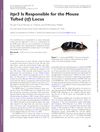
October 2012 in “Journal of Heredity” This study identified the Itpr3 gene as responsible for the tufted hair loss phenotype in the BTBR mouse strain.
5 citations
,
December 2023 in “Current Biology” A feedback loop between LRH and RSL4 controls root hair growth in Arabidopsis.

This study investigated dual TCR Treg cells in mouse tissues, revealing a high proportion and diverse pairing patterns compared to single TCR Tregs, providing insights into their origins and characteristics across different tissue locations.
January 2026 in “American Journal of Medical Genetics Part A” The researchers reported two brothers with a new variant of X-linked trichothiodystrophy associated with an RNF113A gene mutation, highlighting features such as intellectual disability and growth failure, but without previously reported endocrinological or genital abnormalities, underlining the importance of genetic counseling for such variants.
 1 citations
,
December 2018 in “Journal of genetic medicine”
1 citations
,
December 2018 in “Journal of genetic medicine” In this case report, a 20-year-old male with tricho-rhino-phalangeal syndrome was found to have a de novo frameshift mutation in the TRPS1 gene, highlighting the challenges in diagnosing this rare disorder.
143 citations
,
May 2002 in “PubMed” This study found that the retinoid LGD1069 suppressed mammary tumorigenesis in a mouse model without observable toxicity, while TTNPB showed modest effects but was associated with significant toxicity.
5 citations
,
May 2022 in “Diagnostics” This study found that certain lncRNA gene polymorphisms in HOTAIR and MALAT1 are associated with increased susceptibility to systemic lupus erythematosus, potentially informing clinical applications.
11 citations
,
September 2023 in “Nature Communications” In this study, researchers found that the cell surface protein Lrig1 plays a crucial role in regulating the suppressive function of regulatory T cells, suggesting it as a potential target for treating autoimmune diseases, as evidenced by experiments in mouse models.
 April 2015 in “Plastic and Reconstructive Surgery”
 This article discusses the role of the American Society of Plastic Surgeons in plastic and reconstructive surgery education but presents no new research findings.
 April 2015 in “Plastic and Reconstructive Surgery”
 This article is from the ASPS Education Network and does not report any new research findings.
20 citations
,
April 2014 in “Autoimmunity” In this study, TLR1 gene polymorphism rs4833095 was significantly associated with increased susceptibility to alopecia areata in the Korean population.
 2 citations
,
June 2024 in “Frontiers in Plant Science”
2 citations
,
June 2024 in “Frontiers in Plant Science” This study found that RALF peptides, through liquid-liquid phase separation, form condensates with pectin and other proteins, playing a pivotal role in plant development and stress response regulation.