 March 2013 in “CRC Press eBooks”
 This review discusses the development and history of follicular unit transplantation and reports no new clinical results.
63 citations
,
May 2015 in “PloS one” This study found that GALT5 and GALT2 are redundant enzymes essential for O-glycosylation of AGPs, with mutations leading to significant growth and development defects in plants.
26 citations
,
December 1990 in “Journal of Biological Chemistry” In this study, elevated mRNA levels for serine-rich ultra high sulfur proteins were observed during active hair growth phases in mice, particularly in the forming hair structures and upper skin layers.
 December 2023 in “Clinical, cosmetic and investigational dermatology”
 This study found that no-shave long hair-follicular unit excision using a skin-responsive device, without recess-tipped punches, yielded low graft transection and shaft break rates, improved procedure speed, and increased surgeon willingness.
 April 2018 in “The journal of investigative dermatology/Journal of investigative dermatology”
 This study suggests that GATA6 is a key regulator of the upper pilo-sebaceous unit homeostasis and differentiation in human skin.
5 citations
,
May 2024 in “Developmental Cell” Lower GATA3 levels in mice help hair regrow by changing certain immune cells.
 8 citations
,
September 2015 in “Hair transplant forum international”
8 citations
,
September 2015 in “Hair transplant forum international” This article highlights the significant hair transplant results achieved with the potentially obsolete FUT technique and includes varied expert opinions on its efficacy, but it reports no new clinical findings.
 August 2023 in “Research Square (Research Square)”
 This study found that among patients with inflammatory bowel disease, those with the NUDT15 mutation had a reduced tolerance for thiopurine dosage over the long term and were more likely to require hospitalization and surgery compared to those without the mutation.
 3 citations
,
January 2017 in “Evidence-based complementary and alternative medicine”
3 citations
,
January 2017 in “Evidence-based complementary and alternative medicine” This study found that Galla chinensis solution significantly improved skin lesions and fungal eradication in dermatophytosis-infected dogs, showing over 85% efficacy in fungal removal after 14 days and outperforming the positive control treatment.
 4 citations
,
January 2005 in “Elsevier eBooks”
4 citations
,
January 2005 in “Elsevier eBooks” This article discusses the key considerations and techniques necessary for successful Follicular Unit Transplantation in hair restoration surgery and reports no new clinical results.
7 citations
,
July 2019 in “Asian Journal of Oncology” This study found that Guduchi and Yashtimadhu, when used as adjuvant therapy, significantly improved chemotherapy-related symptoms and blood parameters in cancer patients.
30 citations
,
August 2008 in “The journal of investigative dermatology/Journal of investigative dermatology” This study suggests that TGase 3 may contribute to hair fiber scaffolding by forming specific isopeptide bonds between keratin intermediate filaments and keratin-associated proteins.
2 citations
,
July 1994 in “Journal of Dermatological Science” This study found that a laboratory model using nude mice can produce human hair follicles with amino acid compositions resembling both normal and trichothiodystrophy-affected human scalp hair over extended periods.
14 citations
,
July 1994 in “Journal of Investigative Dermatology” January 1995 in “Journal of the Society of Cosmetic Chemists” This study found no conclusive evidence of biocatalytic activity of guinea pig liver transglutaminase with virgin human hair, potentially due to a fatty acid layer on the hair surface.
 3 citations
,
May 2024 in “Cureus”
3 citations
,
May 2024 in “Cureus” This review revisits hair-thread tourniquet syndrome, highlighting the importance of prompt diagnosis and treatment by removing the constricting hair or similar substance to prevent damage to affected body parts, aiming to raise healthcare professionals' awareness for better prevention and management.
January 2025 in “International Journal of Pharmaceutics” In this study, gelatin-coated transferosomes were developed to deliver tofacitinib specifically to hair follicles, resulting in 80% hair regrowth in alopecia areata patients with recalcitrant lesions after 12 weeks of treatment.
53 citations
,
June 1983 in “Journal of Investigative Dermatology” This study reports that human epidermal transglutaminase activity increases with treatment using organic solvents and chemicals without significant molecular weight changes, which may allow modulation of the enzyme in skin diseases.
24 citations
,
December 2013 in “Archives of Dermatological Research” May 2024 in “International journal of medicine and psychology.” This review discusses Ganser syndrome as a rare and misunderstood disorder within psychiatric practice, noting its exclusion from the DSM-5 and potential dual origins as organic or psychogenic.
9 citations
,
January 2014 in “Molecular Genetics and Metabolism Reports” This study discovered that a specific G to C mutation in the ornithine aminotransferase gene is linked to the retarded hair growth phenotype in mice and may serve as a model for human gyrate atrophy.
1 citations
,
October 2025 in “International Journal of Molecular Sciences” This study found that zebrafish with a mutation in the GDP-fucose biosynthesis gene exhibited enhanced and faster regeneration of mechanosensory hair cells, implicating the importance of this gene and Notch signalling regulation in hair cell regeneration mechanisms.
6 citations
,
September 2024 in “Current Oncology” This review summarizes evidence and adverse event management recommendations for Sacituzumab Govitecan in metastatic triple-negative breast cancer and hormone receptor-positive breast cancer, emphasizing favorable survival data from clinical trials.
 June 2018 in “The Journal of Sexual Medicine”
 This study used high-resolution ultrasound to investigate the pathophysiology of persistent erectile dysfunction in young men who used the drug finasteride, observing differences in erectile tissue homogeneity compared to control subjects without finasteride exposure.
 5 citations
,
September 2003 in “Archives of Facial Plastic Surgery”
5 citations
,
September 2003 in “Archives of Facial Plastic Surgery” This article discusses the follicular-unit grafting technique for hair transplantation and reports no clinical results; the authors highlight its potential for achieving natural-appearing outcomes but note the procedure's complexity.
 3 citations
,
March 2022 in “Polymers”
3 citations
,
March 2022 in “Polymers” This study found that applying glycosaminoglycans fractions from ascidian tunics stimulated human follicle dermal papilla cell proliferation and, when used on mice hair for 28 days, produced a hair growth effect comparable to Minoxidil.
1 citations
,
August 2021 in “NeoReviews” This case report describes a successful outcome for a fetus with a neck mass attributed to unnecessary maternal PTU treatment for transient hyperthyroidism, highlighting the importance of accurate diagnosis and careful management.
 6 citations
,
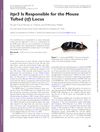
October 2012 in “Journal of Heredity”
6 citations
,
October 2012 in “Journal of Heredity” This study identified the Itpr3 gene as responsible for the tufted hair loss phenotype in the BTBR mouse strain.
May 2005 in “Faculty Opinions – Post-Publication Peer Review of the Biomedical Literature” In this study, transgenic mice with a truncated latent transforming growth factor-beta-binding protein showed reduced keratinocyte proliferation and alterations in the hair cycle due to mis-localization of transforming growth factor-beta.
 9 citations
,
January 2018 in “BioMed Research International”
9 citations
,
January 2018 in “BioMed Research International” This study found that topical application of TSG from Polygonum multiflorum promoted hair regrowth in depilated mice, potentially through the inhibition of apoptosis-related proteins.