 October 2025 in “Proceedings of the National Academy of Sciences”
 This study identifies the PI4P-RHD4 module as a key regulator of GET pathway receptor dynamics in Arabidopsis, affecting TA protein insertion and root hair growth.
 November 2025 in “International Journal of Research in Medical Sciences”
 In this randomized, placebo-controlled study, Titagen® was found to improve skin, hair, and nail health in adults consuming 5g daily, and reduce pain and improve quality of life for osteoarthritis patients taking 10g daily, without related adverse events.
 28 citations
,
May 2019 in “Life Sciences”
28 citations
,
May 2019 in “Life Sciences” This study found that ginsenoside Rb1 promoted the growth of mink hair follicles and dermal papilla cells, potentially through activating the PI3K/AKT/GSK-3β signaling pathway.
 March 2024 in “Journal of Microbiology and Biotechnology”
 This study suggests that phloroglucinol may enhance anagen signaling and reduce oxidative stress-induced damage in human dermal papilla cells, offering a potential therapy for hair loss.
 3 citations
,
December 2019 in “Journal of Cosmetic and Laser Therapy”
3 citations
,
December 2019 in “Journal of Cosmetic and Laser Therapy” This study found that plasma rich in growth factors showed promising results for increasing hair number and thickness in androgenic alopecia patients, with better outcomes after multiple injections.
 April 2018 in “Radiotherapy and Oncology”
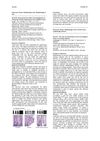
 Prostaglandin helps regenerate hair follicles after radiation damage.
January 2020 in “프로그램북(구 초록집)” This study found that treating androgenetic alopecia patients with microneedle-delivered GFC containing FGF5s and NMN increased hair density and diameter compared to normal saline.
July 2023 in “Journal of the ASEAN Federation of Endocrine Societies” In this study of a postmenopausal woman with hyperandrogenism, GnRH agonist treatment significantly reduced testosterone levels, suggesting the androgen excess was ovarian in origin and indicating the potential of using GnRH agonists as a conservative treatment option when surgery is not feasible.
 40 citations
,
March 2019 in “Nature Communications”
40 citations
,
March 2019 in “Nature Communications” This study found that deleting Stim1 and Stim2 in mature T regulatory cells disrupts Ca 2+ signaling, preventing their differentiation and leading to severe autoimmune disorders in mice.
 54 citations
,
January 2013 in “BMC Complementary and Alternative Medicine”
54 citations
,
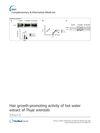
January 2013 in “BMC Complementary and Alternative Medicine” In this study, topical application of Thuja orientalis extract promoted hair growth by inducing the anagen phase and increasing hair follicle size and number in telogenic mice.
8 citations
,
December 2023 in “International Journal of Molecular Sciences” In this study, successful treatment outcomes with platelet-rich plasma injections in patients with IC/BPS and rUTI were associated with specific cytokine concentrations, particularly lower TNF-α levels.
 1 citations
,
January 2004 in “Journal of Physiology & Pathology in Korean Medicine”
1 citations
,
January 2004 in “Journal of Physiology & Pathology in Korean Medicine” Thuja orientalis extract significantly promotes hair growth in mice with hair loss.
19 citations
,
August 2013 in “Journal of Molecular Neuroscience” 46 citations
,
November 2007 in “Gene Expression Patterns” This study observed that Trps1 gene expression in mice is precisely regulated in skin development, particularly during hair follicle morphogenesis, with distinct localization patterns in different cell types.
1 citations
,
May 2025 in “The Journal of Dermatology” In this study, increased Treg cell activity indicated by IL-10 and IL-15 was identified as a feature of ADTA, distinguishing it from AA and potentially explaining ADTA's more favorable prognosis.
9 citations
,
July 2020 in “Cell Proliferation” In this study, EREG promoted hair growth by activating specific receptors in cell and animal models, indicating it may be a potential treatment for hair loss.
25 citations
,
July 1994 in “Journal of Cell Science” This study found that polyomavirus large T-immortalized rat dermal papilla cells retain hair-inductive ability and provide a viable model for studying hair growth and cytokine expression.
 3 citations
,
October 2023 in “Military Medical Research/Military medical research”
3 citations
,
October 2023 in “Military Medical Research/Military medical research” This review explores the crucial role of regulatory T cells in skin wound healing, emphasizing their involvement in balancing immune responses and promoting regeneration. It also discusses Tregs' operations in fibrosis, keloidosis, and scarring, suggesting a potential avenue for novel treatments.
1 citations
,
January 1985 in “Protides of the biological fluids” This study found that injecting highly purified monocyto-angiotropin into hare skin induced new blood vessel formation and significantly accelerated hair growth at the injection site compared to control areas.
 19 citations
,
December 2015 in “European Journal of Human Genetics”
19 citations
,
December 2015 in “European Journal of Human Genetics” This study found that a novel rare variant in ITGB6 may cause intellectual disability, alopecia, and dentogingival anomalies in a specific Pakistani family, highlighting a potential role for ITGB6 beyond enamel formation.
10 citations
,
March 2022 in “Frontiers in Oncology” This study found that the overexpression of the lncRNA HOTTIP in glioma cells increased resistance to the chemotherapy drug temozolomide, suggesting a key role for miR-10b and EMT processes in this resistance.
April 2016 in “Journal of Investigative Dermatology” CD73 may regulate hair growth and could be targeted for hair growth treatments.
 14 citations
,
October 2000 in “Genomics”
14 citations
,
October 2000 in “Genomics” This study demonstrated that dermal papilla cells are molecularly distinct from fibroblasts and identified many novel molecules, including a new member of the CTGF protein family.
 August 2025 in “Research Square (Research Square)”
 This study observed that among male patients who experienced telogen effluvium after platelet-rich plasma treatment for androgenic alopecia, there were elevated levels of TNF-α, androgen receptors, and altered 5α-reductase gene expression, suggesting these factors as potential contributors to this unintended outcome.
8 citations
,
July 2015 in “International Journal of Dermatology” This study reports that a homozygous A1103G mutation in DSG 4 is responsible for localized autosomal recessive hypotrichosis in a 2-year-old Chinese girl, resulting in reduced DSG 4 expression and hair defects.
March 2014 in “Institutional Repositories DataBase (IRDB)”  46 citations
,
September 2014 in “Tissue engineering. Part A”
46 citations
,
September 2014 in “Tissue engineering. Part A” This study found that a 3D Matrigel culture technique for dermal papilla cell spheroids can enhance hair follicle inductivity and induce hair-like fiber differentiation in vitro, even with high-passage cells.
 1 citations
,
January 2023 in “Life sciences”
1 citations
,
January 2023 in “Life sciences” This study demonstrated that elevated GABA levels can worsen stress-induced hair growth inhibition in mice, while GABAA antagonists like ginkgolide A may help alleviate these effects.
122 citations
,
June 1998 in “PubMed” This study found that sensory and sympathetic innervation in the mystacial pads of mice is governed by a balance of neurotrophin signaling, highlighting the roles of NGF/trkA and NT-3/trkC pathways.
 August 2023 in “bioRxiv (Cold Spring Harbor Laboratory)”
 This study found that TLR2 is crucial for maintaining hair follicle health and regeneration, and its stimulation by the metabolite CEP may promote hair growth, while decreases in TLR2 and CEP in aging and obesity may hinder hair growth.