 68 citations
,
November 2012 in “Journal of Investigative Dermatology”
68 citations
,
November 2012 in “Journal of Investigative Dermatology” This study found that PGD2 inhibits hair follicle regeneration in mice through the Gpr44 receptor, suggesting that blocking PGD2 or Gpr44 may enhance skin regeneration after wounds.
 September 2017 in “Journal of Investigative Dermatology Symposium Proceedings”
 This study found that prostaglandin D2 increases testosterone production in human keratinocytes through a mechanism involving ROS and REDOX potential, which could inform treatments for androgenic alopecia.
 1 citations
,
April 2016 in “Journal of Investigative Dermatology”
1 citations
,
April 2016 in “Journal of Investigative Dermatology” This study identified that blocking the PTGDR2 receptor in human hair follicles in vitro and in mice reversed the hair growth inhibition caused by PGD2, suggesting a potential approach for treating alopecia.
April 2019 in “Journal of the Endocrine Society” This study found that in male mouse pancreatic islet β cells, testosterone enhances glucose-stimulated insulin secretion by being locally converted into dihydrotestosterone and estradiol.
May 2005 in “Faculty Opinions – Post-Publication Peer Review of the Biomedical Literature” In this study, transgenic mice with a truncated latent transforming growth factor-beta-binding protein showed reduced keratinocyte proliferation and alterations in the hair cycle due to mis-localization of transforming growth factor-beta.
5 citations
,
May 2024 in “Developmental Cell” Lower GATA3 levels in mice help hair regrow by changing certain immune cells.
60 citations
,
September 2023 in “Science” This study found that the restoration of CD103⁺γδ T cells in humans is associated with sustained remission in inflammatory bowel disease, suggesting a conserved role for these cells in limiting disease progression.

This study found that TLR2 and its ligand CEP are crucial for maintaining hair follicle health and stimulating hair growth, with deficiencies observed in aging and obesity potentially reducing regeneration.
 August 2023 in “International Journal of Nanomedicine”
 This study found that a graphene-barium titanate nanosystem can accelerate wound healing by killing bacteria and promoting fibroblast proliferation, demonstrating effectiveness in both Gram-negative and Gram-positive bacteria-infected wounds in mice.
24 citations
,
November 1997 in “Journal of Biological Chemistry” This study found that genes encoding mouse high-glycine/tyrosine proteins show distinct spatial and temporal expression patterns in hair follicles, suggesting diverse protein distribution during hair growth cycles.
 January 2024 in “OPAL (Open@LaTrobe) (La Trobe University)”
 In this study, researchers explored various aspects of the TRPV3 ion channel, including its novel mechanosensitivity to shear stress, and identified novel agonists while investigating how repeated stimulation affects TRPV3 activity, but found no evidence of GPCRs sensitizing the channel.
409 citations
,
May 1991 in “Genes & Development” This study observed that overexpression of TGF-alpha in transgenic mice led to thicker epidermis and stunted hair growth, particularly in regions with normally thick skin and low hair density.
This study identified a high proportion of dual TCR Treg cells in both lymphoid and non-lymphoid tissues of mice, revealing their tissue specificity, TCR repertoire characteristics, and functional phenotypes.
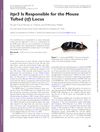 6 citations
,
October 2012 in “Journal of Heredity”
6 citations
,
October 2012 in “Journal of Heredity” This study identified the Itpr3 gene as responsible for the tufted hair loss phenotype in the BTBR mouse strain.
 2 citations
,
February 2014 in “Animal Biotechnology”
2 citations
,
February 2014 in “Animal Biotechnology” This study reported that the PTGER2 gene is strongly expressed in cashmere goat skin and its expression tends to decrease from the anagen to telogen stages of the hair follicle cycle.
9 citations
,
January 2007 in “Journal of dermatological treatment” This study found that applying 2.5% testosterone gel increased facial terminal hairs in young males with beta-thalassemia major and was well tolerated.
December 2014 in “Journal of Biomedical Research” In a mouse model of peripheral vascular disease, this study found that recombinant thymosin β4 treatment increased expression levels of certain proteins, promoting angiogenesis.
 1 citations
,
September 2023 in “eLife”
1 citations
,
September 2023 in “eLife” This study found that TLR2 expression in hair follicle stem cells is crucial for hair follicle maintenance and regeneration, with TLR2-dependent activation potentially offering new therapeutic approaches for hair loss prevention through mechanisms involving immune pathways and CEP administration.
 April 2024 in “The Journal of experimental medicine/The journal of experimental medicine”
 This review discusses how regulatory T cells, known for their immunosuppressive role, also produce repair mediators critical for tissue repair and regeneration, acting on non-immune cells in tissue-specific contexts, and highlights areas for future research in tissue repair, fibrosis, and cancer.
 April 2018 in “The journal of investigative dermatology/Journal of investigative dermatology”
 This study suggests that GATA6 is a key regulator of the upper pilo-sebaceous unit homeostasis and differentiation in human skin.
 June 2023 in “Italian Journal of Medicine”
 This study found that urotensin II promoted proliferation and VEGF secretion in rat dermal papilla cells by activating the Wnt-β-catenin signaling pathway, with the effect being reversible by a Wnt inhibitor.
 September 2009 in “European Urology Supplements”
 This study demonstrates that a new Adaptive Modulation and Coding method can improve control performance in Communication-Based Train Control systems using WLAN by reducing average delay through effective transmission mode selection.
 August 2025 in “Intisari Sains Medis”
 This study found that in healthy individuals, TGF-β1 levels in platelet-rich plasma are significantly higher when extracted using the buffy coat method compared to the pure method, with additional gender differences observed only in the buffy coat PRP.
 August 2024 in “Life Science Alliance”
 This study found that topical application of TGF-β mimic promoted enhanced wound healing and tissue regeneration in mice, suggesting its potential as a therapeutic option for improving wound healing.
 7 citations
,
January 2016 in “Laboratory Investigation”
7 citations
,
January 2016 in “Laboratory Investigation” TR3 is mainly found in hair follicle stem cells and may be involved in hair loss.
2 citations
,
February 2012 in “PubMed” This study found that Gp₄G increased hair length, papilla cell numbers, and versican deposition in treated animals, potentially through alterations in hair follicle phases and nucleotide concentrations.
11 citations
,
January 1992 in “PubMed” In this study, the researchers found distinct patterns of TGF-beta 1 and IGF-II expression in pig fetal subcutaneous tissue, suggesting specific regulatory roles in developing adipocytes and muscle tissue.
 December 2009 in “Saengmyeong gwahag hoeji/Saengmyeong gwahak hoeji”
 This study observed that thymosin beta 4 and VEGF have similar expression patterns in various human tissues, suggesting a role in angiogenesis and organ function.
 April 2016 in “Journal of Investigative Dermatology”
 This study provides a comprehensive platform to explore stem cell interactions regulating hair follicle growth, revealing key signaling pathways in epithelial-mesenchymal interactions using advanced RNA sequencing and transgenic reporters.
227 citations
,
February 1989 in “The Journal of Comparative Neurology” This study found that calcitonin‐gene‐related peptide immunoreactive sensory axons in rats are predominantly involved in tissue maintenance rather than nociceptive functions.