 3 citations
,
February 2022 in “Frontiers in cell and developmental biology”
3 citations
,
February 2022 in “Frontiers in cell and developmental biology” This study found that the circular RNA circCOL1A1 influences the formation of superior-quality brush hair in white goats by regulating hair follicle stem cell behavior and interacting with the miR-149-5p/CMTM3/AR axis.
 January 2024 in “International Journal of Dermatology Venereology and Leprosy Sciences”
 This literature review indicates that tofacitinib, both orally and topically, holds promise as a safe and effective treatment for various dermatological conditions in pediatric patients, though its use requires careful consideration of its benefits and risks.
 408 citations
,
January 2017 in “Science”
408 citations
,
January 2017 in “Science” This study found that hair follicles in mice and humans can convert wound-related myofibroblasts into adipocytes, suggesting a potential pathway to reduce scar formation by activating BMP signaling.
 159 citations
,
October 2015 in “Science Advances”
159 citations
,
October 2015 in “Science Advances” This study observed that applying JAK-STAT pathway inhibitors to mouse and human skin led to rapid hair growth by inducing the anagen phase of hair follicles.
 125 citations
,
September 2019 in “Journal of Clinical Immunology”
125 citations
,
September 2019 in “Journal of Clinical Immunology” This review summarizes recent advances in Treg cell biology, focusing on Foxp3's role in immune regulation and therapeutic reprogramming for immune dysregulatory disorders, but reports no new clinical results.
 70 citations
,
October 2020 in “The journal of allergy and clinical immunology/Journal of allergy and clinical immunology/The journal of allergy and clinical immunology”
70 citations
,
October 2020 in “The journal of allergy and clinical immunology/Journal of allergy and clinical immunology/The journal of allergy and clinical immunology” This review discusses the JAK-STAT pathway and the use of FDA-approved JAK inhibitors for autoimmune and inflammatory diseases but reports no new research findings.
 56 citations
,
January 2021 in “Clinical and Experimental Medicine”
56 citations
,
January 2021 in “Clinical and Experimental Medicine” This review highlights the challenges in treating alopecia areata, noting that current therapies often lead to relapse and have uncertain long-term effectiveness; it also points to potential future treatments such as JAK-STAT inhibitors and PRP.
 55 citations
,
October 2019 in “Dermatology and therapy”
55 citations
,
October 2019 in “Dermatology and therapy” This review found that JAK/STAT pathway inhibitors, such as tofacitinib and ruxolitinib, led to symptom improvement in all observed atopic dermatitis cases, but responses were mixed for vitiligo and alopecia areata, with a generally mild safety profile reported.
 52 citations
,
October 2012 in “Journal of Dermatological Science”
52 citations
,
October 2012 in “Journal of Dermatological Science” This review presents updated tables of mouse mutants with hair growth abnormalities to aid in understanding the molecular mechanisms of human hair disorders, but reports no new clinical results.
 51 citations
,
July 2010 in “Trends in Endocrinology and Metabolism”
51 citations
,
July 2010 in “Trends in Endocrinology and Metabolism” This review discusses prolactin production and regulation in human skin and hair follicles, highlighting its potential broader implications but reports no new empirical results.
 47 citations
,
December 2019 in “Frontiers in immunology”
47 citations
,
December 2019 in “Frontiers in immunology” This study identified a novel G207E STING mutation associated with severe inflammatory symptoms and suggested that common polymorphisms in TMEM173 and IFIH1 may modify the phenotype in affected individuals.
 42 citations
,
April 2021 in “Journal of clinical pharmacology”
42 citations
,
April 2021 in “Journal of clinical pharmacology” This review discusses baricitinib's applications for various inflammatory disorders and highlights its promising efficacy alongside potential adverse effects, advocating for further research before it becomes a standard treatment.
 40 citations
,
August 2022 in “Frontiers in immunology”
40 citations
,
August 2022 in “Frontiers in immunology” This review discusses the potential of JAK inhibitors as a promising treatment strategy for alopecia areata, highlighting their mechanism and recent FDA approval based on clinical trial efficacy.
 26 citations
,
October 2016 in “Biomolecules & Therapeutics”
26 citations
,
October 2016 in “Biomolecules & Therapeutics” This study found that 3-Deoxysappanchalcone may stimulate hair growth in mice by promoting proliferation of hair follicle dermal papilla cells through WNT/β-catenin and STAT signaling modulation.
 23 citations
,
December 2020 in “Frontiers in Cell and Developmental Biology”
23 citations
,
December 2020 in “Frontiers in Cell and Developmental Biology” This review explores recent insights into how intrinsic gene oscillations and molecular interactions in hair follicle stem cells contribute to their regenerative potential, with potential implications for regenerative medicine, but reports no new clinical results.
 18 citations
,
July 2014 in “Molecular Medicine Reports”
18 citations
,
July 2014 in “Molecular Medicine Reports” This study found that UVB radiation significantly alters miRNA expression and induces cytotoxicity and apoptosis in normal human dermal papilla cells.
 12 citations
,
May 2015 in “Molecular Medicine Reports”
12 citations
,
May 2015 in “Molecular Medicine Reports” This study demonstrated that troxerutin may protect human dermal papilla cells from H2O2-induced damage and suggests potential in treating alopecia by inhibiting ROS-mediated cellular damage.
 12 citations
,
April 2014 in “Molecular Medicine Reports”
12 citations
,
April 2014 in “Molecular Medicine Reports” In this study, transcriptome analysis identified 68 differentially expressed miRNAs in human dermal papilla cells treated with hydrogen peroxide, suggesting they play a significant role in growth arrest and apoptosis.
 11 citations
,
July 2014 in “Gene”
11 citations
,
July 2014 in “Gene” This study reports a unique case of common variable immunodeficiency with autoimmunity linked to a heterozygous S250C variant in the autoimmune regulator gene, suggesting a potential molecular basis for this combination.
 9 citations
,
May 2023 in “Inflammation Research”
9 citations
,
May 2023 in “Inflammation Research” This study reported that new drugs, despite lower specificity compared to certain immunobiological therapies, are effective across various challenging dermatological diseases, such as psoriasis, psoriatic arthritis, atopic dermatitis, alopecia areata, and vitiligo.
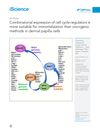 5 citations
,
January 2021 in “iScience”
5 citations
,
January 2021 in “iScience” Using a combination of specific cell cycle regulators is better for safely keeping hair root cells alive indefinitely compared to cancer-related methods.
 2 citations
,
March 2024 in “Meditsinskiy sovet = Medical Council”
2 citations
,
March 2024 in “Meditsinskiy sovet = Medical Council” This review discusses the role of Janus-kinase inhibitors in treating severe atopic dermatitis and alopecia areata, presenting case studies that show their efficacy and calling for further research on long-term effectiveness and safety.
 2 citations
,
November 2019 in “Cancer reports”
2 citations
,
November 2019 in “Cancer reports” This study concluded that the Wnt signaling pathway does not significantly influence human keratoacanthoma development, but the overexpression of Sox9 suggests alternate signaling involvement.
 2 citations
,
October 2015 in “Human Gene Therapy”
2 citations
,
October 2015 in “Human Gene Therapy” The congress highlighted new gene therapy techniques and cell transplantation methods for treating diseases.
 1 citations
,
March 2024 in “Signal transduction and targeted therapy”
1 citations
,
March 2024 in “Signal transduction and targeted therapy” In this review, researchers explored the multifaceted role of NF-κB signaling in various biological processes and diseases, including its interactions with other pathways, and discussed possible therapeutic approaches targeting this pathway for treating conditions like cancer, autoimmune disorders, and COVID-19.
 1 citations
,
January 2023 in “Portuguese Journal of Dermatology and Venereology”
1 citations
,
January 2023 in “Portuguese Journal of Dermatology and Venereology” This review covers the use of JAK inhibitors in treating various dermatological conditions, emphasizing their potential while noting ongoing safety concerns with oral treatments; no new clinical results are provided.
 1 citations
,
October 2021 in “Bőrgyógyászati és Venerológiai Szemle”
1 citations
,
October 2021 in “Bőrgyógyászati és Venerológiai Szemle” This paper reviews current and developing treatments for severe alopecia areata but reports no new clinical findings; the authors highlight the need for standardized treatment protocols.
 1 citations
,
February 2021 in “Farmacja Polska”
1 citations
,
February 2021 in “Farmacja Polska” This article reviews the role of the JAK-STAT pathway in inflammatory skin diseases and considers the therapeutic benefits of JAK inhibitors, presenting them as promising treatments but reports no new experimental results.
 1 citations
,
August 2018 in “bioRxiv (Cold Spring Harbor Laboratory)”
1 citations
,
August 2018 in “bioRxiv (Cold Spring Harbor Laboratory)” This study reports that a novel gain-of-function mutation in TMEM173, combined with polymorphisms in TMEM173 and IFIH1, results in a distinct clinical phenotype with features of SAVI, including alopecia and photosensitivity.
 April 2026 in “Experimental & Molecular Medicine”
 This study used integrated single-cell chromatin and transcriptomic analyses in developing mouse skin to uncover gene networks involved in skin lineage specification and identified Mef2c+ upper fibroblasts as potential precursors to certain muscle-like structures, with cross-species findings in human skin.