91 citations
,
July 2004 in “Journal of Biological Chemistry” This study found that overexpression of the enzyme SSAT in a mouse model significantly reduced prostate tumor size and progression, suggesting it could be a promising strategy against prostate cancer.
 November 2022 in “Journal of the Endocrine Society”
 This case report highlights a novel NR5A1 gene variant associated with a severe 46,XY disorder of sex development, stressing the importance of genetic screening in similar cases.
August 2024 in “Latin American Journal of Development” In this review, the authors highlight the involvement of the 5α-reductase enzyme family in androgen-dependent disorders, noting the discovery of a novel isoform, SRD5A3, which is overexpressed in cancers with poor prognosis.
52 citations
,
June 1991 in “Journal of Virology” In this study, researchers found that the ability of hamster polyomavirus to cause lymphoid tumors in Syrian hamsters may be linked to its association with the tyrosine kinase p59fyn.
January 2021 in “Research Square (Research Square)” This study found that STAT3 directly inhibits the sheep FST gene and cell proliferation, shedding light on the molecular mechanisms of hair follicle development and wool characteristics.
8 citations
,
July 2023 in “Inflammation and Regeneration” This study found that ALKBH5 plays a critical role in wound re-epithelialization by enhancing the stability of PELI2 mRNA, and its absence delays wound healing. Supplementation with PELI2 can partially rescue this delay, pointing to potential new therapies for stubborn wounds.

In this study, researchers developed de novo designed hetero-bifunctional proteins as an alternative approach for targeted protein degradation, successfully targeting BCL-xL for degradation in cells and inducing apoptosis, which may expand the range of addressable E3 ligases and disease targets.
April 2026 in “Future Medicinal Chemistry” This article discusses the impact of PROTACs technology in transforming drug discovery with its novel degradation mechanism, but it reports no new experimental findings.
 14 citations
,
February 2018 in “Psychoneuroendocrinology”
14 citations
,
February 2018 in “Psychoneuroendocrinology” This study found that male 5α-reductase 2 knockout mice showed deficits in social dominance behaviors and reduced dopamine receptor binding in a brain region related to social ranking.
July 2024 in “Journal of Investigative Dermatology” Sex and race affect immune responses and treatment outcomes in Hidradenitis suppurativa.
 13 citations
,
August 1995 in “The Journal of Steroid Biochemistry and Molecular Biology”
13 citations
,
August 1995 in “The Journal of Steroid Biochemistry and Molecular Biology” This study found that the pH dependency of rat steroid 5α-reductase type II isozyme significantly affects its kinetic properties, including Vmax and Km, suggesting past discrepancies in literature may arise from these pH variances during assays.
56 citations
,
December 2002 in “The Journal of Clinical Endocrinology & Metabolism” This study suggests that in human osteoblast-like cells, the 5alpha-reductase type 1 isozyme predominantly catalyzes the conversion of testosterone to DHT, which may play a role in bone homeostasis.
March 2025 in “Journal of Investigative Dermatology” January 2026 in “Preprints.org” In this study, researchers identified four novel variants in the FGF5 gene associated with the long-haired phenotype in dogs, suggesting additional unexplored genetic factors contribute to this trait beyond the known Lh1-Lh5 alleles.
 57 citations
,
November 2006 in “International Journal of Cancer”
57 citations
,
November 2006 in “International Journal of Cancer” This study found that the SRD5A2 A49T A variant is associated with an increased risk of prostate cancer, lower circulating 3α‐diolG levels, and a decreased risk of baldness.
 88 citations
,
August 2019 in “Nature communications”
88 citations
,
August 2019 in “Nature communications” In this study, researchers identified a specific T cell receptor associated with carbamazepine-induced severe cutaneous adverse reactions, demonstrating its potential for therapeutic development in patients with the HLA-B*15:02 genotype.
 11 citations
,
May 1996 in “The Journal of clinical endocrinology and metabolism/Journal of clinical endocrinology & metabolism”
11 citations
,
May 1996 in “The Journal of clinical endocrinology and metabolism/Journal of clinical endocrinology & metabolism” This study reported that 5 alpha-reductase type 2 is the predominant enzyme in pubic skin fibroblasts across normal men, women, and hirsute patients, suggesting potential treatment options for idiopathic hirsutism.
3 citations
,
June 2021 in “Frontiers in genetics” This study found that STAT3 directly inhibited the activity of the sheep FST gene promoter, consequently reducing cell proliferation and promoting a better understanding of hair follicle development mechanisms.
This study identified the FGF5:c.578C>T variant as linked to long hair in Akitas in Japan and suggests that genetic testing could help improve their breeding practices and welfare.
3 citations
,
July 2023 in “Biomolecules” This study reports that some human cell surface HLA-I molecules (including HLA-B27) can appear without their usual peptide component, potentially altering immune interactions, influencing arthritis development in specific mice models, and exhibiting upregulation in certain cancer cells.
 23 citations
,
December 2017 in “Scientific Reports”
23 citations
,
December 2017 in “Scientific Reports” This study found that the ARL15 gene affects adipocyte differentiation and adiponectin secretion, and suggests that ARL15 haploinsufficiency may predispose individuals to lipodystrophy.
35 citations
,
July 2010 in “The FEBS journal” In this study, researchers identified a highly reactive, isozyme-specific sequence for TGase 3, contributing to understanding its distinct functional role and activity distribution in the mouse epidermis.
33 citations
,
October 1996 in “Journal of Investigative Dermatology” January 2026 in “Dermatologic Therapy” This study found that elevated tissue RBP4 levels correlate with disease severity in alopecia areata and decrease after effective baricitinib treatment, while the rs3758539 polymorphism is linked to disease susceptibility but not to treatment response.
July 2025 in “Journal of Investigative Dermatology” 25 citations
,
March 2004 in “Regulatory Toxicology and Pharmacology” Using testosterone-stimulated weanling rats can effectively replace castrated rats for anti-androgen testing, reducing animal stress.
9 citations
,
August 2011 in “The World Journal of Men s Health” This study concluded that administering 5-alpha reductase inhibitors before photoselective vaporization of the prostate increased hemoglobin change, lasing time, and energy required during the procedure compared to controls.
 December 2023 in “Journal of ethnopharmacology”
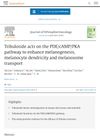
 This study found that tribuloside, a flavonoid from Tribulus terrestris L., enhances melanin production in human melanocytes, zebrafish, and human skin samples without causing toxicity, potentially through inhibiting PDE to increase cAMP levels and promote the melanin biosynthesis pathway.
 3 citations
,
February 2014 in “Asian Pacific journal of tropical medicine”
3 citations
,
February 2014 in “Asian Pacific journal of tropical medicine” This study observed that Wnt5a mRNA expression in mice correlates with the hair cycle and inhibits hair follicle growth by antagonizing the Wnts pathway.
6 citations
,
July 2024 in “Heliyon” This study examined the evolutionary and functional homology of steroid 5α-reductase and DET2 proteins, identifying protists as a common ancestor, and discovered a new subclass DET2-like in plants, potentially involved in polyprenol reduction.