10 citations
,
November 2021 in “International journal of molecular sciences” This review discusses the role of keratin-associated proteins in the growth and characteristics of wool and hair fibres from sheep and goats, and highlights areas for future research, but it presents no new findings.
6 citations
,
December 2021 in “International Journal of Endocrinology” This study found that the INSR His1058 C/T SNP does not increase the risk of developing PCOS among Kashmiri women.
4 citations
,
July 2024 in “Animals” In this study on Chinese Tan sheep, researchers discovered a variant of the KRTAP19-5 gene associated with decreased curvature of fine wool fibres, highlighting potential genetic markers for improving wool quality.
3 citations
,
October 2024 in “Animals” This study identified three genes in the ovine KAP13 family on chromosome 1 and found that a specific allele of KRTAP13-2 is associated with improved wool fibre diameter uniformity in Chinese Tan sheep, suggesting its potential use as a marker for enhancing wool traits.
2 citations
,
August 2022 in “Animals” In this study, a specific genetic variant of KRTAP6-2 in Longdong cashmere goats was associated with finer cashmere fiber diameter, suggesting its potential as a molecular marker for breeding improvements.
1 citations
,
April 2025 in “Animals” In this study, nucleotide sequence variation in the KRTAP13-3 gene was associated with changes in heterotypic hair fibre diameter variation in Chinese Tan sheep.
1 citations
,
September 2024 in “Animals” In this study, researchers identified six unique genetic variants of a sheep gene, KRTAP19-3, with specific variants linked to changes in wool fibre traits, such as increased fibre diameter variability, suggesting these genetic differences affect wool characteristics in Chinese Tan sheep.
1 citations
,
August 2024 in “Animals” This study suggests that variations in α-keratin proteins influence the structure and characteristics of wool fibers, indicating that keratin genes could serve as useful markers for identifying different wool traits.
1 citations
,
October 2023 in “Animals” This study explored the genetic basis of fiber diameter in alpacas, identifying candidate genomic regions including four significant areas on VPA6, VPA9, VPA29, and an unassigned scaffold, using whole genome association analysis and a custom SNP microarray.
1 citations
,
April 2021 in “IntechOpen eBooks” This review examines genetic variation in the ovine KRTAP1.1 gene and its potential impact on wool quality, reporting no new findings but suggesting opportunities for developing gene markers for wool and pelt traits.
1 citations
,
April 2009 in “한국생물공학회 학술대회” In this study, onion (Allium cepa) extracts promoted hair growth in an alopecia model in mice, with the effect appearing unrelated to the presence of the polyphenol quercetin.
September 2025 in “Jurnal Penelitian Pendidikan IPA” In this study, researchers identified two significant genetic polymorphisms in the 3'-UTR of the HSP70 gene in Moa buffalo, which may play an important role in heat adaptation, providing insights for conservation and performance improvement in tropical climates.

In this study, researchers found that the keratin-associated protein 36-1 gene (KRTAP36-1) allele C is linked to variations in mean fibre curvature of fine wool in Chinese Tan lambs, suggesting its role in their distinctive curly coat.
July 2025 in “International Journal of Molecular Sciences” This genetic study identified four new keratin-associated protein genes in sheep, revealing significant sequence variation and suggesting complex evolutionary dynamics, with unique variants in some sheep breeds linking them to Romanov sheep ancestry.
 October 2024 in “Frontiers in Veterinary Science”
 This study identified key proteins, FKBP10 and FBN2, that promote the growth cycle of secondary hair follicles in cashmere goats, with higher expression in the anagen phase, offering insights into mechanisms potentially enhancing cashmere yield and quality.

This study analyzed the genetic variations of the KAP20-1 gene in Chinese Tan sheep lambs and found that the G variant was linked to an increased mean fibre curvature in their fine wool fibres, potentially influencing breeding strategies for this wool trait.
 November 2023 in “BMC genomics”
 Using a multi-omics analysis, this study identified key regulators like PLA2G12A, KRT79, and prostaglandin B2 that influence cashmere fineness, providing crucial data for understanding the molecular mechanisms behind this trait in Liaoning cashmere goats.
 September 2022 in “Canadian journal of animal science”
 This study found that polymorphisms in KRTAP13.1, KRTAP27-1, and KRTAP24-1 were significantly associated with fiber diameter in Jiangnan cashmere goats, which may aid future breeding and conservation efforts.
 April 2011 in “한국생물공학회 학술대회”
 This study found that an anti-atopic lotion containing fucoidan helped heal skin damage in hairless mice with atopic dermatitis by reducing skin thickness and modulating immune responses.
6 citations
,
April 2025 in “Food Bioscience” This study found that fish scale collagen peptide significantly promoted wound healing in mice, with the <1 kDa fractions enhancing collagen synthesis and reducing inflammation, suggesting potential clinical benefits.
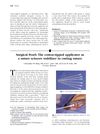 July 2005 in “Journal of The American Academy of Dermatology”
 This article discusses the various uses of the cotton-tipped applicator in dermatologic surgery, highlighting its innovative role as a suture scissors stabilizer, but reports no clinical results.
SMP creates illusion of full hair, addressing various issues and bringing happiness to those with thinning hair.
 6 citations
,
November 2016 in “Journal of Plastic Reconstructive and Aesthetic Surgery”
6 citations
,
November 2016 in “Journal of Plastic Reconstructive and Aesthetic Surgery” This survey found support among BAAPS members for using procedure-specific consent forms to improve clarity and consistency in patient information for aesthetic procedures.
July 2024 in “Journal of Investigative Dermatology” Human epidermal stem cells divide faster than previously thought.
8 citations
,
January 2017 in “Journal of Cutaneous and Aesthetic Surgery” This study found that scalp micropigmentation provided moderate to great improvement in scalp coverage and patient satisfaction for those with hair loss, with any adverse effects being mild and temporary.
 1 citations
,
February 2004 in “Dermatologic Surgery”
1 citations
,
February 2004 in “Dermatologic Surgery” This study found that using deep plane fixation during scalp surgeries significantly reduced closure tension and allowed for increased tissue excision compared to standard techniques without fixation.
4 citations
,
December 2021 in “Journal of clinical laboratory analysis” This study identified a splicing-site deletion in the DCAF17 gene associated with Woodhouse-Sakati syndrome in a large consanguineous pedigree, leading to typical phenotypic features.
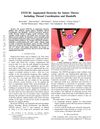 April 2024 in “arXiv (Cornell University)”
 In this study, the researchers developed an advanced robotic system called STITCH for performing suture tasks, which completed an average of 2.93 sutures autonomously and 4.47 sutures with human intervention in physical trials.
 25 citations
,
January 2014 in “Annals of Dermatology”
25 citations
,
January 2014 in “Annals of Dermatology” Sfrp2 increases during hair follicle catagen phase and slows keratinocyte growth.
14 citations
,
February 2008 in “Stem Cells and Development” This study identified several genes highly expressed in germ-line stem cells that are also common in hematopoietic stem cells, potentially aiding the exploration of fundamental stem cell commonalities.