December 2025 in “Advanced Healthcare Materials” This study introduces a spherical skin model that effectively mimics key features of human skin, offering a scalable and rapid alternative for non-animal dermatological and cosmetic testing.
99 citations
,
May 1998 in “Journal of biological chemistry/The Journal of biological chemistry” This study found that small proline-rich proteins modify the biomechanical properties of cornified cell envelopes in rodent forestomachs, potentially affecting the tissue's ability to withstand mechanical stress.
 77 citations
,
February 2017 in “Stem Cell Reports”
77 citations
,
February 2017 in “Stem Cell Reports” This study found that activation of Wnt/β-catenin signaling in mouse testes promotes spermatogonial differentiation and reduces the stem cell pool, with SHISA6 inhibiting this process and maintaining stem cell characteristics.
4 citations
,
August 2024 in “International Journal of Molecular Sciences” This study found that a combination of natural compounds (escin, bromelain, ginkgo biloba, and sage miltiorrhiza) reduced platelet adhesion to activated endothelium in laboratory settings by inhibiting adhesion molecule transcription and reducing pro-inflammatory cytokines, potentially preventing initial steps of the coagulation cascade.
36 citations
,
February 2016 in “British journal of pharmacology” This study found that SIRT1 negatively regulates fibroblast activation and excessive scar formation, suggesting it may be a promising drug target for treating hypertrophic scars.
13 citations
,
December 2005 in “Traffic” In this study, researchers found that syntaxin 9, a novel syntaxin family member, interacts specifically with the epidermal growth factor receptor and may influence its transport and signaling in some epithelial cells.
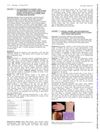
This case report details a child with a specific TNFAIP3 mutation manifesting as a severe SLE/SS phenotype, expanding the known phenotype for this genetic variant.
This study found that the Arabidopsis thaliana protein Formin 2 localizes to plasmodesmata and is crucial for regulating their permeability by anchoring actin filaments, which affects virus susceptibility.
August 2026 in “British Journal of Dermatology” sCD83 shows promise for treating hair loss by promoting growth and reducing inflammation.
19 citations
,
May 2001 in “Endocrinology” This study suggests that Mrp3 may play a role in both wound healing and the hair follicle cycle as a growth factor and/or angiogenesis factor.
 April 2025 in “Journal of Investigative Dermatology”
 This study found that fibronectin supports hair follicle regeneration by influencing stem cell behavior through integrin-dependent mechanotransduction, highlighting its potential role in epidermal renewal.
 February 2026 in “Journal of the Korean Society of Cosmetology”
 This study found that among older adults in Korea, satisfaction with scalp and hair-care services and perceived effectiveness in managing hair loss were the strongest predictors of their intention to continue using these services, with self-esteem and relational factors also contributing positively.
 July 2022 in “Journal of Veterinary Medical Research”
 This research outlines the significant morbidity and economic impact of dermatophytosis, a contagious fungal disease affecting skin, hair, and nails, with heightened severity in immune-compromised individuals and poor environmental conditions.
11 citations
,
February 2011 in “International Journal of Molecular Sciences” This article reviews sPLA2-mediated phospholipid metabolism using sPLA2 transgenic/knockout mice and lipid mass spectrometry, offering insights into the distinct roles of sPLA2 enzymes in various biological events.
 4 citations
,
January 2017 in “Biological & pharmaceutical bulletin”
4 citations
,
January 2017 in “Biological & pharmaceutical bulletin” This study found that inhibiting arachidonate 12-lipoxygenase (ALOX12) may enhance hair cuticle maturation by increasing S100A3 protein citrullination and promoting cuticular differentiation in isolated human hair follicles.
6 citations
,
June 2025 in “Cell Reports” This study found that the IL-33/ST2 axis may protect against skin carcinogenesis by promoting cross-talk between epithelial cells and regulatory T cells to minimize mutations and contain tissue damage.
 September 2025 in “bioRxiv (Cold Spring Harbor Laboratory)”
 This study found that human dermal papilla cells are surrounded by a basement membrane-like extracellular matrix, which maintains their aggregated structure without strong cell‒cell contacts.
 3 citations
,
May 2022 in “Oncogene”
3 citations
,
May 2022 in “Oncogene” This study revealed that Vav2 and Vav3 play roles in regulating hair follicle bulge stem cells in normal conditions and cancer stem cell activation and remodeling in mice.
 25 citations
,
April 2015 in “Journal of Investigative Dermatology”
25 citations
,
April 2015 in “Journal of Investigative Dermatology” This study found that Gsdma3 mutation in mice allows hair follicles to bypass a typical telogen phase and directly enter the anagen phase, suggesting Gsdma3's role in hair cycle transitions by regulating Wnt signaling.
September 2008 in “Faculty Opinions – Post-Publication Peer Review of the Biomedical Literature” Loss of Dsc3 function in the epidermis impaired cell adhesion, leading to blistering and hair loss, which suggests a potential cause of PV-like skin diseases according to this study.
89 citations
,
May 2005 in “Stem Cells” This study found that keratinocyte stem cells in mouse skin are closely related to side population or BCRP1-positive cells based on their localization and marker expression.
 49 citations
,
October 2009 in “Cancer research”
49 citations
,
October 2009 in “Cancer research” This study found that disrupting Stat3 in keratinocyte stem cells of mice reduced skin tumor formation by approximately 80%, suggesting Stat3's role in tumor initiation survival mechanisms.
September 2022 in “European Journal of Dermatology” This study identified a novel pathogenic splice-site variant of the LAMB3 gene in patients with junctional epidermolysis bullosa, highlighting the importance of gene sequencing for diagnosis.
32 citations
,
March 2018 in “Neoplasia” This study suggests that nephronectin (NPNT) could serve as a novel prognostic marker for poor prognosis in a subgroup of breast cancer patients, associated with specific NPNT staining patterns.
 83 citations
,
June 2020 in “Materials & Design”
83 citations
,
June 2020 in “Materials & Design” In this study, ACF sponges with 10% fucoidan significantly promoted wound healing and hair follicle regeneration in rats, showing improved hemostatic and antibacterial performance compared to other formulations.
1 citations
,
September 2019 in “Journal of Investigative Dermatology” This study developed a pemphigus model in mice showing that anti-Desmocollin 3 and anti-Desmoglein 3 antibodies lead to more severe disease, suggesting diverse antigens contribute to varying human pemphigus phenotypes.
34 citations
,
May 2001 in “Endocrinology” This study found that MRP3 is induced in wound edge keratinocytes during wound healing and may play a role as a growth or angiogenesis factor in this process and the hair follicle cycle.
 31 citations
,
October 2010 in “Progress in lipid research”
31 citations
,
October 2010 in “Progress in lipid research” This review discusses the role of LPA(3) in embryo implantation and its genetic connection with prostaglandin signaling, but reports no new clinical results.
 6 citations
,
October 2012 in “Journal of Heredity”
6 citations
,
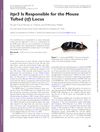
October 2012 in “Journal of Heredity” This study identified the Itpr3 gene as responsible for the tufted hair loss phenotype in the BTBR mouse strain.
This study found that the protein Formin 2 helps regulate cell-to-cell transport in thale cress by stabilizing actin filaments at plasmodesmata, with its absence leading to increased permeability and vulnerability to viral infections.