
This study developed and validated an optimized culture method for dermal papilla cells, leading to the establishment of an immortalized cell strain called iDP6, which resembles primary DP cells in key characteristics.
1 citations
,
February 2020 in “Regenerative Medicine” This article provides industry updates on stem cell research and regenerative medicine from December 2019 and reports no new research findings.
8 citations
,
January 2013 in “Australasian journal of dermatology” This review examines trichodysplasia spinulosa, a rare virus-linked skin condition in immunosuppressed individuals, noting its clinical features and highlighting antiviral treatment efficacy, without new clinical results.
 20 citations
,
January 2021 in “GeroScience”
20 citations
,
January 2021 in “GeroScience” This study found that administering spermidine to aged mice for six months significantly reduced various age-related conditions, including brain, heart, kidney, liver issues, and hair loss, possibly due to decreased telomere attrition.
36 citations
,
November 2005 in “Forensic Science International” This study developed a new STR typing strategy for forensic casework, enabling the simultaneous analysis of 11 polymorphic systems, particularly useful for limited or degraded DNA samples such as telogen hair roots.
 December 2013 in “Biomedical and biopharmaceutical research”
 This review discusses technological advances in liposome systems for drug delivery and reports no new clinical results; it highlights the clinical acceptance and market presence of liposomal products.
71 citations
,
January 2011 in “Journal of cutaneous pathology” This case report describes the first confirmed instance of trichodysplasia spinulosa in a child with Down syndrome and leukemia, linking it to the TS-associated polyomavirus.
2 citations
,
October 2021 in “Experimental Cell Research” This study found that injectable platelet-rich fibrin (i-PRF) enhances hair follicle regeneration in vitro by promoting human dermal papilla cell proliferation, migration, and trichogenic inductivity, with varying effects depending on concentration.
15 citations
,
March 2014 in “Acta naturae” This study found that human dermal papilla cells reprogram into induced pluripotent stem cells with higher efficiency than dermal fibroblasts, demonstrating their potential as an alternative source for iPS cells.
 4 citations
,
January 2018 in “Cosmetics”
4 citations
,
January 2018 in “Cosmetics” This review discusses the potential use of spin traps in cosmetic products to limit reactive oxygen species generated by pollution, emphasizing the need for further research due to toxicity and regulatory concerns.
 3 citations
,
May 2021 in “Archiv der Pharmazie”
3 citations
,
May 2021 in “Archiv der Pharmazie” This study found that the FGF-2 mimetic SUN11602 and VEGF mimetic ONO-1301 had unique effects on skin fibroblasts and keratinocytes, indicating potential for improving wound healing.
 1 citations
,
June 2025 in “Journal of Allergy and Clinical Immunology Global”
1 citations
,
June 2025 in “Journal of Allergy and Clinical Immunology Global” This study describes the case of a young boy with Netherton syndrome who showed significant improvements in skin inflammation, quality of life, and hair growth after receiving dupilumab, with a marked decrease in serum IgE levels observed following treatment.
32 citations
,
August 2016 in “Science Signaling” This study developed PiSCES biosignatures that distinguished alopecia areata patients from controls, revealing enhanced basal TCR signaling and a potential disease-specific signaling network signature.
1 citations
,
April 2024 in “PubMed” This article reviews the mechanisms and applications of photobiomodulation in trauma repair and medical aesthetics, but reports no new clinical results while highlighting its growing clinical significance.
 39 citations
,
June 2017 in “Scientific Reports”
39 citations
,
June 2017 in “Scientific Reports” Different lab conditions and light treatment methods change how human skin cells respond to light therapy.
 September 2019 in “Journal of Investigative Dermatology”
 This study found that a combination of botanical extracts from jasmine, Longoza, peony, and lily significantly increased a6 and b4 integrin protein expression in human skin cells, suggesting complementary effects that could enhance skin quality.
37 citations
,
December 2018 in “Frontiers in Immunology” This study found that fibroin/gelatin and spidroin microparticles increased re-epithelialization rates and inhibited scar formation in mouse models of deep skin wounds.
11 citations
,
November 2002 in “Dermatologic Surgery” This study found that IPL treatment in females with facial hirsutism can trigger hair growth in untreated areas near those that undergo photoepilation, especially in patients with polycystic ovarian syndrome.
January 2014 in “Institutional Repositories DataBase (IRDB)” The study observed that cell spheres formed from mesenchymal cells of newborn mice skin exhibited upregulation of markers linked to hair follicle regeneration, suggesting a potential hibernation-like state for maintaining viability.
September 2019 in “Ukrainian Journal of Dermatology Venerology Cosmetology” In this study, 90 pediatric patients with scalp microsporia were treated with a combination of griseofulvin, Antral, sertaconazole nitrate cream, and Bion 3 Kid, resulting in complete recovery, reduced treatment duration, and prevention of disease recurrence and colds, with high drug tolerability.
22 citations
,
August 1999 in “Mechanisms of Development” This study identified two novel genes, pmg-1 and pmg-2, expressed in various skin and gland tissues and potentially involved in the differentiation of epithelial cells in epidermal appendages.
 3 citations
,
January 2023 in “Materials horizons”
3 citations
,
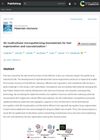
January 2023 in “Materials horizons” This study developed 3D micropatterns with magnesium silicate nanospheres that mimic vessels and hair follicles for potential use in skin regeneration by reconstructing vasculature and promoting hair growth.
This abstract provides contact information for Dr. Ban Kamoona at the Medical University – Sofia and contains no research findings.
 1 citations
,
September 2010 in “The journal of investigative dermatology/Journal of investigative dermatology”
1 citations
,
September 2010 in “The journal of investigative dermatology/Journal of investigative dermatology” This article reviews a variety of research presentations from the Society for Investigative Dermatology's annual meeting, highlighting advances in dermatological research without reporting new clinical results.
 January 2026 in “RIGGS Journal of Artificial Intelligence and Digital Business”
 This study analyzed the formulation and stability of pomade containing peppermint oil and minoxidil, determining that a particular formulation with 1% paraffin yielded optimal physical and stability characteristics for promoting hair growth, making it the best choice among the tested options.
 10 citations
,
January 2007 in “Journal of cosmetic and laser therapy”
10 citations
,
January 2007 in “Journal of cosmetic and laser therapy” In this study, a new IPL device effectively reduced hair regrowth with high patient satisfaction, particularly in individuals with coarse dark hair and darker skin, despite repeated sessions needed for lighter hair and skin.
April 2020 in “The FASEB journal” In in-vitro experiments, this study found that poncirin showed higher inhibitory activity against JAK3 than tofacitinib, suggesting potential for alopecia areata treatment.
October 2014 in “Dialnet (Universidad de la Rioja)” This research concluded that Snail2's absence in myeloid progenitors promotes tumor progression in mice, and specific zinc fingers are crucial for Snail1 and Snail2's roles in establishing epithelial-to-mesenchymal transition.
 24 citations
,
December 2009 in “Future Medicinal Chemistry”
24 citations
,
December 2009 in “Future Medicinal Chemistry” This study identified new potential targets and indications for several marketed drugs using in silico profiling, suggesting opportunities for drug repositioning.
February 2025 in “International Journal of Impotence Research”