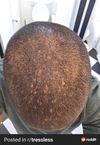
Fibrosing Alopecia in a Pattern Distribution in Two Brothers with Pili Multigemini

    July 2015
    B. Kamoona, Dimitrina Serafimova, Valentina Broshtilova, ,
    TLDR Genetic factors might cause fibrosing alopecia linked to hair shaft abnormalities.
    The document described a case study of fibrosing alopecia in a pattern distribution observed in two brothers who also had pili multigemini, a rare hair shaft disorder. This condition was characterized by the presence of multiple hair shafts emerging from a single follicle. The study highlighted the potential genetic link and familial occurrence of this type of alopecia, suggesting that genetic factors might play a role in its development. The findings contributed to the understanding of the relationship between fibrosing alopecia and hair shaft abnormalities, although the study was limited by its small sample size of only two individuals.
    Discuss this study in the Community →

    Related Community Posts Join

    6 / 254 results
      If You Have DUPA, PLEASE READ THIS: Everyone Should Be Scalp Biopsied

      community If You Have DUPA, PLEASE READ THIS: Everyone Should Be Scalp Biopsied

      in Research  830 upvotes 1 year ago
      Scalp biopsies are crucial for diagnosing hair loss conditions like Diffuse Unpatterned Alopecia (DUPA) and retrograde hair loss, as treatments like finasteride and dutasteride may not be effective if other conditions are present. Combining PPAR-GAMMA agonists with retinoids could improve treatments for conditions like Lichen Planopilaris.

      community I tried salt water to stop the DHT itch

      in Treatment  58 upvotes 3 years ago
      Treating the itch associated with male pattern baldness, which is believed to be caused by DHT. Potential treatments discussed include salt water, finasteride, ketoconazole, and RU58841.

      community One year of progress (Fin, 1mg)

      in Is this regrowth?  281 upvotes 11 months ago
      The user started finasteride (1mg) a year ago for hair thinning, experiencing stabilization but not significant regrowth. Suggestions included adding minoxidil, microneedling, and considering a hair transplant for improved results.

      community Fibrosing alopecia in a pattern distribution

      in Research/Science  14 upvotes 1 year ago
      A user has been experiencing hair loss for 4 years, with treatments like minoxidil, finasteride, and various supplements proving ineffective. They were diagnosed with fibrosing alopecia in a pattern distribution, a condition that may require a combination of anti-inflammatory and hair growth treatments.

      community scarring alopecia awareness in this community

      in Chat  33 upvotes 3 years ago
      Lichen Planopilaris (LPP), a form of permanent hair loss, which can be mistaken for seborrheic dermatitis and is characterized by scalp itching, burning, redness, and dandruff. Treatment options discussed include steroidal creams, finasteride, minoxidil, and RU58841.

      community Losing Hair on Dutasteride? You might have LPP

      in Research/Science  97 upvotes 9 months ago
      Men with hair loss might have lichen planopilaris (LPP), which can mimic androgenetic alopecia, leading to misdiagnosis and ineffective treatment with finasteride or dutasteride. Proper diagnosis, including biopsies, is crucial to distinguish between androgenetic alopecia and conditions like LPP.

    Similar Research

    5 / 1000+ results
      Dermatoscopy of Hair Shaft Disorders

      research Dermatoscopy of Hair Shaft Disorders

      68 citations , August 2012 in “Journal of the American Academy of Dermatology”
      Dermatoscopy is a useful tool for diagnosing hair disorders and can help choose samples for more detailed analysis.
      Hair Loss in Children

      research Hair Loss in Children

      30 citations , August 1983 in “Pediatric Clinics of North America”
      Most hair loss in children is caused by a few common conditions, and it's important to diagnose these properly and support the child's mental health.
      The Genetics of Hair Shaft Disorders

      research The Genetics of Hair Shaft Disorders

      59 citations , June 2008 in “Journal of The American Academy of Dermatology”
      The article explains the genetic causes and symptoms of various hair disorders and highlights the need for more research to find treatments.