1 citations
,
February 2023 in “Tropical Journal of Pharmaceutical Research” This study found that polysulfonic acid mucopolysaccharide may reduce skin scarring in rats by influencing the TGF-β1/Smad signaling pathway.
1 citations
,
April 2023 in “International journal of molecular sciences” In this study, AMACO was found to be non-essential for the formation or function of anchoring cords in mice, despite its presence in the structure.
 April 2018 in “Journal of Investigative Dermatology”
 In a clinical phase I/IIa study, subcutaneous injections of the peptide FOL-005 increased hair growth by 8% and were safe for treating alopecia.
 April 2016 in “The Journal of Sexual Medicine”
 This research overview discusses Post-Finasteride Syndrome, presenting data from an FDA database, but it does not report any new clinical findings.
 January 2024 in “JEADV clinical practice”
 This study reported high patient satisfaction with multidisciplinary shared medical appointments for alopecia areata and frontal fibrosing alopecia, with participants appreciating the educational and supportive group environment.
3 citations
,
August 2024 in “The Journal of Cell Biology” This study demonstrated that in live rodents, actin filaments adjust their structure to facilitate membrane transfer between cellular compartments with different biophysical properties.
39 citations
,
February 2024 in “Small” This review discusses the evolution and development of smart and multifunctional microneedles, highlighting their potential future importance in medical applications, but it reports no new experimental results.
December 2024 in “Food Bioscience” In a depilation mouse model, this study found that Limosilactobacillus fermentum MF10 promoted hair growth and increased follicle size by activating skin Wnt/β-catenin signaling and modulating gut microbiota, with effects comparable to the positive control finasteride.
 4 citations
,
April 2018 in “Biotechnology Letters”
4 citations
,
April 2018 in “Biotechnology Letters” Human growth factor 20 can boost mouse whisker growth.
27 citations
,
September 2013 in “The FASEB Journal” This study reports that the loss of the protein Memo in mice leads to a reduced lifespan and suggests that Memo is a key regulator of FGFR signaling and vitamin D production.
 January 2011 in “Journal of Human Genetics”
 This study found a severe MBTPS2 gene mutation in a Japanese IFAP syndrome patient, suggesting other factors may influence the syndrome's clinical features compared to previously studied patients.
 July 2018 in “European Medical Journal”
 This meeting review discusses recent advances in systemic psoriasis treatments, emphasizing the impact of dimethylfumarate monotherapy on understanding psoriasis and treatment strategies; it reports no new clinical results.
January 2009 in “Xumu shouyi xuebao” In this study, researchers successfully established a stable transgenic sheep fibroblast cell line containing an artificially synthesized spider dragline silk protein gene.
January 2011 in “Zhongguo nongye Kexue” This study successfully established a transgenic sheep fibroblast cell line expressing the spider dragline silk protein gene, laying groundwork for developing transgenic sheep with this capability in hair follicles.
 1 citations
,
October 2023 in “Journal of the Pakistan Medical Association”
1 citations
,
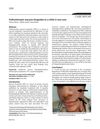
October 2023 in “Journal of the Pakistan Medical Association” This source describes a case of a 12-year-old male diagnosed with folliculotropic mycosis fungoides, presenting with an asymptomatic, erythematous plaque. Histology and immunohistochemistry confirmed FMF, which is typically rare in children and marked by follicular infiltration by CD4+ lymphocytes.
December 2025 in “Advanced Healthcare Materials” This study introduces a spherical skin model that effectively mimics key features of human skin, offering a scalable and rapid alternative for non-animal dermatological and cosmetic testing.
This study discovered two new species of mites in the hair follicles of squirrel monkeys from South America, potentially causing follicle damage due to secondary infection.
 36 citations
,
June 2021 in “Experimental & Molecular Medicine”
36 citations
,
June 2021 in “Experimental & Molecular Medicine” This study found that mechanical stress activates a WISP-1/Hedgehog signaling axis that contributes to ligamentum flavum hypertrophy and fibrosis, identifying Hedgehog signaling as a potential therapeutic target.
3 citations
,
August 2022 in “Pharmaceuticals” This study observed that a self-emulsifying drug delivery system for finasteride significantly enhanced bioavailability in rats compared to commercial tablets, but the formulation was found to be thermodynamically unstable.
This study found that fibroblasts from highly regenerative mammals, such as spiny mice and rabbits, exhibit unique metabolic characteristics, including a preference for glycolysis and specific mitochondrial features, which may contribute to their resistance to oxidative stress and support tissue regeneration.
 26 citations
,
September 2018 in “Colloids and Surfaces B: Biointerfaces”
26 citations
,
September 2018 in “Colloids and Surfaces B: Biointerfaces” This study reported that a novel liposomal formulation, SP-bFGF-SF-LIP, enhanced bFGF stability and skin permeability, significantly improving hair follicle recovery and wound healing in a mouse model.
September 2012 in “DOAJ (DOAJ: Directory of Open Access Journals)” This study found that D-004, a lipid extract from royal palm fruit, has a moderate antidepressant effect in mice, which may help treat depressive symptoms in patients with benign prostatic hyperplasia.
 10 citations
,
July 2019 in “Journal of Asia-Pacific Entomology”
10 citations
,
July 2019 in “Journal of Asia-Pacific Entomology” This study suggests that ultra-fine powders of steamed and lyophilized mature silkworms may have enhanced pharmacological effects compared to fine powders, possibly due to their smaller particle size.
 November 2022 in “CARDIOMETRY”
 This article discusses the potential benefits of GcMAF and oral MAF, developed by "Saisei Mirai", for cancer and other conditions, but reports no new clinical results.
 February 2022 in “Journal of Clinical and Experimental Investigations”
 This study found that patients with Fibromyalgia Syndrome had more frequent skin symptoms and lower quality of life compared to controls, suggesting the need for a multidisciplinary treatment approach.
 1 citations
,
September 2023 in “Applied sciences (Basel)”
1 citations
,
September 2023 in “Applied sciences (Basel)” This study found that Ishige sinicola ethanol extract and its butanol fraction can protect against lipopolysaccharide-induced muscle atrophy in C2C12 myotubes through antioxidant and anti-inflammatory activities.
 June 2024 in “British Journal of Dermatology”
 This case report highlights the diagnosis of folliculotropic mycosis fungoides in a 15-year-old boy with atypical skin and hair follicle changes, a rare occurrence in pediatric patients.
8 citations
,
January 2005 in “SKINmed Dermatology for the Clinician” This case report details three patients with follicular mycosis fungoides, highlighting an impressive response to bexarotene in advanced cases, suggesting potential for further research on this treatment's effectiveness.
 6 citations
,
May 2022 in “Colloids and Surfaces B: Biointerfaces”
6 citations
,
May 2022 in “Colloids and Surfaces B: Biointerfaces” This study found that oral administration of naturally safe active polypeptides from marine shellfish promoted scarless dermal wound healing in mice, potentially via effects on inflammation, fibroblast activity, and the "skin-gut" axis.
May 2023 in “Spectrochimica Acta Part A: Molecular and Biomolecular Spectroscopy” This study developed a synchronized fluorescence spectroscopic approach to quantify finasteride and tadalafil in various forms, achieving high accuracy with %recoveries of about 99.62% and 100.19% respectively, and demonstrated superior environmental friendliness compared to previous methods.