September 2025 in “Biological Procedures Online” This study presented a refined surgical protocol for a fetal mouse model that improves pregnancy success, reduces fetal loss, and allows for consistent phenotypic outcomes, enhancing research in scarless skin regeneration.
 2 citations
,
August 2018 in “Advances in Animal and Veterinary Sciences”
2 citations
,
August 2018 in “Advances in Animal and Veterinary Sciences” This report documents the first outbreak of a mixed infection of camelpox and dermatophilosis in camels in Iraq, highlighting the need for further study due to the novelty of dermatophilosis in the region.
 6 citations
,
January 2000 in “Dermatology”
6 citations
,
January 2000 in “Dermatology” A girl's severely tangled hair couldn't be fixed and had to be cut due to a rare condition called plica neuropathica.
January 2007 in “Pizhūhish va sāzandigī” This study describes the characteristics and potential research applications of the first hairless guinea pigs in Iran, noting their suitability for allergy, dermal, transplantation, and immunology studies.
 December 2019 in “Mehmet Akif Ersoy Üniversitesi Sağlık Bilimleri Enstitüsü dergisi”
 In this case series, two cats with hypothyroidism and hyperthyroidism achieved clinical remission and normal thyroid function following timely diagnosis and targeted treatment with levothyroxine and methimazole, respectively.
 January 2023 in “Skin appendage disorders”
 This article describes two cases of plica neuropathica, a rare hair condition involving severe matting, and discusses possible contributing factors and diagnosis methods while reporting no new scientific results.
 April 2026 in “Experimental & Molecular Medicine”
 This study used integrated single-cell chromatin and transcriptomic analyses in developing mouse skin to uncover gene networks involved in skin lineage specification and identified Mef2c+ upper fibroblasts as potential precursors to certain muscle-like structures, with cross-species findings in human skin.
 April 2019 in “Journal of Investigative Dermatology”
 This study suggests that dietary grape powder may reduce the severity of atopic dermatitis in a mouse model, highlighting its potential in both prevention and intervention settings.
 April 2019 in “Journal of Investigative Dermatology”
 This study found that bioelectric and biochemical signaling mechanisms coordinate collective cell movement during chicken feather bud morphogenesis, suggesting a potential new angle for research in skin development and wound healing.
 January 2018 in “Stem cell biology and regenerative medicine”
 This paper reviews the role of ATP-dependent chromatin remodeling complexes in epidermal homeostasis, hair regeneration, and skin repair, noting contributions to 3D-genomic organization and suppression of UV-induced hyper-proliferation, without presenting new results.
 January 2021 in “Research journal for veterinary practitioners”
 This study evaluated a commercial topical solution with essential fatty acids for its potential effectiveness in treating skin disorders in rabbits.
 June 2012 in “Springer eBooks”
 Skin changes can indicate starvation and nutritional deficiencies in anorexia nervosa.
 116 citations
,
August 2010 in “Nature”
116 citations
,
August 2010 in “Nature” Scientists turned rat thymus cells into stem cells that can help repair skin and hair.
 67 citations
,
August 2007 in “American Journal of Pathology”
67 citations
,
August 2007 in “American Journal of Pathology” This study found that overexpression of the mineralocorticoid receptor in a mouse model led to premature epidermal barrier development, keratinocyte apoptosis, and postnatal alopecia, indicating new roles for MR signaling in skin physiology.
 36 citations
,
September 2009 in “Journal of Cellular and Molecular Medicine”
36 citations
,
September 2009 in “Journal of Cellular and Molecular Medicine” This review addresses the role of skin-resident adult stem/progenitor cells in skin homeostasis, disease, and cancer development, and reports no new research results.
 2 citations
,
May 2025 in “Infection”
2 citations
,
May 2025 in “Infection” This source underscores the need for a multidisciplinary effort to raise awareness of Demodex and demodicosis, suggesting that prioritizing research, diagnostics, and treatment development could enhance global health outcomes and improve quality of life for affected individuals.
 May 2016 in “Research opinions in animal & veterinary sciences”
 In this study, aspartame consumption during gestation in rats was associated with significant histological changes and increased apoptosis in the skin of their neonatal pups.
 January 2024 in “bioRxiv (Cold Spring Harbor Laboratory)”
 In this mouse study, the absence of the Ascl4 gene did not affect the development of hair follicles, teeth, or mammary glands, suggesting it is non-essential for these processes.
 July 2019 in “Acta Scientiae Veterinariae”
 This case report describes a Canadian Husky dog with sertolioma that exhibited dermatological symptoms and aggressive behavior, both of which improved significantly after surgery.
 January 1990 in “Springer eBooks”
 Some chemicals can permanently or temporarily remove color from skin and hair, which can be distressing and is not well-regulated in cosmetics.

This study suggests that hair follicle dermal stem/progenitor cells play a key role in both hair regeneration and skin wound healing, with potential implications for preventing hair follicle miniaturization linked to aging or alopecia.
 192 citations
,
March 2017 in “Cell host & microbe”
192 citations
,
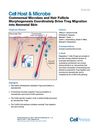
March 2017 in “Cell host & microbe” The researchers reported that hair follicle development and commensal microbe colonization promote the accumulation of regulatory T cells in neonatal skin, with the Ccl20-Ccr6 pathway playing a key role in this process.
 28 citations
,
February 2012 in “PLoS ONE”
28 citations
,
February 2012 in “PLoS ONE” In this study, researchers identified a novel congenital skin disorder in Chesapeake Bay retrievers, linked to a plakophilin-1 deficiency due to a genetic mutation, marking the first known occurrence in an animal species.
 21 citations
,
November 2010 in “Journal of molecular medicine”
21 citations
,
November 2010 in “Journal of molecular medicine” This study found that deleting FoxN1 in specific thymic epithelial cells disrupted the 3D thymic structure and led to age-dependent formation of 2D epithelial cysts, highlighting FoxN1's critical role in thymic morphogenesis.
 7 citations
,
October 1985 in “Genetics Research”
7 citations
,
October 1985 in “Genetics Research” This study found that in chimaeric mice models, the pigment distribution and pattern were influenced by the sash genotype, demonstrating the melanocyte-autonomous nature of the beige and leaden loci.
 98 citations
,
December 2008 in “Journal of Investigative Dermatology”
98 citations
,
December 2008 in “Journal of Investigative Dermatology” This review discusses the possible impacts of prolactin on skin conditions like psoriasis, alopecia, and stress-related dermatoses, emphasizing the need for further research to explore its therapeutic potential.
 81 citations
,
September 2005 in “The American journal of pathology”
81 citations
,
September 2005 in “The American journal of pathology” This study found that activin affects both stromal cells and keratinocytes in skin morphogenesis and repair, with dose-dependent effects on keratinocytes demonstrated through transgenic mouse models.
 40 citations
,
April 2014 in “Genes & Development”
40 citations
,
April 2014 in “Genes & Development” The researchers reported that in mice, prolactin signaling in the skin epithelium inhibits hair follicle stem cell activation, promoting quiescence during periods of high serum prolactin like pregnancy and lactation.
 16 citations
,
October 2020 in “Lipids in Health and Disease”
16 citations
,
October 2020 in “Lipids in Health and Disease” This review explores the current understanding of leptin's role in psoriasis and other skin diseases but reports no new clinical findings, emphasizing that the exact mechanisms of its impact are still being investigated.
 204 citations
,
October 1999 in “EMBO journal”
204 citations
,
October 1999 in “EMBO journal” This study found that overexpression of activin in transgenic mice led to enhanced granulation tissue formation after skin injury due to changes in keratinocyte proliferation and differentiation.