19 citations
,
March 2021 in “Applied Materials Today” This study found that silk fibroin gel induced more pro-regenerative macrophages and hair follicle stem cells, leading to almost scarless skin regeneration compared to alginate gel.
8 citations
,
April 2022 in “Nutrients” In this study, Ishige sinicola extract was observed to improve bone density and structure in an animal model of estrogen deficiency-induced osteoporosis, suggesting its potential as a therapeutic option for postmenopausal osteoporosis by inhibiting osteoclast formation without cytotoxic effects.
49 citations
,
January 2017 in “Journal of Materials Chemistry B” This study developed a hydrogel from glycol chitosan and silica nanoparticles, which showed promise in wound healing by supporting microvessel and hair follicle growth in skin defects.
75 citations
,
August 2018 in “Plant physiology” In this study, researchers found that increased hydrogen sulfide levels in Arabidopsis disrupted actin dynamics through S-sulfhydration, leading to the depolymerization of actin filaments and inhibited root hair growth.
31 citations
,
September 2019 in “Acta Pharmacologica Sinica” August 2026 in “Materials Technology” This study developed a multifunctional TA-MoS2-SF hydrogel for diabetic ulcer treatment, demonstrating enhanced photothermal bactericidal effects, immune environment remodeling, and fibroblast proliferation, suggesting it may serve as an effective 'antibacterial-immunomodulatory-repair' strategy.
29 citations
,
February 2019 in “Journal of Microbiology and Biotechnology” This study found that silibinin may promote hair growth by increasing proliferation and activating the AKT and Wnt/β-catenin signaling pathways in 3D cultured human dermal papilla spheroids.
26 citations
,
April 2021 in “Materials & Design” This study found that composite chitosan nanofibers containing luminescent europium complexes can sensitively detect Cu2+ concentrations as low as 10 μmol/L, making them suitable for use in biological systems.
36 citations
,
January 1994 in “Cell and Tissue Research”  19 citations
,
July 2006 in “Acta crystallographica”
19 citations
,
July 2006 in “Acta crystallographica” This study determined that previous reports mistakenly identified different polymorphs of furosemide and finasteride, which are actually identical, due to incomplete data collection in single-crystal X-ray diffraction analysis.
This study compiles data on the microstructural and cytotoxic properties of nano physical sunscreens, emphasizing the need for a technology platform to assess nanomaterial characteristics due to their growing use in cosmetics.
 61 citations
,
September 2016 in “NPG Asia Materials”
61 citations
,
September 2016 in “NPG Asia Materials” This study developed thermo-reversible glycol chitosan hydrogels that effectively form and maintain 3D cell spheroids within one day, offering a simplified method for creating biologically realistic cultures for tissue regeneration and drug screening applications.
January 2020 in “대한미용학회지” This study reported that both gray and black-brown hair had decreased sulfur content after dyeing with a permanent hair dye mixture consisting primarily of carbon, oxygen, nitrogen, and sulfur.
 7 citations
,
January 1995 in “Journal American Society of Mining and Reclamation”
7 citations
,
January 1995 in “Journal American Society of Mining and Reclamation” This review discusses the forms of selenium and sulfur in soil, their plant absorption, and risks of toxicity to livestock, emphasizing selenium's role in selenosis and sulfur's link to polioencephalomalacia in ruminants; it reports no new experimental results.
 16 citations
,
November 2020 in “International journal of pharmaceutics”
16 citations
,
November 2020 in “International journal of pharmaceutics” This study found that PEGylation of nanoparticles enhances their penetration into hair follicles, with higher molecular weight PEG resulting in deeper follicular delivery.
62 citations
,
December 2007 in “Journal of biological chemistry/The Journal of biological chemistry” This study found that enzymatic conversion of Arg-51 in S100A3 protein to citrulline promotes homotetramer assembly, potentially increasing Ca²⁺ binding required for hair cuticular barrier formation.
 January 2006 in “Journal of Society of Cosmetic Chemists of Japan”
 This study found that a new hybrid polymer containing hydrolyzed protein and silicone effectively improved moisture feel and prevented discoloration in dyed hair, particularly benefiting damaged hair.
This study reports that carbamazepine can self-assemble into stable channel structures without guest polymers, while griseofulvin relies on guest molecules for structural stability in drug-polymer inclusion complexes.
 February 2024 in “Journal of Geochemical Exploration”
 Selenium levels in soil, crops, and human hair in Northwest China are within safe limits.
September 2025 in “OPAL (Open@LaTrobe) (La Trobe University)” This study developed a biobased copolymer called SELP::KP, showing improved hair strength, elasticity, and conditioning properties while being a safer alternative to conventional chemical treatments, based on application to human hair in a laboratory setting.
16 citations
,
January 1996 This review discusses selenium's role in human and animal health, its deficiency's link to diseases in China, and the need for precise geochemical control data; it reports no new findings.
35 citations
,
April 1956 in “Journal of the American Medical Association” This study found that using selenium sulfide shampoo for seborrheic dermatitis was associated with hair loss, which ceased after discontinuing the shampoo.
 4 citations
,
November 1968 in “Textile research journal”
4 citations
,
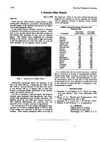
November 1968 in “Textile research journal” Hair fibers may have a unique, non-protein sheath not previously identified.
12 citations
,
July 1964 in “Archives of Dermatology” This study found that neither a single application nor prolonged exposure to selenium sulfide had a significant effect on hair growth or rest phase percentages.
8 citations
,
July 2002 in “X-Ray Spectrometry” In this study, researchers found a correlation between x-ray patterns and the element composition of human hair, with certain metal roles in the hair matrix considered.
5 citations
,
January 2016 in “European Journal of Dermatology” Suplatast tosilate successfully treated a woman's systemic sclerosis symptoms.
 February 1999 in “Analytical Sciences”
 A new antiandrogen compound was made and its detailed three-dimensional shape was described.
12 citations
,
July 2017 in “International Journal of Cosmetic Science” This study found that N‐AOHPA was particularly effective as a silicone emulsifier for improving the condition of damaged hair by preventing amino acid dissolution from bleached hair.
This study introduced a technology for creating water-soluble minerals, which reportedly showed potential health benefits such as diet and anti-wrinkle effects in their applications.
71 citations
,
June 2008 in “Annals of Internal Medicine” This article describes a case of selenosis linked to excessive selenium in a nutritional supplement that led to a product recall due to toxicity concerns.