August 2024 in “Journal of the National Medical Association” ChatGPT is more accurate at diagnosing hair disorders in lighter skin tones than darker ones.
June 2024 in “British Journal of Dermatology” This study found that alopecia areata significantly impacts patients' quality of life irrespective of hair loss severity, and concluded that the newer assessment tools AAPPO and AASIS better capture this impact compared to the traditional SALT measure.
 April 2024 in “MRIMS journal of health sciences”
 This study observed that autologous growth factor concentrate combined with topical minoxidil significantly improved hair growth and patient satisfaction in individuals with androgenic alopecia, with no adverse effects reported.
 March 2024 in “International journal of research in medical sciences”
 In this study, researchers reported that intradermal injections of Dr. SKS hair booster serum improved hair growth and patient satisfaction in individuals experiencing COVID-19-induced persistent telogen effluvium, with increased benefits observed over six months.
 February 2024 in “Psychoneuroendocrinology”
 This study observed that higher anxiety levels in pregnant individuals are negatively correlated with neonatal hair cortisol, suggesting that increased anxiety during pregnancy may affect fetal cortisol accumulation, which is important for fetal development and associated with birth outcomes and cognitive function.
 February 2024 in “Psychoneuroendocrinology”
 In this study, researchers found that higher levels of general and pregnancy-related anxiety during gestation were negatively correlated with neonatal hair cortisol levels, suggesting that increased maternal anxiety may alter fetal cortisol exposure, which is important for fetal development.
 January 2024 in “International Ayurvedic medical journal”
 This study explores how Ayurveda concepts, specifically Prakruti, relate to male pattern baldness, suggesting that individual constitutional types may predict susceptibility to earlier hair loss when influenced by modern lifestyle factors.
 January 2024 in “Biomedicines”
 This study found that a single injection of autologous cell micrografts significantly improved hair condition in women with androgenetic alopecia six months post-treatment.
 January 2024 in “International Journal of Homoeopathic Sciences”
 In this case series, the researchers reported successful individualized homeopathic treatment for alopecia areata in three patients, with each case receiving a specific remedy—Natrum Muriaticum, Calcarea Carbonica, or Argentum Nitricum—resulting in positive treatment outcomes.
November 2023 in “Pakistan Journal of Medical & Health Sciences” In this cross-sectional study, researchers observed that patients undergoing hair transplant procedures showed significant improvements in hairline patterns, with most reverting to lower Norwood-Hamilton grades, after treatment at a tertiary care center in Balochistan, Pakistan.
 November 2023 in “JEADV Clinical Practice”
 In this study, adults with severe alopecia areata experienced greater improvements in hair regrowth, health-related quality of life, and reduced anxiety and depression symptoms after 36 weeks of treatment with baricitinib compared to placebo.
 November 2023 in “The journal of investigative dermatology/Journal of investigative dermatology”
 This study reported that adipose stem cell exosomes, combined with microneedling, improved facial skin wrinkles, elasticity, hydration, and pigmentation compared to a placebo, with significant results on the Global Aesthetic Improvement Scale and no serious adverse events noted in treated individuals.
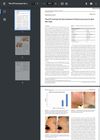 October 2023 in “Skin research and technology”
 This study evaluated the effectiveness of a 675 nm laser device on facial acne scars in patients with darker skin types, finding that 67% reported excellent improvement and 33% reported good improvement, with significant enhancements in skin texture and appearance after five treatments.
September 2023 in “Journal of the American Academy of Dermatology” This study examined the application of new clinical guidelines for diagnosing frontal fibrosing alopecia in 18 men, highlighting that current diagnostic criteria may often overlook early beard involvement and sideburn recession.
September 2023 in “Journal of the American Academy of Dermatology” CTP-543 significantly improved eyebrow and eyelash regrowth and patient satisfaction in adults with alopecia areata.
 August 2023 in “Journal of Cosmetic Dermatology”
 In this study, injecting two different concentrations of botulinum toxin A was found to be safe and effective for treating androgenetic alopecia in Egyptian men and women, with improvements in hair grade and vellus hair density observed over six months.

This study found that among women with female pattern hair loss, higher self-esteem is significantly associated with lower body image concerns and greater self-compassion.
 August 2023 in “Journal of Cosmetic Dermatology”
 This study found that combining fractional ablative erbium YAG laser with minoxidil led to slightly better dermoscopy scores than minoxidil alone in male patients with moderate to severe androgenetic alopecia, although no significant difference was observed in photography scores between the two groups.
 July 2023 in “Dermatology practical & conceptual”
 This study found that women with Female Pattern Hair Loss had lower serum BDNF levels, which correlated with higher stress and depression, suggesting BDNF as a potential marker for psychological impacts in these patients.

In this study involving 30 Kazakh women with systemic lupus erythematosus, the researchers found a strong correlation between disease activity (SELENA-SLEDAI scores) and organ damage (SLICC/ACR scores), which depended on disease duration and reliably reflected cumulative disease activity.
 May 2023 in “Bali Medical Journal”
 This study found a very strong positive correlation between sebum levels and the severity of androgenetic alopecia in men.
 April 2023 in “Research Square (Research Square)”
 The researchers reported that combining stromal vascular fraction (SVF) with fractional CO2 laser treatment significantly improved burn scar outcomes and patient satisfaction compared to using the laser alone.
 April 2023 in “Journal of Investigative Dermatology”
 This study found that short-term NB-UVB treatment significantly reduced anxiety levels in psoriasis patients, but not depression.
 February 2023 in “Cosmoderma”
 This study found that combining red light therapy with oral beta-carotene significantly improved photoaging treatment outcomes compared to red light therapy alone, with Group A showing a 56.12% reduction in photoaging scores over 12 weeks versus 44.78% in Group B.
 January 2023 in “Research Square (Research Square)”
 This study suggests that measuring cortisol levels in hair may serve as a useful biomarker for assessing mood in individuals with bipolar disorder over recent months.
 January 2023 in “Siriraj Medical Journal”
 This study found that listening to music can effectively reduce preoperative anxiety in patients undergoing hair transplantation.
 December 2022 in “The Indian journal of chest diseases & allied sciences”
 This study found that sleep disorders, especially poor sleep quality, are common in women with PCOS, suggesting the need for regular screening using specific questionnaires.
 November 2021 in “Journal of Gandhara Medical and Dental Science”
 This study found that oral Minoxidil 5 mg daily significantly improved androgenic alopecia in 90.2% of male participants after four months, with consistent effectiveness across different demographic and clinical subgroups.
 October 2021 in “QJM: An International Journal of Medicine”
 This study found that four sessions of Intense Pulsed Light treatment significantly improved signs of photodamaged skin in adult female patients, as demonstrated by patient satisfaction and 3D camera assessments.
 April 2021 in “International journal of health services research and policy”
 This study found that nursing students in western Turkey have a moderate acceptance level of aesthetic surgery, influenced by demographic and socio-cultural factors.