 31 citations
,
October 2010 in “Progress in lipid research”
31 citations
,
October 2010 in “Progress in lipid research” This review discusses the role of LPA(3) in embryo implantation and its genetic connection with prostaglandin signaling, but reports no new clinical results.

This study found that additive discourse markers were the most frequently used type in a sampled news article from The Jakarta Post.
 17 citations
,
August 2019 in “Frontiers in Immunology”
17 citations
,
August 2019 in “Frontiers in Immunology” This review examines non-invasive methods for diagnosing inflammatory skin diseases like lupus erythematosus and psoriatic inflammation using samples from plucked hair and skin tape-strips, but no new clinical results are presented.
 3 citations
,
March 2021 in “Metabolites”
3 citations
,
March 2021 in “Metabolites” This study identified distinct differences in metabolic pathways related to pattern baldness, with findings highlighting the androgen metabolic pathway in males and the estrogen plus arachidonic acid pathways in females using hair samples.
 867 citations
,
November 2020 in “Nature Communications”
867 citations
,
November 2020 in “Nature Communications” This review discusses the challenges of interpreting observational studies on COVID-19 due to biases from non-representative samples, such as collider bias, and suggests better sampling methods to mitigate these issues.
 25 citations
,
May 2019 in “Heliyon”
25 citations
,
May 2019 in “Heliyon” This study found that excessive heat caused the most significant structural changes in hair from Caucasian and Afro samples, especially when combined with other treatments like bleaching and straightening.
 18 citations
,
July 2009 in “Drug Metabolism and Disposition”
18 citations
,
July 2009 in “Drug Metabolism and Disposition” This study identified previously unknown phase I and phase II metabolites of finasteride in human bile and urine using a specialized bile collection technique and advanced mass spectrometry analysis.
 14 citations
,
June 2021 in “British journal of dermatology/British journal of dermatology, Supplement”
14 citations
,
June 2021 in “British journal of dermatology/British journal of dermatology, Supplement” This paper presents consensus guidelines for standardized diagnostic criteria and assessment methods for frontal fibrosing alopecia to improve clinical research and data collection globally.
 5 citations
,
October 2014 in “Journal of cosmetic and laser therapy”
5 citations
,
October 2014 in “Journal of cosmetic and laser therapy” In this study, the researchers found that combining physical dermabrasion with chemical peeling increased growth factors and neuropeptides more than chemical peeling alone in porcine skin samples.
 November 2023 in “Deleted Journal”
 In this study, multimedia education significantly improved the knowledge and practices of women with polycystic ovarian syndrome, particularly in managing symptoms like menstrual irregularity and oligomenorrhea, as observed in a sample from the Sohag University Hospital clinic in Egypt.
 19 citations
,
July 2006 in “Acta crystallographica”
19 citations
,
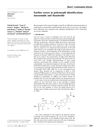
July 2006 in “Acta crystallographica” This study determined that previous reports mistakenly identified different polymorphs of furosemide and finasteride, which are actually identical, due to incomplete data collection in single-crystal X-ray diffraction analysis.
 November 2025 in “Molecular and Cellular Biomedical Sciences”
 This study found no significant association between the MMP-1 gene polymorphisms rs1799750 and androgenetic alopecia in the sample population.
 21 citations
,
May 2021 in “Prostate Cancer and Prostatic Diseases”
21 citations
,
May 2021 in “Prostate Cancer and Prostatic Diseases” This review analyzes the potential mechanisms by which SARS-CoV-2 may exacerbate symptoms of benign prostatic hyperplasia and suggests a connection via ACE2 and androgen receptor pathways; it reports no new clinical results.
 6 citations
,
September 2014 in “Food Additives & Contaminants: Part A”
6 citations
,
September 2014 in “Food Additives & Contaminants: Part A” This study developed a new method for detecting 30 hormones in anti-aging functional foods, demonstrating good sensitivity and reliability, and identified seven hormones in four out of 14 samples tested.
 4 citations
,
January 2011 in “Analytical Letters”
4 citations
,
January 2011 in “Analytical Letters” This study demonstrated that a flow injection method using potassium permanganate for detecting minoxidil provided accurate recoveries and agreed closely with HPLC results, showing potential for effective analysis of commercial samples.
 January 2024 in “Frontiers in endocrinology”
 This study found that genetic variants linked to hypothyroidism significantly increased the risk of developing alopecia areata, suggesting a causative connection between the two conditions.
 38 citations
,
January 2006 in “Journal of Cellular Biochemistry”
38 citations
,
January 2006 in “Journal of Cellular Biochemistry” This study reported the successful isolation of epithelial stem cells from mouse embryonic skin using a simple culture method, with the cells showing the potential to differentiate into multiple cell types.
 January 2024 in “Journal of Hard Tissue Biology”
 In this study, researchers found that a high-fat diet in mice induced downregulation of certain Krtap genes in the tongue, which may be linked to structural issues or oral cancer risk, highlighting a potential connection between oral health and systemic diseases like metabolic syndrome.
 June 2018 in “Journal of Acupuncture and Meridian Studies”
 This study reports that an electrochemical biosensor using a gold and palladium-modified electrode effectively detects levodopa and uric acid in various samples, offering improved performance over previous electrodes.
 63 citations
,
August 1996 in “Forensic Science International”
63 citations
,
August 1996 in “Forensic Science International” In this study, bleaching and perming were found to significantly reduce opiate concentrations in both spiked and naturally opiate-positive human hair samples.
 2 citations
,
January 2017 in “Journal of Biotechnology Research Center”
2 citations
,
January 2017 in “Journal of Biotechnology Research Center” This study found that hair dyes significantly affect DNA sequence analysis, with the organic extraction method performing better on hair shafts and the prepFiler kit yielding higher success for follicle-included samples.
 April 2026 in “bioRxiv (Cold Spring Harbor Laboratory)”
 In this study, periodic exposure to red light in aged mice led to increased histone acetylation and activated mitochondrial fatty acid oxidation, which collectively mitigated cellular aging by modulating metabolism, inflammation, and gene expression.
 46 citations
,
January 2009 in “Textile Research Journal”
46 citations
,
January 2009 in “Textile Research Journal” This study presents a DNA-analytical method that can reliably identify and differentiate cashmere, fine wool, yak, and camel hair fibers in both untreated and processed samples.
 32 citations
,
October 2003
32 citations
,
October 2003 This review reports that 100 mg/day spironolactone improved hair growth more than placebo and was more effective in reducing hair growth than finasteride and low-dose cyproterone acetate, but its effectiveness for acne remains unclear due to small sample sizes.
 6 citations
,
July 2005 in “Farmaco”
6 citations
,
July 2005 in “Farmaco” This study developed a micellar electrokinetic capillary chromatography method for determining minoxidil in Rogaine and generic products, offering a simple and efficient alternative to HPLC.
 1 citations
,
July 2019 in “The journal of applied laboratory medicine”
1 citations
,
July 2019 in “The journal of applied laboratory medicine” This review analyzes 873 cases of female hyperandrogenism, primarily attributing it to polycystic ovarian syndrome, and explores sample testing for suspected neoplasms but reports no new clinical findings.
 December 2025 in “Bolu Abant Izzet Baysal Universitesi Tip Fakultesi Abant Tip Dergisi”
 In this experimental study on rats, the researchers reported that administering minoxidil did not have significant electrophysiological or histopathological effects on penicillin-induced epilepsy, although future studies with larger sample sizes are recommended for more definitive conclusions.
 April 2025 in “International Journal of Multidisciplinary Research in Science, Engineering and Technology.”
 In this study, researchers surveyed 100 women with PCOD or PCOS and found no statistical correlation between the diagnosis and common symptoms like irregular menstruation or infertility, suggesting a need for further research with larger samples.
 January 2024 in “Wiadomości Lekarskie”
 In this lecture, Dr. Anna Gorecka and Dr. Ewa Bieber discuss how social media has influenced the rise of cosmetic surgery and patient expectations, as well as its connection to self-esteem and body dysmorphic disorder. Results are not reported in this summary.
 November 2023 in “European medical journal. Dermatology”
 This review found mixed evidence regarding platelet-rich plasma's effectiveness in various medical applications, noting significant limitations like small sample sizes and lack of standardization that necessitate further research.