 7 citations
,
June 2021 in “Cell Proliferation”
7 citations
,
June 2021 in “Cell Proliferation” This study found that direct interactions between human dermal papilla cells and melanocytes under low oxygen conditions improved cell functions and could be important for hair regeneration efforts.
 September 2024 in “Vietnam Journal of Biotechnology”
 This study found that astaxanthin effectively protected human dermal papillae cells from oxidative stress induced by hydrogen peroxide, reducing the percentage of cells expressing a stress marker significantly, suggesting potential benefits for hair loss treatment related to reactive oxygen species.
57 citations
,
November 2024 in “Aggregate” This review article highlights recent advancements in smart hydrogels as promising solutions for diabetic wound management, emphasizing their ability to respond to wound environments and deliver targeted therapies, while addressing limitations of traditional dressings.
 October 2025 in “Journal of Nanobiotechnology”
 This study reports that using a hydrogel-based therapy that dynamically regulates reactive oxygen species helps achieve skin regeneration in infected wounds, promoting organized dermal architecture with improved hair follicle and blood vessel formation, rather than scar formation.
 February 2024 in “Journal of Cellular and Molecular Medicine”
 In this study using rat models, researchers developed a Pluronic@F-127 hydrogel to deliver the flavonoid pectolinarin, finding it accelerates wound healing and reduces scar formation by enhancing cell migration, proliferation, and antioxidant activity.

This review categorizes contractile hydrogels by their contraction mechanisms and explores their role in advanced wound management, emphasizing mechanical and biochemical signaling in healing, but also notes challenges like force transmission and clinical applicability.
March 2026 in “Chemical Engineering Journal” The hydrogel helps heal diabetic wounds by combining antibacterial, antioxidant, and immune-boosting effects.
 91 citations
,
July 2010 in “Tissue Engineering Part A”
91 citations
,
July 2010 in “Tissue Engineering Part A” This study found that low oxygen conditions and ECM degradation products increased the proliferation and migration of perivascular stem cells without altering their phenotype, suggesting potential roles in tissue repair.
 16 citations
,
January 2023 in “Acta Biomaterialia”
16 citations
,
January 2023 in “Acta Biomaterialia” This study reported that a new bioinspired injectable hydrogel, CQCS@gel, showed promise as a multifunctional wound dressing by achieving rapid hemostasis and promoting the healing of infected skin wounds in both in vitro and in vivo tests.
 520 citations
,
January 2017 in “AIMS biophysics”
520 citations
,
January 2017 in “AIMS biophysics” This review discusses the effects of photobiomodulation, particularly its potential to reduce inflammation in various conditions, but it does not report new clinical findings.
June 2025 in “Materials Today Bio” In diabetic mice, this study reported that the multifunctional hydrogel CPGel achieved complete wound closure in 21 days, showing promise in improving chronic wound healing through antibacterial, antioxidative, and tissue regeneration properties.
 September 2025 in “ACS Applied Materials & Interfaces”
 The researchers reported that a newly developed photo-cross-linked hydrogel with multifunctional properties, including antimicrobial and antioxidant effects, significantly improved diabetic wound healing, achieving over 90% wound closure in seven days in vivo.
 12 citations
,
December 2017 in “Journal of biomaterials science. Polymer ed.”
12 citations
,
December 2017 in “Journal of biomaterials science. Polymer ed.” This study found that protein extracts from human hair demonstrated significant antioxidant abilities, protecting human dermal fibroblasts from oxidative stress, suggesting potential for biomedical applications.
4 citations
,
April 2025 in “Antioxidants” This study found that α-ketoglutarate protected dermal papilla cells from oxidative stress by enhancing the Nrf2 pathway and mitigating cell damage through the ERK/Nrf2 axis.
 June 2026 in “Frontiers in Materials”
 This review examines advancements in "smart" hydrogel dressings for complex wound healing, highlighting innovations in materials that provide multifunctionality, such as responsive drug delivery and regenerative capabilities. The study also addresses potential challenges in clinical application, like manufacturing and regulatory hurdles.
 57 citations
,
March 2024 in “Nano-Micro Letters”
57 citations
,
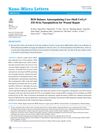
March 2024 in “Nano-Micro Letters” In this study, researchers created a core-shell nanozyme, CeO2@ZIF-8/Au, which autonomously regulates ROS levels to efficiently eliminate bacteria, reduce inflammation, and promote wound healing by balancing ROS generation and scavenging in response to environmental conditions.
 4 citations
,
December 2023 in “Advanced science”
4 citations
,
December 2023 in “Advanced science” This study found that injectable gelatin/metal/tea polyphenol double nanonetworks significantly accelerated wound healing in diabetic wounds by enhancing cell migration and providing anti-inflammatory and antioxidant properties, without detectable cytotoxicity in tests.
 4 citations
,
October 2022 in “Cell Reports Physical Science”
4 citations
,
October 2022 in “Cell Reports Physical Science” This study developed a novel mineralization strategy using metal-polyphenol coordination for dynamic control of nano-scale processes, enhancing hydrogels that support wound healing with antibacterial and angiogenesis-promoting properties.
 April 2026 in “Pharmaceutics”
 This review highlights cellulose-based materials' potential in skin disease treatments, emphasizing their smart, responsive design for various conditions, with insights into their roles in wound healing, infection prevention, and wearable monitoring.
21 citations
,
June 2024 in “Pharmaceuticals” This review examines the potential of swellable microneedles in drug delivery and diagnostics, highlighting innovations and challenges in their use for chronic disease treatment, but noting that issues like physiological responsiveness and long-term stability still require research.
277 citations
,
February 2013 in “Science Signaling” This study found that mitochondrial reactive oxygen species are crucial for normal epidermal differentiation and hair follicle growth, as demonstrated by impaired development in mice lacking these signals due to a keratinocyte-specific TFAM deficiency.
92 citations
,
March 2016 in “Developmental Cell” Zebrafish skin regeneration relies on cell behaviors and reactive oxygen species, with antioxidants reducing and hydrogen peroxide increasing regeneration.
 8 citations
,
June 2022 in “International Journal of Molecular Sciences”
8 citations
,
June 2022 in “International Journal of Molecular Sciences” This review discusses the potential of extracellular vesicles for facial aesthetic applications, including scar reduction and skin rejuvenation, but reports no new clinical results; further research into production and mechanisms is needed.
 1 citations
,
October 2021 in “Clinical, Cosmetic and Investigational Dermatology”
1 citations
,
October 2021 in “Clinical, Cosmetic and Investigational Dermatology” In this study on cultured human dermal papilla cells, researchers found that niacinamide may enhance hair growth by reducing oxidative stress-induced cell senescence and delaying catagen entry, suggesting potential applications against hair loss.

In this study, 1'-S-1'-acetoxychavicol acetate (ACA) from Alpinia galanga showed potential in suppressing testosterone-induced hair loss by inhibiting Nox isozymes in a mouse model of androgenetic alopecia.
10 citations
,
March 2024 in “Frontiers in Bioengineering and Biotechnology” This review examined photothermal hydrogels, biomedically innovative materials responsive to near-infrared stimulation, which hold promise for enhancing infection control and tissue regeneration. The authors highlighted their unique properties, construction methods, and potential applications while also discussing existing challenges and future research directions.
 January 2018 in “bioRxiv (Cold Spring Harbor Laboratory)”
 This study explored how root hairs integrate opposing growth signals but did not report new conclusive findings on the activation of known molecular players in polar growth.
 34 citations
,
January 2012 in “Journal of Dermatological Science”
34 citations
,
January 2012 in “Journal of Dermatological Science” In this mouse study, researchers found that hydrogen peroxide and monoethanolamine in hair dyes may be key contributors to dermatitis and hair loss due to oxidative stress.
24 citations
,
January 2022 in “Journal of Nanobiotechnology” This study found that quaternary ammonium iminofullerenes (IFQA) can alleviate oxidative stress in maize caused by hydrogen peroxide, promoting root growth by enhancing antioxidant cycles and reducing ROS accumulation.
 126 citations
,
October 2012 in “PLoS ONE”
126 citations
,
October 2012 in “PLoS ONE” This study found that reduced cytokinin levels allow plants to adapt to low potassium conditions by enhancing root hair growth, reactive oxygen species accumulation, and expression of a key potassium transporter gene.