30 citations
,
September 2011 in “International Wound Journal” This study found that platelet-rich plasma therapy significantly improved wound area and depth reduction in chronic wounds compared to pre-treatment, suggesting registry data can effectively complement traditional clinical trials.
January 2026 in “International Journal for Research in Applied Science and Engineering Technology” This source reviews PCOS, emphasizing its complex etiology involving genetic and metabolic factors and highlighting reproductive and long-term health risks. It notes evolving diagnostic criteria and stresses the importance of early diagnosis and personalized management to improve outcomes.
 March 2024 in “Frontiers in medicine”
 In this nonrandomized controlled trial, tenon capsule injection of platelet-rich plasma improved capillary perfusion and may enhance short-term vision in patients with acute nonarteritic anterior ischemic optic neuropathy.
This study found that adding calcitriol to metformin significantly improved symptoms in patients with polycystic ovary syndrome and decreased serum MCP-1 levels compared to metformin alone.
 June 2023 in “Journal of cosmetic dermatology”
 This case report highlights a patient who developed cutaneous sarcoidal lesions at the site of platelet-rich plasma injections after COVID-19 infection and vaccination, suggesting possible immune system involvement.
September 2019 in “Journal of Investigative Dermatology” CCCA in women of African ancestry may be caused by PADI3 gene mutations and intense hair grooming.
5 citations
,
April 2017 in “The journal of investigative dermatology/Journal of investigative dermatology” This study reports on an ongoing Phase I/IIa clinical trial of ex vivo gene therapy for treating severe Recessive Dystrophic Epidermolysis Bullosa, involving six adult participants with COL7A1 mutations resulting in deficient type VII collagen production.
 105 citations
,
December 2009 in “Archives of dermatology”
105 citations
,
December 2009 in “Archives of dermatology” This overview discusses primary cicatricial alopecias, focusing on lichen planopilaris, and highlights the challenges in treatment and the progressive nature of hair loss despite symptom management, without providing new clinical results.
July 2024 in “Journal of Investigative Dermatology” PRP preparation partially activates platelets, causing varied growth factor release.
 May 2025 in “Ambulatornaya khirurgiya = Ambulatory Surgery (Russia)”
 This study found that using platelet-rich plasma in optimal doses improves mesh integration and reduces the risk of chronic pain and fibrosis in hernia repair, but overdoses led to inflammatory complications in rats.
 9 citations
,
December 2024 in “Clinical and Experimental Obstetrics & Gynecology”
9 citations
,
December 2024 in “Clinical and Experimental Obstetrics & Gynecology” This review examines the impact of polycystic ovary syndrome on reproductive health, its pathophysiology, clinical manifestations, and emerging therapies, and reports no new findings; the authors emphasize the need for individualized treatment strategies.
In this study, Norwegian researchers followed over 350 patients with porphyria cutanea tarda for an average of 7 years and found that 25% experienced biochemical relapse, suggesting the importance of routine follow-up for early detection and management.
This review synthesizes existing research on autologous platelet-rich plasma for treating androgenetic alopecia, suggesting its promise with standardized protocols and personalized approaches, but reports no new clinical results.
December 2024 in “Clinical and Experimental Dermatology” This study found that patients with central centrifugal cicatricial alopecia preferred shared decision-making with their doctors regarding treatment management.
3 citations
,
March 2022 in “PubMed” This review discusses the use of platelet-rich plasma in treating various forms of alopecia, including androgenic alopecia and alopecia areata, but provides no new clinical results.
 May 2025 in “The Journal of Rheumatology”
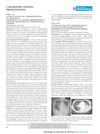
 This case report highlights a rare instance of diffuse alveolar hemorrhage in a patient with catastrophic antiphospholipid syndrome, emphasizing the importance of early recognition and multidisciplinary management.
 3 citations
,
March 2023 in “National Journal of Health Sciences”
3 citations
,
March 2023 in “National Journal of Health Sciences” This article reviews the potential of platelet-rich plasma therapy in managing diabetic foot ulcers but reports no new clinical findings, highlighting the need for further controlled trials to evaluate its effectiveness.
 23 citations
,
December 2006 in “Evaluation and Program Planning”
23 citations
,
December 2006 in “Evaluation and Program Planning” This article presents a model for evaluating public R&D that emphasizes measuring capacity-based metrics over traditional outcome-based metrics, using the concept of a Knowledge Value Collective.
 January 2024 in “International Journal of Trichology”
 In this laboratory study, researchers found that human platelet-rich plasma (hPRP) significantly improved the proliferation and hair-inductive capacity of human dermal papilla cells (hDPCs) compared to fetal bovine serum, suggesting hPRP as a potential substitute for FBS in expanding hDPCs for clinical hair regeneration therapies.
This study found that structural changes in the stroma surrounding hair follicles and skin laxity are associated with the appearance of large pores, regardless of ethnicity or age.
 April 2024 in “Asian Journal of Medical Sciences”
 This study found that ring block anesthesia was the most acceptable method for reducing pain during platelet-rich plasma injections for hair loss.
 July 2026 in “Zenodo (CERN European Organization for Nuclear Research)”
 This study from PRP Bristol suggests that PRP therapy may stimulate hair growth by revitalizing dormant follicles, noting its rising popularity as a non-surgical option for hair restoration.
 April 2026 in “Preprints.org”
 This review discusses the potential of cold atmospheric plasma as a selective antitumor therapy for breast cancer but reports no clinical results, emphasizing its promise and the challenges to its use in precision oncology.
 1 citations
,
December 2022 in “Archives of Dermatological Research”
1 citations
,
December 2022 in “Archives of Dermatological Research” This study compared fluid PRF and PRP for treating atrophic acne scars and found PRF to be more effective, particularly when combined with needling. Both treatments improved scars, but PRF showed higher therapeutic response, suggesting it as a superior alternative for acne scar treatment.
 May 2014 in “Hair transplant forum international”
 This report announces that the International Society of Hair Restoration Surgery received Accreditation with Commendation.
 July 2023 in “Aesthetic Plastic Surgery”
 Both types of Platelet-Rich Plasma treatments work well for hair loss.
PRP therapy is effective and safe for treating hair loss, increasing hair follicles and reducing hair loss after at least 4 treatments.
 3 citations
,
September 2018 in “Dermatologic Surgery”
3 citations
,
September 2018 in “Dermatologic Surgery” Platelet-Rich Plasma (PRP) can improve hair loss in cicatricial alopecia cases, but treatment must be ongoing and results vary among patients.
8 citations
,
January 2019 in “JAAD Case Reports” This article describes erosive pustular dermatosis of the scalp, emphasizing its chronic nature, potential complications, and the lack of specific diagnostic findings, but reports no new clinical results.
 8 citations
,
January 2018 in “Journal of the American Academy of Dermatology”
8 citations
,
January 2018 in “Journal of the American Academy of Dermatology” This study found that maintenance treatment with diphenylcyclopropenone was associated with a lower relapse rate in alopecia areata patients, highlighting the importance of adjusting treatment intervals post-improvement.