July 2026 in “Environmental Science & Technology” This study found that nanoplastics' aggregation behavior on human skin, influenced by factors like concentration, photoaging, and organic constituents, affects their penetration potential through sweat glands and hair follicles, highlighting potential dermal exposure risks.
 January 2026 in “International Journal of Medical Science”
 This randomized controlled trial reported that combining 0.1% Adapalene with 2.5% Benzoyl Peroxide significantly improved mild acne outcomes in patients compared to Adapalene alone, with greater efficacy noted particularly among females, younger individuals, and those who are non-obese.
8 citations
,
January 2018 in “Science of the total environment” This study found elevated levels of dioxin-like polychlorinated biphenyls in the fur of juvenile Australian fur seals with alopecia, suggesting a possible link to the syndrome and underscoring fur's utility for monitoring exposure.
 March 2026 in “Collagen and Leather”
 This study found that a newly developed supramolecular FPC hydrogel effectively promotes wound healing through its anti-inflammatory and angiogenic properties, making it a promising material for wilderness first aid due to its storage convenience, sprayability, and ability to speed up wound recovery.
 June 2026 in “Pharmaceutical Sciences and Research”
 This prospective observational study in Indonesia found that chemotherapy regimens for lung cancer were 100% in line with treatment guidelines, but adverse effects, including anemia and hair loss, were common among patients, highlighting the need to consider these when optimizing treatment choices.
 2 citations
,
May 2023 in “Life”
2 citations
,
May 2023 in “Life” This review summarizes the mechanisms by which Plumbagin, a naphthoquinone derived from plants, may impact inflammation and explores its potential biological effects, highlighting areas that require further comprehensive research before considering it for therapeutic use.
 1 citations
,
January 2009
1 citations
,
January 2009 In this case report, a 25-year-old man with nevus comedonicus showed no improvement from keratolytics and topical tretinoin, but had success with surgical excision of the lesions.
 21 citations
,
January 2023 in “Biomaterials Science”
21 citations
,
January 2023 in “Biomaterials Science” This study investigated the use of dissolving microneedle patches to improve the skin-lightening effects of alpha-arbutin and resveratrol, finding that the patches enhanced intradermal delivery and slightly decreased the melanin index without affecting skin hydration or causing irritation over 24 hours.
 February 2026 in “International Journal of Molecular Sciences”
 This study found that PDLLA filler treatment may help combat age-related hair thinning by reducing oxidative stress and enhancing hair follicle function in both cell and animal models.
 January 2007 in “Journal of The American Academy of Dermatology”
 Post-steroid panniculitis is now rare because doctors taper steroids more carefully.
19 citations
,
January 2015 in “International Journal of Cosmetic Science” This study reports that optimized PLA nanoparticles can effectively target hair follicles to deliver both lipophilic and hydrophilic compounds, suggesting potential applications in hair cosmetics and treatments.
 May 2025 in “The Journal of Rheumatology”
 This case report details a 56-year-old woman's diagnosis with an overlapping syndrome of dermatomyositis, systemic lupus, and secondary antiphospholipid syndrome, highlighted by purpura fulminans, treated successfully with immunosuppressants and plasmapheresis.
May 2006 in “The American journal of medicine” This article presents a case of a 45-year-old African American man with firm, hyperpigmented papules and pustules on his cheeks and neck, persisting despite various shaving methods.
 April 2023 in “Jurnal Farmasi Indonesia”
 In this study using New Zealand White rabbits, a nanoemulsion combining candlenut oil and celery powder improved hair growth over 28 days, showing greater hair weight and thickness than both positive and negative controls, suggesting potential as an alopecia treatment.
 January 2024 in “International Journal of Advanced Research”
 This case report describes a 56-year-old woman with wooly hair and skin lesions, who experienced reduced plaque size and thickness after using 6% salicylic acid topically for three months.
1 citations
,
September 2024 in “Dermatological Reviews” In this systematic review, significant improvements in clinical severity, patient-reported outcomes, and quality of life were reported for dupilumab compared to placebo in patients with moderate-to-severe atopic dermatitis, prurigo nodularis, and alopecia areata, supporting its efficacy and safety for these dermatological conditions.
 3 citations
,
January 2021 in “Jurnal Health Sains”
3 citations
,
January 2021 in “Jurnal Health Sains” This study describes the demographic distribution of seborrheic dermatitis patients in Banda Aceh, identifying an increase in male prevalence from 2016 to 2019 and varied age group prevalence across the years.
July 2024 in “Journal of Investigative Dermatology”  114 citations
,
April 2004 in “International Journal of Dermatology”
114 citations
,
April 2004 in “International Journal of Dermatology” Postinflammatory hyperpigmentation causes dark skin patches and needs personalized treatment.
13 citations
,
October 2007 in “Bulletin of the Korean Chemical Society” This article reviews mollugin's reported biological activities, including its potential for various therapeutic and cosmetic applications such as anti-tumor effects and hair growth stimulation, but presents no new experimental data.
April 2026 in “ScholarWorks (Walden University)” This phenomenological study reported that Malaysian women with PCOS experience significant emotional, social, and physical challenges affecting their quality of life, highlighting the need for improved patient-centered care.
 85 citations
,
February 1989 in “Journal of The American Academy of Dermatology”
85 citations
,
February 1989 in “Journal of The American Academy of Dermatology” This case report describes a newly identified condition called loose anagen hair of childhood, characterized by easily pluckable hair in two young boys, with variable duration and no scalp inflammation or scarring.
22 citations
,
February 2018 in “International Journal of Pharmacy and Pharmaceutical Sciences” This review compiles existing research on Peperomia pellucida's traditional medicinal uses and pharmacological properties but reports no new findings, suggesting its potential for drug development.
 July 2019 in “International Journal of Advance Research in Community Health Nursing”
 This study observed that, among women in Padgampora Village, J&K, aged 15-45, 42.5% had PCOS between ages 15 and 25, with clinical signs like irregular cycles, obesity, acne, and more, highlighting the need for increased awareness and early intervention.
 6 citations
,
September 1990 in “International Journal of Gynecology & Obstetrics”
6 citations
,
September 1990 in “International Journal of Gynecology & Obstetrics” This case report describes a rare instance of pruritic urticarial papules and plaques of pregnancy in a 25-year-old caucasian primigravida during the third trimester, discussing management recommendations.
 2 citations
,
January 2018
2 citations
,
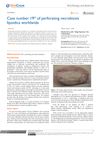
January 2018 This article reports the first case of perforating necrobiosis lipoidica in Colombia and the 19th case worldwide in diabetic patients.
3 citations
,
January 2019 in “Indian Journal of Drugs in Dermatology” This study reports two cases of PRIDE complex in nonsmall cell lung cancer patients treated with erlotinib and gefitinib, highlighting cutaneous reactions like papulopustules and paronychia.
 December 2015 in “Focus on catalysts”
 This study found that Pomiferin demonstrated potent stimulation of extracellular matrix proteins in human dermal fibroblasts and hair follicles, suggesting its potential as an ingredient in skin and scalp treatments.
 6 citations
,
August 1993 in “Archives of Dermatology”
6 citations
,
August 1993 in “Archives of Dermatology” This study found that polymorphous light eruption (PLE) may include a wide range of conditions, requiring careful differentiation from similar skin disorders such as benign summer light eruption.
June 2026 in “JAAD Case Reports”