8 citations
,
June 2013 in “Journal of bone and joint surgery. American volume/The Journal of bone and joint surgery. American volume” This commentary highlights that while platelet-rich plasma (PRP) is widely used in orthopaedic and cosmetic treatments, its effectiveness is questionable and varies with different compositions and applications.
1 citations
,
January 2018 in “Revue Médicale de Bruxelles” This review analyzes existing clinical results on the use of platelet-rich plasma injections for treating androgenetic alopecia but reports no new findings; the authors emphasize the need for further controlled studies.
PRP can help regrow hair and improve hair transplant results.
1 citations
,
January 2021 This review covers the use of platelet-rich plasma in dermatology for wound healing, hair restoration, skin rejuvenation, and dermal augmentation, and notes the need for standardized guidelines.
 7 citations
,
December 2016 in “Journal of The Taiwan Institute of Chemical Engineers”
7 citations
,
December 2016 in “Journal of The Taiwan Institute of Chemical Engineers” This study found that porcine platelet-rich plasma can be a commercially viable replacement for fetal bovine serum with similar effectiveness in promoting human hair follicle cell growth.
 November 2024 in “Journal of Drugs in Dermatology”
 This review found that platelet-rich plasma may have a positive effect on scarring alopecia by slowing progression and reducing inflammation, though evidence remains limited to case reports.
 November 2022 in “LA Referencia (Red Federada de Repositorios Institucionales de Publicaciones Científicas)”
 Platelet-rich fibrin speeds up burn wound healing in rabbits.
 July 2017 in “Skin appendage disorders”
 Platelet-Rich Plasma (PRP) is becoming popular for treating hair loss and it's important for dermatologists to understand how it works and its safety.
 58 citations
,
January 2020 in “International Journal of Molecular Sciences”
58 citations
,
January 2020 in “International Journal of Molecular Sciences” This review evaluates various kits for isolating platelet-rich plasma using established processing standards and finds they enable compliance with consensus quality criteria; ongoing research is needed to refine these procedures for improved consistency and safety.
22 citations
,
July 2021 in “Journal of Investigative Dermatology” 53 citations
,
September 2013 in “Journal of Investigative Dermatology” This study suggests that cultured hair follicle dermal sheath cup cells exhibit immune privilege properties, partly through the expression of PD-L1, which impacts co-cultured immune cells' behavior.
1 citations
,
May 2016 in “Aktuelle Dermatologie” This case study reported that a 34-year-old woman with classic lichen planopilaris achieved disease remission after two months of hydroxychloroquine treatment following ineffective corticosteroid therapy.
39 citations
,
November 2017 in “PubMed” This case series reported that low-dose naltrexone may benefit patients with lichen planopilaris by reducing scalp symptoms and slowing disease progression, with no adverse effects observed in the patients.
33 citations
,
August 2000 in “Experimental Cell Research” January 2016 in “프로그램북(구 초록집)” In this study, LED irradiation was found to promote hORSC proliferation and stimulate the Wnt5a/β-catenin and ERK signaling pathways, suggesting a potential mechanism for hair growth.
3 citations
,
January 2019 in “Indian Journal of Drugs in Dermatology” This study reports two cases of PRIDE complex in nonsmall cell lung cancer patients treated with erlotinib and gefitinib, highlighting cutaneous reactions like papulopustules and paronychia.
 May 2018 in “Journal of dermatology and dermatitis”
 This review discusses the role of PRP in treating androgenetic alopecia and alopecia areata, but reports no new clinical results and emphasizes the potential of growth factor signaling as a future therapy.
 22 citations
,
March 2017 in “Scientific reports”
22 citations
,
March 2017 in “Scientific reports” This study investigated the role of NLRP3 inflammasomes in alopecia areata and found that outer root sheath cells may contribute to inflammation by increasing IL-1β and HMGB1 secretion when stimulated with double-stranded RNA.
 January 2017 in “Postepy Dermatologii I Alergologii”
 This study investigates the potential role of the corticotropin-releasing hormone system in the pathogenesis of lichen planus but does not report new clinical results, emphasizing the need for further exploration.
36 citations
,
July 2017 in “Journal of controlled release” In this study, a new formulation of all-trans retinoic acid bound to polyvinyl alcohol showed reduced skin inflammation and sustained drug release for up to six days compared to free ATRA in vitro and in vivo.
 6 citations
,
October 2019 in “Jo'jig gonghag gwa jaesaeng uihag/Tissue engineering and regenerative medicine”
6 citations
,
October 2019 in “Jo'jig gonghag gwa jaesaeng uihag/Tissue engineering and regenerative medicine” This study found that rice bran ash extract enhanced melanin biosynthesis-related protein expression in a 3D hair follicle-like tissue model and hair follicle organ culture, suggesting potential for future research in melanogenesis.
 15 citations
,
November 2022 in “Cell Death and Disease”
15 citations
,
November 2022 in “Cell Death and Disease” In this study, the researchers identified CEP135 as a biomarker linked to poor sarcoma survival and suggested PLK1 as a potential therapeutic target for sarcoma patients with high CEP135 expression.
This study found that peptides from Lablab purpureus, particularly fraction 2, demonstrated potential anticancer effects by exhibiting significant antioxidant and apoptotic activities, selectively inhibiting cancer cells with minimal impact on healthy cells.
 4 citations
,
January 2011 in “Annals of Dermatology”
4 citations
,
January 2011 in “Annals of Dermatology” This article discusses the role of HR gene mutations in differentiating atrichia with papular lesions from alopecia universalis, but presents no new experimental results.
This study identified a proliferative intermediate transcriptional state associated with the transition from secondary hair germ cells to lower hair follicle-associated cells during early hair follicle regeneration in mice.
9 citations
,
July 2020 in “Cell Proliferation” In this study, EREG promoted hair growth by activating specific receptors in cell and animal models, indicating it may be a potential treatment for hair loss.
 37 citations
,
May 2018 in “Journal of Cosmetic Dermatology”
37 citations
,
May 2018 in “Journal of Cosmetic Dermatology” This review analyzed clinical trial protocols for platelet-rich plasma preparation in hair loss treatment, finding inconsistent and insufficient reporting that complicates comparison and efficacy determination.
9 citations
,
December 1991 in “Annals of the New York Academy of Sciences”  9 citations
,
April 2020 in “Journal of dermatology”
9 citations
,
April 2020 in “Journal of dermatology” This case report describes a Thai male with TRPS1 who exhibited unique and unreported features such as hypoplastic mandibular condyles, double mental foramina, and distinctive hair abnormalities.
 September 2021 in “Physiology News”
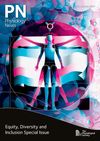
 This abstract contains only graphic design specifications and reports no new research findings.