 May 2026 in “Journal of the Egyptian Womenʼs Dermatologic Society”
 This review discusses microneedling radiofrequency in cosmetic dermatology, particularly for skin texture improvement and various conditions, and reports no new clinical results.
 December 2025 in “Eastern Ukrainian Medical Journal”
 This study reviews current methods for making and using platelet-rich plasma and fibrin, emphasizing the variability in clinical outcomes due to differences in preparation protocols, and calls for standardized guidelines and large-scale studies for better effectiveness in regenerative medicine.
December 2022 in “Plastic and Reconstructive Surgery” In this study, PRPF treatment was more effective than PRP alone in improving hair count and hair quality in androgenetic alopecia patients, with PRPF showing significant improvements in various hair growth parameters and having no statistical differences observed in the placebo group.
February 2017 in “Spectrum Research Repository (Concordia University)” This study confirmed porcine PRP's commercial viability as a fetal bovine serum replacement, showing higher growth factor levels and stability, without increasing human follicle dermal papilla cell proliferation compared to FBS.
 54 citations
,
December 2014 in “Wound Repair and Regeneration”
54 citations
,
December 2014 in “Wound Repair and Regeneration” This study observed that autologous PRP and PDRN injections improved hair thickness and density in women with pattern hair loss, with combined therapy showing greater improvement in thickness than PDRN alone.
 August 2018 in “Journal of The American Academy of Dermatology”
 A 5-year-old girl with a rare skin disorder was effectively treated with skin creams instead of oral medication.
 September 2022 in “Journal of The American Academy of Dermatology”
 This study found that PRP is most commonly used for treating androgenetic alopecia and facial rejuvenation, with no serious adverse events reported among participants.
1 citations
,
February 2022 in “Brain Research Bulletin” This study found that finasteride reduced impulsivity in a rat model of pramipexole-induced probability discounting, possibly by normalizing D3 receptor expression in the nucleus accumbens.
 5 citations
,
April 2017 in “Dermatologic Surgery”
5 citations
,
April 2017 in “Dermatologic Surgery” PRP treatment satisfies 58% of female hair loss patients, with most noticing fuller, thicker hair and less shedding.

In this study, a 75% ethanol extract of Fructus Psoraleae was found to significantly inhibit 5-α reductase and promote hair growth in mice, indicating its potential as a treatment for androgenetic alopecia through modulation of the Nrf2-Keap1 pathway.
 2 citations
,
March 2017 in “Current regenerative medicine”
2 citations
,
March 2017 in “Current regenerative medicine” This article reviews the use of platelet rich plasma in regenerative medicine and highlights the need for standardization in its preparation and application, reporting no new clinical results.
January 2025 in “Fìzìologìčnij žurnal” This study found that in patients with elevated fibrinogen levels undergoing revision rhinoplasty, PDRN decreased M1 cytokines and increased M2 cytokines, potentially offering a new therapeutic approach, but further research is needed to understand its mechanisms and effects fully.
 August 2021 in “International Journal of Dermatology and Venereology”
 This review discusses various potential applications of platelet-rich fibrin in dermatology, but reports no clinical results and highlights the need for standardized protocols.
 October 2023 in “European journal of dermatology/EJD. European journal of dermatology”
 In this study, I-PRF, a blood-derived biomaterial without anticoagulants, was found to inhibit melanin production and reduce oxidative stress damage in a rat model of melasma, suggesting it as a safe and cost-effective treatment option.
2 citations
,
October 2021 in “Experimental Cell Research” This study found that injectable platelet-rich fibrin (i-PRF) enhances hair follicle regeneration in vitro by promoting human dermal papilla cell proliferation, migration, and trichogenic inductivity, with varying effects depending on concentration.
 49 citations
,
January 2003 in “Clinical and Experimental Dermatology”
49 citations
,
January 2003 in “Clinical and Experimental Dermatology” This report from the UK reviews the literature on post-menopausal frontal fibrosing alopecia and highlights its under-recognition and distinctive characteristics compared to lichen planopilaris, but does not provide new results.
 35 citations
,
July 2009 in “Optics express”
35 citations
,
July 2009 in “Optics express” This study introduces a new intracavity frequency modulation technique for tunable picosecond optical parametric oscillators, enhancing chemical contrast in coherent Raman imaging by allowing real-time subtraction of background signals.
 May 2016 in “Portuguese National Funding Agency for Science, Research and Technology (RCAAP Project by FCT)”
  November 2025 in “PARIPEX-INDIAN JOURNAL OF RESEARCH”
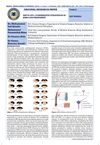
 GFC is more effective than PRP for treating hair loss.
June 2026 in “Journal of Cosmetic Dermatology” PDRN may help with female hair loss, but more research is needed.
2 citations
,
December 2022 in “Bio-Design and Manufacturing” This study demonstrates that the newly developed portable reflectance confocal microscope (PRCM) offers real-time, noninvasive monitoring of wound healing processes by visualizing skin morphology in both mice and humans.
 April 2016 in “The Journal of Sexual Medicine”
 This study analyzed 3,295 cases from the FDA Adverse Event Reporting System to describe demographics and reporting trends of post-finasteride syndrome, finding that most reports came from patients rather than health professionals.
 1 citations
,
January 2022 in “European Journal of Pharmacology”
1 citations
,
January 2022 in “European Journal of Pharmacology” In this study, FMN was found to inhibit androgen receptor function and androgen-regulated gene expression in prostate cancer cells, suggesting potential as an antiandrogen therapy.
 4 citations
,
April 2024 in “Cellular and Molecular Biology”
4 citations
,
April 2024 in “Cellular and Molecular Biology” In this study, injectable platelet-rich fibrin (i-PRF) was found to enhance the proliferative, migratory, and hair-inducing abilities of dermal papilla cells more effectively than platelet-rich plasma through the TGF-β/Smad pathway.
 January 2017 in “Hair transplant forum international”
 This study examined the effects of platelet-rich plasma (PRP) treatment on women with female androgenetic alopecia in a double-blind, placebo-controlled pilot trial, but specific results were not reported in the abstract.
3 citations
,
June 2025 in “Gyemyeong uidae haksulji” This review suggests that PDRN shows promise as a safe and versatile regenerative agent for wound healing and other dermatological applications, based on its dual mechanisms and clinical evidence of efficacy.
 September 2025 in “American Journal of Dermatopathology”
 In this research, most cases of mammary and extramammary Paget disease were reported to express PRAME, expanding the understanding of its presence in cutaneous epithelial tumors, though its diagnostic utility is limited by overlap with other conditions.
April 2026 in “Journal of Dermatological Treatment” This study concluded that in female pattern hair loss patients, CGF and i-PRF treatments were more effective than PRP in increasing target area hair count, with i-PRF having the lowest adverse event rate.
 1 citations
,
March 1999 in “British journal of rheumatology”
1 citations
,
March 1999 in “British journal of rheumatology” Adequate steroid treatment needed to limit bone loss in PMR patients.