July 2024 in “Journal of Investigative Dermatology” PP405 may help hair growth by activating hair follicle stem cells.
 September 2024 in “Journal of the American Academy of Dermatology”
 In this case report, a 53-year-old woman with Little-Graham-Piccardi-Lassueur-Syndrome responded well to a treatment regimen of hydroxychloroquine, methotrexate, and other therapies, effectively halting the progression of this rare dermatosis characterized by alopecia and hyperkeratotic eruptions.
 1 citations
,
April 2018 in “The journal of investigative dermatology/Journal of investigative dermatology”
1 citations
,
April 2018 in “The journal of investigative dermatology/Journal of investigative dermatology” This study found that oral tofacitinib improved disease activity in patients with lichen planopilaris, suggesting it may be a promising treatment option for this condition.
4 citations
,
November 2019 in “Dermatology - Open Journal” This study reports that Lichen planus pigmentosus is present in Moroccan patients but remains challenging to treat, with only some experiencing complete resolution of lesions after therapy.
 1 citations
,
October 2023 in “Skin research and technology”
1 citations
,
October 2023 in “Skin research and technology” This study found that line-field confocal optical coherence tomography effectively visualized key diagnostic features of classic lichen planopilaris in real time, suggesting its potential as a valuable diagnostic tool.
 November 2021 in “CRC Press eBooks”
 This article reviews the characteristics and presentation of fibrosing alopecia in a pattern distribution, a form of scarring alopecia similar to androgenetic alopecia and lichen planopilaris, but provides no new clinical findings.
 April 2018 in “Journal of Investigative Dermatology”
 This study suggests that macrophages play a more substantial role in the pathogenesis of Lichen planopilaris compared to Frontal fibrosing alopecia, as indicated by increased CD68+ cells in Lichen planopilaris.
14 citations
,
January 2018 in “Skin Appendage Disorders” This case report suggests that identifying hyperpigmentation on the upper eyelid with specific dermoscopy patterns could help diagnose facial lichen planus pigmentosus without needing a facial biopsy.
June 2023 in “Journal of dermatology for physician assistants” This case report highlights a misdiagnosis of traction alopecia that progressed to lichen planopilaris in a patient of color, emphasizing the need to consider LPP in similar cases due to differing treatments.
This study demonstrated that the IVL-DrugFluidic® platform is effective for mass-producing finasteride-loaded polymeric microspheres for long-acting injectables, maintaining stable drug release without an initial burst for a month.
 January 2017 in “Open Journal of Endocrine and Metabolic Diseases”
 This case report identifies an adolescent with symptoms indicative of Dunnigan-type partial lipodystrophy, emphasizing the need for early diagnosis to manage associated metabolic complications and improve self-esteem.
 1 citations
,
September 2013 in “The Journal of Dermatology”
1 citations
,
September 2013 in “The Journal of Dermatology” An 8-year-old girl developed a rare skin condition in a linear pattern on one side of her body after a lung infection, which improved with treatment.
 April 2023 in “IP Indian journal of clinical and experimental dermatology”
 This article reviews the pathogenesis, complications, and management of lichen planus, especially its persistent oral form, and highlights the need for further prospective studies.
 April 2023 in “Egyptian journal of Immunology”
 This study found that human platelet lysate supported mesenchymal stem cell growth as effectively as fetal bovine serum, while fetal bovine serum was more effective for hepatocyte proliferation.
24 citations
,
December 2018 in “Inflammation and Regeneration” This review discusses the roles of various PLA2 enzymes in skin health and disease, highlighting potential pathways for future diagnosis and therapy, but it reports no new clinical results.
July 2025 in “Journal of Investigative Dermatology” Nelfb is essential for dermal fat development and survival.
 80 citations
,
April 2011 in “Plant physiology”
80 citations
,
April 2011 in “Plant physiology” This study suggests that the GPX-PDE1 and GPX-PDE2 genes in white lupin enhance root hair development and contribute to Pi limitation acclimation by facilitating glycerophosphodiester degradation.
 22 citations
,
April 2011 in “Anais Brasileiros de Dermatologia”
22 citations
,
April 2011 in “Anais Brasileiros de Dermatologia” This report describes two cases where lichen planopilaris may have compromised the hair follicles in both donor and recipient areas following follicular unit transplantation.
 1 citations
,
January 2022 in “Open Access Macedonian Journal of Medical Sciences”
1 citations
,
January 2022 in “Open Access Macedonian Journal of Medical Sciences” This study observed that PRP treatment resulted in greater improvement in hair thickness and density in alopecia areata patients compared to LLLT, with benefits sustained over 12 weeks.

This study found that activating Toll-like receptor 3 signaling in periodontal ligament stem cells may enhance their immunomodulatory properties, suggesting potential implications for future stem cell therapy applications.
 54 citations
,
December 2014 in “Wound Repair and Regeneration”
54 citations
,
December 2014 in “Wound Repair and Regeneration” This study observed that autologous PRP and PDRN injections improved hair thickness and density in women with pattern hair loss, with combined therapy showing greater improvement in thickness than PDRN alone.
 1 citations
,
November 2024 in “Cutis”
1 citations
,
November 2024 in “Cutis” PLLA injections can cause hair loss and skin issues.
8 citations
,
January 2019 in “Journal of cosmetic dermatology” This study found that six sessions of a modified phenol peel effectively reduced hyperpigmentation in patients with Lichen Planus Pigmentosus, with 76% of treated individuals experiencing at least a 25% improvement, and no serious side effects reported.
 179 citations
,
December 2004 in “Journal of The American Academy of Dermatology”
179 citations
,
December 2004 in “Journal of The American Academy of Dermatology” This study observed that frontal fibrosing alopecia in postmenopausal women involves selective follicular inflammation, and finasteride treatment may slow disease progression, suggesting a potential androgen-related component.
May 2022 in “The FASEB Journal” This experimental study suggests that finasteride may reduce Lymphocyte Specific Protein 1 gene expression through methylation in human Leydig cells, potentially offering a pathway for treating Neutrophil Actin Dysfunction.
 16 citations
,
July 2018 in “Dermatologic Surgery”
16 citations
,
July 2018 in “Dermatologic Surgery” In this study, iL-PRF injections produced significantly better clinical scores for androgenetic alopecia patients compared to controls, especially in those with more severe baseline conditions.
 November 2023 in “Periodontology 2000”
 This narrative review examines the technological advancements and clinical applications of liquid injectable platelet-rich fibrin (i-PRF), discussing its use across regenerative periodontology, sports medicine, and more, as well as its potential as a drug delivery system.
 January 2017 in “Clinical approaches and procedures in cosmetic dermatology”
 This review explores clinical studies on low-level laser therapy (LLLT) for alopecia and suggests it may benefit patients unresponsive to conventional treatments, but larger studies are needed to confirm efficacy.
 March 2026 in “SKIN The Journal of Cutaneous Medicine”
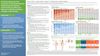
 This study demonstrated that litifilimab significantly reduced disease activity in cutaneous lupus erythematosus by Week 16, with improvements most notable in sunlight-exposed skin areas.
 15 citations
,
August 2019 in “Dermatologic Therapy”
15 citations
,
August 2019 in “Dermatologic Therapy” This letter details a case report on platelet-rich plasma treatment for a patient with treatment-resistant frontal fibrosing alopecia, but it does not provide new clinical results.