 1 citations
,
December 2019 in “Protetyka Stomatologiczna”
1 citations
,
December 2019 in “Protetyka Stomatologiczna” This review discusses the use of platelet-rich fibrin in medical fields, especially dentistry, and reports no new clinical results.
7 citations
,
August 2017 in “Genetic testing and molecular biomarkers” This report suggests that patients with primary spontaneous pneumothorax should be evaluated for FLCN mutations, as they may indicate Birt-Hogg-Dube syndrome and associated cancer risks.
151 citations
,
August 2011 in “The EMBO Journal” The enzyme PA-PLA1α is important for proper hair follicle development.
 October 2014 in “Journal of the Portuguese Society of Dermatology and Venereology”
 This paper presents a therapeutic approach with excellent results in a case of lichen planopilaris overlapping with dermatomyositis and scleroderma, although broader applicability is not discussed.
This study found that home use of low-level light therapy reduced inflammation and symptoms like itching and burning in women with frontal fibrosing alopecia over six months.

This study conducted a comparative analysis of platelet rich plasma and low level laser therapy for androgenetic alopecia but does not present new clinical findings.
April 2022 in “Actas Dermo-Sifiliográficas” This article discusses the case of a 59-year-old woman with a history of progressive facial hyperpigmentation and explores potential connections between her condition and her family history, but reports no clinical findings.
 March 2026 in “Frontiers in Immunology”
 In this study, a 49-year-old female with metastatic adrenocortical carcinoma experienced an abscopal effect following pulse electric field ablation, suggesting potential as an adjunct to systemic immunotherapy for liver tumors.
 4 citations
,
September 2020 in “PeerJ”
4 citations
,
September 2020 in “PeerJ” This study found that platelet factor 4 in platelet-rich plasma suppresses human hair follicle growth and alters related gene expressions, suggesting potential implications for its use in hair loss treatment.
 July 2024 in “New Phytologist”
 This study suggests that the transcription factor PDF2 in Arabidopsis may link lipid sensing with growth responses to phosphate starvation by acting as a sensor for lyso-PCs through its START domain.
 July 2022 in “JEADV Clinical Practice”
 This review discusses the classification of lichen planopilaris and its subtypes under the proposed term "lichenoid alopecias," suggesting they exist along a clinical and histological spectrum.
November 2025 in “Journal of Investigative Dermatology” PCFCL may have unrecognized subtypes and needs more research.

In this case report, a 65-year-old woman with lichen planopilaris achieved stabilization of her condition through early recognition and systemic corticosteroid therapy, emphasizing the critical role of coordinated management between primary care and dermatology.
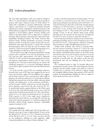 April 2012 in “Informa Healthcare eBooks”
 Lichen planopilaris is a rare, chronic condition causing hair loss, mainly in middle-aged women, and early treatment is important to prevent permanent baldness.
 September 2024 in “Skin Research and Technology”
 This study used atomic force microscopy to identify significant morphological differences in hair from patients with lichen planopilaris compared to healthy controls, noting more scratches, uneven edges, and pitted scales in affected hair, which may aid future research on the condition.
January 2026 in “Advances in Dermatology and Allergology” In this study, patients with lichen planopilaris and frontal fibrosing alopecia reported a substantial impairment in quality of life and experienced high levels of stress, often considering stress a cause of their condition.
 80 citations
,
April 2018 in “Trends in Molecular Medicine”
80 citations
,
April 2018 in “Trends in Molecular Medicine” This review discusses the roles of interferon-γ and PPAR-γ-mediated signalling in scarring alopecia, suggesting these pathways as potential therapeutic targets, but it reports no new empirical results.
January 2013 in “Refubium (Universitätsbibliothek der Freien Universität Berlin)” This study observed that hormone replacement therapy and autoimmune diseases may be more common among women with frontal fibrosing alopecia compared to those with androgenetic alopecia.
 24 citations
,
December 2018 in “Life sciences”
24 citations
,
December 2018 in “Life sciences” This review discusses the role of lysophosphatidic acid in skin physiology and pathology, highlighting its significance in processes like wound healing and hair follicle development, but reports no new clinical findings.
 August 2016 in “Journal of Investigative Dermatology”
 This case report identifies a novel LIPH gene mutation linked to autosomal recessive woolly hair/hypotrichosis in a Japanese boy, expanding the spectrum of known mutations associated with this condition.
 94 citations
,
October 2017 in “International Journal of Dermatology”
94 citations
,
October 2017 in “International Journal of Dermatology” This narrative review discusses lichen planus pigmentosus, including its variations, associated triggers, and management strategies, but reports no new clinical results.
 3 citations
,
June 2022 in “Dermatology and therapy”
3 citations
,
June 2022 in “Dermatology and therapy” This case report found that a novel botanical treatment halted disease progression and promoted hair regrowth in four patients with lichen planopilaris, indicating potential for use as a safe alternative therapy.
 90 citations
,
July 2008 in “Dermatologic therapy”
90 citations
,
July 2008 in “Dermatologic therapy” This article reviews lichen planopilaris, a chronic scarring alopecia, and explores recent treatment developments, but it reports no new clinical results.
 5 citations
,
April 2017 in “Dermatologic Surgery”
5 citations
,
April 2017 in “Dermatologic Surgery” PRP treatment satisfies 58% of female hair loss patients, with most noticing fuller, thicker hair and less shedding.
This study demonstrated that Reverse Protein Engineering can decrease the size of Firefly Luciferase from 550 to less than 80 amino acids, but further research is needed to ensure these smaller peptides retain bioluminescent activity.
September 2025 in “Development” In this study, deleting the transcriptional pause factor Nelfb in mouse preadipocyte lineages led to defective dermal fat formation and lethal outcomes, while interventions targeting Pparg could rescue adipocyte differentiation and promote dermal white adipose tissue formation, underscoring Nelfb's critical role in adipogenesis.
January 2026 in “Case Reports in Dermatological Medicine” This report identified a family of Iranian siblings with diverse clinical forms of Lichen Planus, suggesting potential genetic and environmental involvement in its pathogenesis.
May 2009 in “Faculty Opinions – Post-Publication Peer Review of the Biomedical Literature” This study suggests that decreased PPARgamma function may trigger the pathogenesis of lichen planopilaris, and PPARgamma-targeted therapy could be a potential treatment method.
1 citations
,
January 2025 in “Dermatology Practical & Conceptual” This review describes trichoscopy features of lichen planopilaris and frontal fibrosing alopecia, identifying distinct patterns that help differentiate the two conditions.
72 citations
,
November 2020 in “Frontiers in Surgery” This review found that the clinical results of L-PRF as a grafting material in maxillary sinus augmentation were mixed, with some studies reporting positive effects and others finding no significant impact.