1 citations
,
May 2022 in “Journal of Drugs in Dermatology” This case report describes a patient with lichen planopilaris who experienced remarkable hair regrowth at a previously scarred area after treatment with low-dose naltrexone and platelet-rich plasma, following minimal response to other therapies.
9 citations
,
April 2018 in “Canadian Journal of Animal Science” This study found that LEF-1 expression influences dermal papilla cells' proliferation through Wnt signaling, impacting the potential for cashmere yield improvement.
 September 2022 in “Frontiers in genetics”
 This case study reports a new LAMB3 mutation linked to junctional epidermolysis bullosa with severe urinary tract stenosis, outlining treatment challenges and expanding knowledge of EB-related urological complications.
4 citations
,
September 2021 in “Medical Lasers” This review reports that low-level laser therapy may effectively prevent and alleviate oral mucositis from chemotherapy, supporting its use as a viable treatment option.
 8 citations
,
April 2022 in “The journal of investigative dermatology/Journal of investigative dermatology”
8 citations
,
April 2022 in “The journal of investigative dermatology/Journal of investigative dermatology” This study identified biallelic variants in the LSS gene as a possible genetic cause of palmoplantar keratoderma-congenital alopecia syndrome type 2, highlighting the role of cholesterol synthesis in skin cornification.
 April 2024 in “Cellular signalling”
 This study on mice found that activating TRPML channels with MLSA1 promoted hair regeneration, accelerated hair cycle transition, and influenced human dermal papilla cells to secrete hair growth promoting factors while reducing hair growth inhibitors and oxidative damage.
 24 citations
,
May 2019 in “PLOS genetics”
24 citations
,
May 2019 in “PLOS genetics” This study reports that compound heterozygous loss-of-function mutations in the HEPHL1 gene in a child were associated with abnormal hair and cognitive issues, linking altered ferroxidase activity to hair disorders.
 May 2022 in “Frontiers in Cell and Developmental Biology”
 This study identified that in pig embryos, the miR-29a-5p/EDAR/lncRNA627.1 ceRNA complex plays a critical role in inhibiting hair placode precursor cells proliferation and regulating hair placode formation through the suppression of EDAR expression, which may provide insights into similar mechanisms affecting human hair conditions.
176 citations
,
February 2006 in “Cancer Research” This study found that loss of Ptch1 function in mouse skin's basal cells is sufficient to rapidly induce tumors resembling human basal cell carcinoma, suggesting Ptch1 as a key tumor suppressor.
2 citations
,
May 2023 in “Indian Journal of Dermatology Venereology and Leprology” A new genetic mutation in the CAST gene may link PLACK syndrome to alopecia areata.
November 2025 in “Journal of Investigative Dermatology” KLHL24-mutant stem cells help understand skin and heart disease.
2 citations
,
January 2014 in “Photochemical & photobiological sciences” This study suggests that the Grasp protein may play a role in regulating skin homeostasis following UVB exposure by influencing p53-mediated apoptotic responses in mice.
 9 citations
,
July 2018 in “European Journal of Dermatology”
9 citations
,
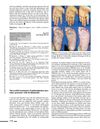
July 2018 in “European Journal of Dermatology” Brodalumab effectively treated a man's severe hand and foot psoriasis.
 2 citations
,
June 2020 in “Dermatology and therapy”
2 citations
,
June 2020 in “Dermatology and therapy” In this case report, narrowband-UVB phototherapy successfully treated a rare instance of Graham Little-Piccardi-Lassueur syndrome, a variant of lichen planopilaris, as investigated through non-invasive imaging techniques.
5 citations
,
September 2021 in “Clinical case reports” This case report documents the first known instance of Graham‐Little Piccardi Lassueur Syndrome in Saudi Arabia, observed in an adult dark-skinned male.
 October 2023 in “International Journal of Science and Research (IJSR)”
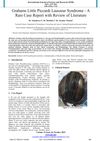
 This paper describes Grahams Little Piccardi Lassueur Syndrome, a rare type of Lichen Planopilaris that causes different types of alopecia and distinctive skin papules, primarily affecting females aged 40 to 70, and notes the current challenges in treatment options, particularly once scarring occurs.
43 citations
,
January 2016 in “Development” This study identified a critical NF-κB-LHX2-TGFβ2 signaling pathway essential for primary hair follicle development in mice, revealing new insights into the underlying mechanisms of morphogenesis.
7 citations
,
September 2019 in “DOAJ (DOAJ: Directory of Open Access Journals)” This review discusses photobiomodulation therapy for different types of alopecia and reports no new clinical results; the authors highlight potential mechanisms and future perspectives.
 22 citations
,
April 2011 in “Anais Brasileiros de Dermatologia”
22 citations
,
April 2011 in “Anais Brasileiros de Dermatologia” This report describes two cases where lichen planopilaris may have compromised the hair follicles in both donor and recipient areas following follicular unit transplantation.
November 2020 in “Acta Medica Bulgarica/Acta medica Bulgarica” This case report details two patients with Graham-Little-Piccardi-Lassueur syndrome who showed marked skin lesion improvement with corticosteroid treatment, though cicatricial scalp alopecia remained unresponsive.
 11 citations
,
March 2014 in “Journal of Investigative Dermatology”
11 citations
,
March 2014 in “Journal of Investigative Dermatology” In this study, basal cell carcinoma developed in Ptch-deficient mice only after chemical treatment, not skin wounding, suggesting a second unknown event is necessary for tumor formation.
 35 citations
,
September 2012 in “PloS one”
35 citations
,
September 2012 in “PloS one” This study found that in Arabidopsis seedlings, tonoplast intrinsic proteins are targeted to the vacuole via at least two pathways, including pathways with differing sensitivity to a chemical inhibitor that affect root hair growth and PIN2 targeting.
4 citations
,
May 2023 in “Cells” In this study, baricitinib treatment improved the differentiation of skin-derived precursors into adipocytes for diseases like Hutchinson-Gilford progeria syndrome, suggesting potential benefits when combined with lonafarnib.
1 citations
,
January 2013 in “Lung India” This letter discusses how differentiating features in clinical and radiological findings can help distinguish pulmonary Langerhans cell histiocytosis and Birt-Hogg-Dube syndrome from lymphangioleiomyomatosis, noting overlapping symptoms but specific distinctive traits.
117 citations
,
April 2008 in “Developmental biology” This study identified that Eda-A1 unexpectedly induces placode inhibitors dkk4 and lrp4, indicating the importance of tightly regulated signaling for proper ectodermal organ development.
82 citations
,
January 2011 in “New Phytologist” This study demonstrated that AtVLN4 plays a role in root hair growth by regulating actin organization in a calcium-dependent manner.
475 citations
,
October 2006 in “Proceedings of the National Academy of Sciences” This study suggests that folliculin, mutated in Birt–Hogg–Dubé syndrome, and its partner FNIP1 may play a role in energy and nutrient sensing through the AMPK and mTOR pathways.
117 citations
,
August 1999 in “Nature Genetics”  51 citations
,
March 2019 in “Journal of cellular physiology”
51 citations
,
March 2019 in “Journal of cellular physiology” This review discusses the use of platelet lysate and its growth factors in treating diseases and regenerative medicine but reports no new clinical findings.
August 2025 in “BMC Pharmacology and Toxicology” The LTF gene may help predict and manage nonspecific orbital inflammation.