 September 2022 in “Journal of Contemporary medical practice”
 This study found that among women with polycystic ovarian disease, 72% experienced infertility, indicating a correlation between PCOD and difficulties in conceiving.
 28 citations
,
May 2018 in “Scientific reports”
28 citations
,
May 2018 in “Scientific reports” This study found that exercise decreases the expression of 5αR1, thereby enhancing the PI3K/AKT signaling pathway in PCOS rats.
 26 citations
,
December 2020 in “Nature metabolism”
26 citations
,
December 2020 in “Nature metabolism” Martin-Perez et al. show that rapamycin's beneficial effects in a mouse model of Leigh syndrome are linked to the downregulation of protein kinase C.
 June 2025 in “IntechOpen eBooks”
 This review discusses the complex nature, diagnostic approach, and management strategies of polycystic ovary syndrome, emphasizing the importance of individualized care without presenting new clinical findings.
6 citations
,
December 2017 in “Journal of Medicine” This article discusses polycystic ovarian syndrome and highlights the importance of early diagnosis and management to reduce long-term complications, but reports no new research findings.
October 2019 in “Obsgyne Review Journal of Obstetric and Gynecology of Siddharth Health Research and Social Welfare Society” This study observed that PCOS presents frequently with cutaneous symptoms and affects both obese and non-obese women, highlighting the importance of interdisciplinary care for effective management.
 28 citations
,
August 2018 in “Dermatologic Surgery”
28 citations
,
August 2018 in “Dermatologic Surgery” This abstract is a listing of affiliations and funding, with no new study or results reported.
April 2018 in “The Journal of Urology” This study found that phosphodiesterase inhibitors may suppress the proliferation of benign prostatic hyperplasia epithelial cells by modulating CCL5 levels in low androgen conditions.
October 2020 in “Indian journal of forensic medicine and toxicology” This review discusses the link between polycystic ovary syndrome and periodontal disease and emphasizes the need for further studies to clarify their association, but it reports no new clinical results.
20 citations
,
September 2023 in “Nutrients” In this study, a very-low-calorie diet led to greater weight loss and improvements in hyperandrogenaemia and metabolic markers in obese women with polycystic ovary syndrome compared to a moderate energy deficit approach over eight weeks.
 February 2026 in “Pharmaceuticals”
 This study introduced the KRDQN predictive framework, which outperformed existing methods in predicting adverse drug reactions and provided interpretable insights into drug mechanisms, aiding pharmacovigilance and clinical decision-making.
 March 2026 in “Anti-Aging Eastern Europe”
 This review examines current evidence on personalized management strategies for PCOS, but does not present new clinical results; the authors advocate for treatments tailored to predominant symptoms and individual health profiles.

This study identified 193 plasma proteins associated with prostate cancer risk, validating 20 high-risk proteins including KLK3, and pinpointed potential drug targets like HSPB1, RRM2B, and PSCA through genetic analysis, offering new insights for biomarkers and treatments.
 June 2018 in “Journal of evolution of medical and dental sciences”
 In this study, polycystic ovarian disease was identified as a prevalent chronic endocrinopathy among women of reproductive age, with common dermatological symptoms such as hirsutism, acne, and androgenic alopecia.
 October 2021 in “Journal of Investigative Dermatology”
 This study found no significant difference in SARS-CoV2 IgG seroconversion rates between patients with immune-mediated inflammatory diseases treated with targeted immune-modulating therapies and those on conventional systemic treatments.
27 citations
,
August 2008 in “Mayo Clinic proceedings” This review discusses the diagnosis, management, and treatment options for peripheral arterial disease and does not report new clinical findings; the authors emphasize the need for early diagnosis and comprehensive management.
3 citations
,
July 2015 in “International Journal of School Health” This study found that in a sample of female adolescents in Shiraz, the most common PCOS phenotype was hyperandrogenic with polycystic ovary syndrome, warranting further investigation due to associated risks.
This study found that mutations in the PADI3 gene, which is important for hair shaft formation, may contribute to central centrifugal cicatricial alopecia among patients.
September 2024 in “Journal of the American Academy of Dermatology” In this study, DataDerm revealed that from 2016 to 2022, a majority of patients diagnosed with keratinocyte carcinoma were male, predominantly white, and commonly between 56-75 years old, with most living in urban areas and having a history of non-melanoma skin cancer.
 July 2026 in “Zenodo (CERN European Organization for Nuclear Research)”
 This article reviews existing strategies for managing polycystic ovarian disease and highlights the role of lifestyle changes, natural remedies, and conventional treatments, reporting no new clinical results.
 July 2023 in “CRC Press eBooks”
 This review explores plant-based pharmacological advances for treating polycystic ovary syndrome, reporting no new clinical results but highlighting potential benefits for menstrual cycle regulation and testosterone reduction.
March 2022 in “IntechOpen eBooks” This review discusses the complexities and co-morbidities associated with polycystic ovary syndrome, including its impact on metabolic and psychological health, and reports no new clinical results.
 May 2026 in “International Journal of Drug Delivery Technology”
 This study reports that using machine learning models, particularly XGBoost and Random Forest, can accurately predict PCOS phenotypes based on non-invasive data, with cycle length as the most significant predictor.
11 citations
,
January 2018 in “Jaypee's international journal of clinical pediatric dentistry” This report describes the clinical presentation of Papillon-Lefèvre syndrome in two brothers and reviews the related literature, without providing new clinical outcomes.
 1 citations
,
January 2023 in “Deleted Journal”
1 citations
,
January 2023 in “Deleted Journal” This article discusses the symptoms, pathophysiology, diagnosis, and treatment options for polycystic ovary syndrome, highlighting early diagnosis benefits, but it reports no new findings.
 1540 citations
,
October 2008 in “Fertility and Sterility”
1540 citations
,
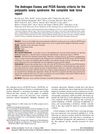
October 2008 in “Fertility and Sterility” This review discusses the definition of polycystic ovary syndrome proposed by the AE-PCOS Society Task Force, emphasizing hyperandrogenism, ovarian dysfunction, and excluding related disorders, while noting potential variations needing more research.

This review discusses the complexities of managing polycystic ovarian syndrome in females, examining its various phenotypes and treatment options, but it does not present new clinical findings.
 April 2017 in “Journal of Investigative Dermatology”
 This study found that PRC1 plays crucial roles in skin epithelial stem cell regulation, with catalytic and non-catalytic functions impacting epidermal integrity, hair development, and Merkel cell dynamics in murine models.

This study found that Plakophilin 1 regulates innate immune responses in keratinocytes by controlling RNA helicase activity, balancing inflammation during epidermal immune challenges.
 July 2025 in “Journal of Clinical Research and Reports”
 This abstract provides a narrative overview of polycystic ovary syndrome, discussing its symptoms and related health issues, and does not include new research findings.