 15 citations
,
January 2019 in “Gynecological Endocrinology”
15 citations
,
January 2019 in “Gynecological Endocrinology” This article discusses the need for a globally standardized protocol for epidemiologic studies of polycystic ovary syndrome to improve study comparability and public health policy.
 1 citations
,
January 2001 in “Drug and therapeutics bulletin”
1 citations
,
January 2001 in “Drug and therapeutics bulletin” This review discusses the management of polycystic ovary syndrome in women and reports no new clinical results.
 2 citations
,
April 2021 in “Reproductive health of woman”
2 citations
,
April 2021 in “Reproductive health of woman” This study found that among women with PCOS, the most common clinical symptoms were menstrual dysfunction, infertility, acne, and hirsutism, with the non-androgenic phenotype being the most frequently identified.
September 2019 in “Journal of Investigative Dermatology” CCCA in women of African ancestry may be caused by PADI3 gene mutations and intense hair grooming.
2 citations
,
October 2025 in “Cells” This review discusses the multifunctional role of PKM2 in promoting cardiac repair and regeneration, highlighting its potential as a therapeutic target in cardiovascular medicine, but reports no new experimental results.
175 citations
,
September 1998 in “British Journal of Dermatology” This study found that mutations in the K17 gene underlie both pachyonychia congenita type 2 and steatocystoma multiplex phenotypes, regardless of the specific mutation involved.
June 2026 in “IP Indian Journal of Clinical and Experimental Dermatology” This study observed that a significant proportion of women with acne vulgaris also met the criteria for PCOS, suggesting a notable link between the two conditions.
1 citations
,
January 2009 in “PubMed” This systematic review evaluates the effectiveness and safety of various treatments for polycystic ovary syndrome including finasteride, flutamide, and metformin, but does not provide specific new results.
June 2026 in “JAAD International”  97 citations
,
February 2007 in “Clinical Obstetrics and Gynecology”
97 citations
,
February 2007 in “Clinical Obstetrics and Gynecology” This article reviews the diagnostic criteria and prevalence of PCOS, emphasizing its status as the most common endocrine disorder among women of reproductive age, with no new clinical results reported.
This review discusses the diagnostic criteria and management challenges for polycystic ovarian syndrome and reports no clinical results, highlighting complications associated with pregnancy in women with the condition.
12 citations
,
January 2013 in “Indian dermatology online journal” This case report details a 21-year-old woman with dermatopathia pigmentosa reticularis, presenting with generalized reticulate hyperpigmentation, diffuse noncicatricial alopecia, onychodystrophy, palmoplantar keratoderma, and poorly developed dermatoglyphics.
 July 2023 in “Journal of ayurveda and integrated medical sciences”
 This case report details the treatment of a 28-year-old woman with PCOS symptoms, including irregular menstruation, weight gain, and hair loss, using Ayurvedic management after ultrasound showed a bilateral PCO pattern.
 60 citations
,
January 2004 in “The journal of investigative dermatology/Journal of investigative dermatology”
60 citations
,
January 2004 in “The journal of investigative dermatology/Journal of investigative dermatology” This study found that inhibiting PKC-β activity with bisindolylmaleimide reduces pigmentation in the skin and hair of guinea pigs and mice by preventing tyrosinase activation.
 7 citations
,
October 2012 in “S. Karger AG eBooks”
7 citations
,
October 2012 in “S. Karger AG eBooks” This review discusses the similarities in clinical, endocrine, and ultrasonographic features between PCOS and other disorders with excessive androgen secretion, emphasizing the importance of accurate diagnosis but reports no new clinical results.
January 2023 in “European journal of biology and medical science research” This review discusses the diverse prevalence, symptoms, and diagnostic criteria of Polycystic Ovary Syndrome in women and highlights that treatment varies based on symptom presentation and long-term management.
 257 citations
,
July 2018 in “Obstetrics & Gynecology”
257 citations
,
July 2018 in “Obstetrics & Gynecology” This review discusses the various phenotypes and diagnostic challenges of polycystic ovary syndrome, highlighting its complex pathophysiology and associated health risks, and reports no new clinical results.
September 2019 in “Journal of Investigative Dermatology” This study observed that PCE-DP may improve skin pigmentation by increasing epidermal turnover and inhibiting melanin uptake and inflammation in human epidermal keratinocytes.
 11 citations
,
August 2017 in “Journal of Chromatographic Science”
11 citations
,
August 2017 in “Journal of Chromatographic Science” This study established a rapid and accurate ultra-performance liquid chromatographic method for chemical fingerprinting and analyzing Platycladi cacumen, effectively distinguishing batches based on geographical and climatic conditions.
 January 2022 in “World journal of pharmaceutical sciences”
 This review discusses methods for inducing polycystic ovary syndrome in animal models, with letrozole considered the easiest and most convenient for testing new treatments, but it reports no new clinical findings.
17 citations
,
April 1997 in “American Journal of Dermatopathology” This report provides the first microscopic description of pachyonychia congenita-associated alopecia, identifying a combination of histological features that might be unique to this condition.
 989 citations
,
August 2007 in “The Lancet”
989 citations
,
August 2007 in “The Lancet” This article reviews the clinical features, diagnostic criteria, and possible genetic and environmental influences of polycystic ovary syndrome but provides no new research findings.
 45 citations
,
January 2006 in “Endocrine journal”
45 citations
,
January 2006 in “Endocrine journal” To diagnose Polycystic Ovarian Syndrome, two out of three signs—irregular periods, high male hormone levels, or cysts on the ovaries—are needed.
November 2025 in “Journal of Investigative Dermatology” This study identified nine pathogenic variants in the PADI3 gene and variants in the S100A3 and TCHH genes in patients with central centrifugal cicatricial alopecia, suggesting a broader genetic basis for the disease and potential targets for genetic testing and therapies.
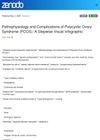 May 2026 in “Zenodo (CERN European Organization for Nuclear Research)”
 This infographic reviews the pathophysiology and complications of PCOS, illustrating how genetic and environmental factors contribute to its development, and highlights associated metabolic and neuroendocrine effects.
 87 citations
,
July 2018 in “Nursing Clinics of North America”
87 citations
,
July 2018 in “Nursing Clinics of North America” This review discusses the diagnostic criteria and treatment options for polycystic ovary syndrome focusing on metabolic subtypes and reports no clinical results.
 October 2022 in “Aesthetic Cosmetology and Medicine”
 This study reviews polycystic ovary syndrome, focusing on its hormonal and metabolic disturbances and related skin lesions, but provides no new clinical findings.
 May 2025 in “Clinical Medicine Insights Case Reports”
 This case study reported on a 6-year-old boy with Kindler Syndrome born to consanguineous parents, featuring atypical symptoms like hyperpigmented macules and glucose intolerance, contributing to expanding insights into the condition's phenotypic diversity.
13 citations
,
November 2018 in “Animal Genetics” This study suggests that a newly identified KRT 71 gene variant may be responsible for curly hair in Curly Coated Retrievers and potentially contributes to follicular dysplasia.
 June 2008 in “CRC Press eBooks”
 PCOS may have evolved as an advantage in past environments with food scarcity.