 25 citations
,
January 2022 in “Endocrine journal”
25 citations
,
January 2022 in “Endocrine journal” This study suggests that hormonal changes may contribute to the persistent symptoms of long COVID, with specific patterns observed in serum hormone levels related to fatigue and sensory dysfunction.
 8 citations
,
February 2010 in “Journal für Kardiologie (Krause & Pachernegg GmbH)”
8 citations
,
February 2010 in “Journal für Kardiologie (Krause & Pachernegg GmbH)” This study developed a detailed classification system for functional androgenization in females that may enhance diagnosis and personalized treatment by identifying individual dysfunctions.
This review discusses polycystic ovary syndrome, focusing on its primary features of ovulatory dysfunction and hyperandrogenism, and reports no new findings.
 October 2004 in “European Neuropsychopharmacology”
 This article reviews studies on younger men using finasteride for hair loss, finding persistent sexual and nonsexual side effects like erectile dysfunction and depression, and reports lower neurosteroid levels in affected individuals.
 1040 citations
,
October 1992 in “The New England Journal of Medicine”
1040 citations
,
October 1992 in “The New England Journal of Medicine” In this study, 5 mg of finasteride per day significantly improved urinary symptoms and reduced prostate volume in men with benign prostatic hyperplasia, but increased the risk of sexual dysfunction.
 86 citations
,
July 1993 in “Drugs”
86 citations
,
July 1993 in “Drugs” Finasteride treats enlarged prostate, shrinks it, improves urination, but may cause sexual dysfunction and isn't for women or children.
 24 citations
,
December 2013 in “Sexual medicine reviews”
24 citations
,
December 2013 in “Sexual medicine reviews” This review discusses persistent sexual and nonsexual adverse effects of the 5α-reductase inhibitor finasteride in younger men, including erectile dysfunction, low libido, and depression. It reports no new clinical results but emphasizes further research is needed.
 19 citations
,
January 2012 in “Dermato-endocrinology”
19 citations
,
January 2012 in “Dermato-endocrinology” This study suggests that moderate elevated prolactin levels are unlikely to cause significant hair loss in women, but still warrant further diagnostic investigation to rule out a prolactin-producing pituitary tumor.
 18 citations
,
April 2016 in “Endocrinology and Metabolism Clinics of North America”
18 citations
,
April 2016 in “Endocrinology and Metabolism Clinics of North America” This review discusses the diagnostic challenges of PCOS in adolescents, noting that the persistence of hyperandrogenism and oligomenorrhea is required for diagnosis, while genetic studies suggest involvement of the hypothalamic-pituitary-ovarian axis.
 18 citations
,
February 2016 in “The Journal of Clinical Endocrinology and Metabolism”
18 citations
,
February 2016 in “The Journal of Clinical Endocrinology and Metabolism” This article reviews emerging opportunities and challenges in male reproductive medicine, including advancements and unmet needs in erectile dysfunction, androgen deficiency, and fertility, but reports no new clinical findings.
 3 citations
,
December 2021 in “Frontiers in endocrinology”
3 citations
,
December 2021 in “Frontiers in endocrinology” In this study, a novel DCAF17 gene mutation was identified in a Chinese family, suggesting a potential role in pancreatic β cell dysfunction and diabetes development in Woodhouse-Sakati syndrome.
 2 citations
,
January 2005 in “The Japanese Journal of Veterinary Dermatology”
2 citations
,
January 2005 in “The Japanese Journal of Veterinary Dermatology” In this study, Pomeranians with non-illness, generalized alopecia did not exhibit adrenal or pituitary abnormalities, suggesting a breed-specific hormonal pattern as a potential cause rather than a functional adrenal anomaly.
 April 2024 in “Canadian Women s Health Today”
 This review suggests that "polycystic ovarian syndrome" is a misleading name, as the disorder involves complex metabolic and reproductive issues beyond ovarian dysfunction and may stem from factors affecting the fetus in utero.
 July 2023 in “Zenodo (CERN European Organization for Nuclear Research)”
 In this study, the authors propose that drugs like trazodone and antipsychotics such as chlorpromazine, which can induce priapism, may help restore libido synaptic circuits, offering potential treatment for post-finasteride syndrome and post-SSRI sexual dysfunction.
 February 1999 in “Drugs in R & D”
 The document concludes that various drugs for men's health issues are in development, with treatments for sexual dysfunction and prostate conditions being the most advanced.
 5 citations
,
February 2022 in “Frontiers in physiology”
5 citations
,
February 2022 in “Frontiers in physiology” This review discusses the role of various cells outside the hair follicle in regulating melanocyte stem cells and hair graying, but reports no new clinical results.
7 citations
,
October 2024 in “Livers” This review highlights the connection between sex hormones and metabolic dysfunction, emphasizing how conditions like male hypogonadism and female hyperandrogenism can increase the risk and severity of hepatic steatosis, which often progresses alongside metabolic syndrome and elevates mortality risks.
1 citations
,
July 2007 in “Journal of Investigative Dermatology” The mutation causes hairless mice due to mislocalized and dysfunctional HR protein.
November 2022 in “Journal of the Endocrine Society” This case study suggests that marijuana use may be associated with low TSH levels without causing thyroid dysfunction in humans.
 10 citations
,
January 2019 in “Archives of Endocrinology and Metabolism”
10 citations
,
January 2019 in “Archives of Endocrinology and Metabolism” This source reports that testosterone therapy may mildly improve sexual desire in women with sexual dysfunction but lacks long-term safety data and cannot be widely recommended, as no formulations are approved for women in most countries.
 November 2022 in “Journal of the Endocrine Society”
 This case study reports that immunotherapy with ipilimumab and nivolumab induced hypophysitis in a patient with renal cell carcinoma, emphasizing the need for careful monitoring of endocrine function in such treatments.
 24 citations
,
July 2011 in “PubMed”
24 citations
,
July 2011 in “PubMed” This review discusses the classic skin characteristics of hypothyroidism, notably generalized myxedema caused by increased glycosaminoglycan deposition, and reports no clinical results.
 9 citations
,
December 2024 in “Clinical and Experimental Obstetrics & Gynecology”
9 citations
,
December 2024 in “Clinical and Experimental Obstetrics & Gynecology” This review examines the impact of polycystic ovary syndrome on reproductive health, its pathophysiology, clinical manifestations, and emerging therapies, and reports no new findings; the authors emphasize the need for individualized treatment strategies.
 2 citations
,
April 2021 in “Reproductive health of woman”
2 citations
,
April 2021 in “Reproductive health of woman” This study found that among women with PCOS, the most common clinical symptoms were menstrual dysfunction, infertility, acne, and hirsutism, with the non-androgenic phenotype being the most frequently identified.
 February 2024 in “Biomedicines”
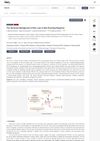
 This review examines the hormonal causes of hair loss, noting how androgen excess can lead to follicle miniaturization and linking estrogen deficiency and thyroid dysfunction to common alopecia types. It further discusses hormonal treatments such as finasteride, dutasteride, and spironolactone.
 June 2023 in “Journal of multidisciplinary sciences”
 This review examines the potential link between polycystic ovary syndrome and reproductive cancers, highlighting possible underlying causes as well as the ongoing debate over the cancer risk in these patients.
 3 citations
,
January 2012 in “Internal Medicine”
3 citations
,
January 2012 in “Internal Medicine” In this case study, a 68-year-old woman was diagnosed with central diabetes insipidus and hypothalamic hypopituitarism due to a Rathke's cleft cyst.
 November 2017 in “Elsevier eBooks”
 This article reviews the complications and health risks associated with polycystic ovary syndrome and reports no new clinical findings.
 1 citations
,
June 2010 in “Mayo Clinic Proceedings”
1 citations
,
June 2010 in “Mayo Clinic Proceedings” This article reviews the Clinical Pearls presentation format introduced at the American College of Physicians' 2001 meeting for its effectiveness in applying practical clinical tips, but provides no new empirical results.
 883 citations
,
August 2016 in “Nature Reviews Disease Primers”
883 citations
,
August 2016 in “Nature Reviews Disease Primers” This review discusses the current understanding of polycystic ovary syndrome, focusing on its epidemiology, pathophysiology, diagnosis, management, and future research directions, but reports no new clinical results.