2 citations
,
June 2012 in “American Journal of Dermatopathology” This case study describes a rare cutaneous follicular hybrid cyst intimately associated with syringocystadenoma papilliferum, proposing a potential relationship with the infrainfundibulum based on keratin expression.
 September 2020 in “Acta Scientific Cancer Biology”
 This case report describes how personalized treatment based on Encyclopedic Tumor Analysis successfully led to durable regression in a woman with advanced pilomatrical carcinoma, unresponsive to standard care.
August 2025 in “Dermatopathology” This study identified 96 cases of pilomatricomas linked to genetic syndromes, including a novel association with Apert syndrome, highlighting that these tumors often manifest as the first indication of underlying conditions in pediatric patients.
 November 2011 in “APMIS. Acta pathologica, microbiologica et immunologica Scandinavica./APMIS”
 This study found that Polyomavirus A2 infection in mice led to the development of pilomatricomas in hair follicles, with the virus replicating initially in the skin and later infecting matrix cells.
108 citations
,
October 2005 in “Journal of Ultrasound in Medicine” This study found that ultrasonography improved preoperative diagnosis rates of pilomatricoma to 76% by identifying specific features such as inner echogenic foci and a peripheral hypoechoic rim.
 20 citations
,
February 2016 in “American Journal of Pathology”
20 citations
,
February 2016 in “American Journal of Pathology” This study indicates that the OVOL1-OVOL2 axis may play a significant role in hair follicle differentiation and growth, potentially serving as therapeutic targets for hair disorders like alopecia and in the tumorigenesis of pilomatricoma.
18 citations
,
March 2009 in “Experimental Dermatology” This study suggests that pilomatricoma can differentiate towards various hair follicle structures, including hair matrix, hair cortex, follicular infundibulum, outer root sheath, and hair bulge.
 13 citations
,
February 2006 in “Clinical and Experimental Dermatology”
13 citations
,
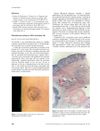
February 2006 in “Clinical and Experimental Dermatology” A benign tumor developed at a girl's BCG vaccination site, not previously linked to the vaccine.
8 citations
,
April 1997 in “Experimental Dermatology” This study found that hHbl gene expression is localized in the cortical cells of the human hair shaft and is notably high in pilomatricoma cells transitioning to hair shaft keratinocytes.
 3 citations
,
June 2023 in “Cureus”
3 citations
,
June 2023 in “Cureus” This case study describes a 4-year-old boy whose neck tumor was initially misdiagnosed as scrofuloderma before being correctly identified as a pilomatricoma, underscoring the need to include pilomatricoma in differential diagnoses for persistent skin lesions.
 1 citations
,
August 2023 in “Journal of cutaneous pathology”
1 citations
,
August 2023 in “Journal of cutaneous pathology” This case report describes an 8 cm giant pilomatricoma on a 67-year-old man's scalp, revealing distinct transcriptional patterns related to hair follicle factors and keratin through spatial gene expression analysis.
In this study, pilomatricoma, a benign skin tumor from hair follicle matrix cells, is highlighted as an important consideration when diagnosing painless, firm subcutaneous nodules, with accurate diagnosis relying on histopathological examination.
August 2024 in “Clinical Case Reports” This case study reports on a rare benign skin tumor known as Pilomatricoma in the lower left orbital region of a 32-year-old male, highlighting its characteristic histopathological features and emphasizing the importance of surgical excision for successful treatment and minimal recurrence risk.
June 2024 in “Annals of Medicine and Surgery” Surgeons should know about pilomatricoma for accurate diagnosis, even though it's rare.
 April 2024 in “Journal of Cytology”
 In this case study, researchers describe a rare instance of pilomatricoma with ossification in a 32-year-old woman, highlighting specific histopathological features and the role of bone morphogenic proteins and macrophages in its development.

This case report describes a rare instance of pilomatricoma, a benign tumor of the hair follicle, accompanied by striae distensae on a young man's flank, emphasizing the uniqueness of this presentation for timely diagnosis and care due to its potential for malignant transformation.
 July 2023 in “The Egyptian Journal of Otolaryngology/The Egyptian Journal of Otolaryngology”
 In this case report, a 34-year-old with a slowly growing mass near the right parotid gland was diagnosed with pilomatrixoma, a rare benign hair follicle tumor, which was only confirmed pathologically after surgical excision.
March 2023 in “ACTA SCIENTIAE VETERINARIAE” This study reports a case of benign pilomatricoma in an adult Shih-Tzu dog, highlighting surgical excision and histopathology as effective for diagnosis and treatment of this rare condition in dogs.
 January 2022 in “Nasza Dermatologia Online”
 In this study, dermoscopy was suggested as a potentially useful tool for improving the clinical recognition of pilomatricoma.
 January 2022 in “Autopsy and Case Reports”
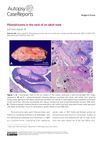
 This article describes a case of pilomatricoma in a 22-year-old male with successful surgical excision and no recurrence, highlighting its histopathological features and typical clinical presentation.
September 2020 in “Oral surgery, oral medicine, oral pathology and oral radiology” This case report describes a pilomatricoma in a 21-year-old woman, highlighting the diagnostic process and illustrating the potential for intraoral surgical access to minimize scarring.
 September 2016 in “Journal of dermatological science”
 The researchers reported that the OVOL1-OVOL2 axis may play a role in hair follicle differentiation and tumorigenesis, and OVOL1 and OVOL2 are potential diagnostic markers for pilomatricoma and pilomatrix carcinoma.
27 citations
,
December 2005 in “Journal of Cutaneous Pathology” This study found that while malignant pilomatricomas maintain some keratin expression patterns seen in benign counterparts, they notably express additional epithelial keratins, potentially influencing tumor calcification.
27 citations
,
May 2004 in “Journal of Investigative Dermatology”  October 2023 in “Research Review”
 This source describes the development, structure, and types of skin appendage tumors, noting both benign and malignant forms, potential associations with syndromes, and categories based on follicular differentiation.
158 citations
,
November 1998 in “Cell” β-catenin affects hair growth and can lead to tumors, needing more research for better understanding.
 54 citations
,
January 2016 in “Cell reports”
54 citations
,
January 2016 in “Cell reports” This study found that different epidermal stem cell populations contribute to the formation of various skin tumors and new hair follicles following β-catenin activation in the adult epidermis.
54 citations
,
September 1999 in “PubMed” This study suggests that immunostaining for Keratin 15 may be a useful tool for differentiating between basal cell carcinoma and trichoepithelioma.
47 citations
,
February 2014 in “Journal of Cutaneous Pathology” This study found that nuclear beta-catenin, LEF1, and PHLDA1 expression was conserved in matrical tumors, suggesting a shared tumorigenesis process involving Wnt pathway activation.
20 citations
,
November 2004 in “Archives of Pathology & Laboratory Medicine” This case report describes a rare instance of melanocytic matricoma, a benign pigmented papule found in sun-damaged skin of an elderly individual, highlighting its distinct clinical and pathological features.