12 citations
,
August 2001 in “PubMed” This study found that contrast enhanced phototrichogram (CE-PTG) significantly improved detection of various hair types and growth stages in androgenetic alopecia compared to standard PTG and was comparable to biopsy analysis.
March 2022 in “IntechOpen eBooks” This review discusses the complexities and co-morbidities associated with polycystic ovary syndrome, including its impact on metabolic and psychological health, and reports no new clinical results.
1 citations
,
April 2010 in “DOAJ (DOAJ: Directory of Open Access Journals)” This review discusses the psychosocial impact of polycystic ovary syndrome on women's quality of life and highlights the need for multidisciplinary care, but it reports no new clinical results.
January 2010 in “프로그램북(구 초록집)”  April 2017 in “Turkish Journal of Pediatric Disease”
 This study found that 20% of children initially diagnosed with premature pubarche were later identified with other conditions like central puberty precox or congenital adrenal hyperplasia during follow-up, emphasizing the importance of ongoing differential diagnosis.
 February 2026 in “Trials”
 This abstract describes a clinical trial registered in the Chinese Clinical Trial Registry, with its first participant enrolled on September 30, 2024; no specific study outcomes are reported.
20 citations
,
June 2019 in “Archives of dermatological research” In this study, combination therapy with DPCP and anthralin promoted hair regrowth in 40.62% of alopecia areata patients who were unresponsive to DPCP alone, with response improving over longer treatment durations.
 10 citations
,
April 2007 in “Aesthetic Plastic Surgery”
10 citations
,
April 2007 in “Aesthetic Plastic Surgery” This study demonstrated the feasibility of a new patient-controlled method for tissue expansion that achieved full expansion in about 3 weeks with minimal complications after mastectomy.
 87 citations
,
July 2018 in “Nursing Clinics of North America”
87 citations
,
July 2018 in “Nursing Clinics of North America” This review discusses the diagnostic criteria and treatment options for polycystic ovary syndrome focusing on metabolic subtypes and reports no clinical results.
December 2025 in “Biomedicines” In this study, researchers identified two person-centered sexual function profiles among women, linked to physical and psychological factors, with PCOS showing greater, though not significant, presence in the dysfunction profile. The dysfunction was associated with higher adiposity and body-image distress.
 13 citations
,
October 2024 in “Scientific Reports”
13 citations
,
October 2024 in “Scientific Reports” In this study using data from young women in West Bengal, India, the researchers identified that leptin signaling impairment, insulin resistance, and specific gene mutations significantly contribute to PCOS, with obesity commonly manifesting in affected individuals.
 414 citations
,
August 2005 in “The Journal of Clinical Endocrinology and Metabolism”
414 citations
,
August 2005 in “The Journal of Clinical Endocrinology and Metabolism” This study estimates the total cost of evaluating and treating polycystic ovary syndrome in reproductive-aged women in the United States to be $4.36 billion, suggesting more liberal screening could be beneficial.
 July 2023 in “Clinical, cosmetic and investigational dermatology”
 In this study, reflectance confocal microscopy was used to diagnose periorificial dermatitis, revealing specific skin changes such as hair follicle dilatation, increased vascular density, and inflammation, which help distinguish it from similar conditions.
 2 citations
,
August 2023 in “Development”
2 citations
,
August 2023 in “Development” In this study, researchers explored how hair follicle orientation is affected in the rosette fancy mouse and found that a mutation in the PCP gene Fzd6 caused reversed hair orientations in the posterior region, leading to the formation of unique whorls.
 2 citations
,
September 2014 in “Journal of evolution of medical and dental sciences”
2 citations
,
September 2014 in “Journal of evolution of medical and dental sciences” This study found that evaluating clinical parameters such as BMI, waist-hip ratio, and symptoms like hirsutism and acne significantly aids in diagnosing polycystic ovarian syndrome among women.
 14 citations
,
March 2021 in “Journal of Pediatric and Adolescent Gynecology”
14 citations
,
March 2021 in “Journal of Pediatric and Adolescent Gynecology” In teens with Polycystic Ovary Syndrome and obesity, issues related to metabolism, skin, and mental health are common, and a clinic with various specialists can provide care for most of these problems.
4 citations
,
March 2021 in “International Journal of Environmental Research and Public Health” This study found that women with polycystic ovary syndrome have higher body mass index, fat mass percentage, and skinfold thickness compared to women without PCOS.
8 citations
,
April 2022 in “Revista Brasileira Ginecologia e Obstetrícia” This review explores contraceptive options for women with polycystic ovary syndrome, emphasizing the need for tailored choices based on individual clinical, hormonal, and metabolic profiles, but reports no new clinical findings.
 August 2023 in “International journal of reproduction, contraception, obstetrics and gynecology”
 In this study, PCOS was found to be highly prevalent among urban, middle socioeconomic status women aged 21 to 30, with common symptoms including oligomenorrhea, weight gain, infertility, hirsutism, and acne.
 2 citations
,
November 2025 in “Journal of Ovarian Research”
2 citations
,
November 2025 in “Journal of Ovarian Research” This study found that in a mouse model of PCOS, high androgen levels caused pyroptosis in ovarian granulosa cells and increased ER stress in oocytes, reducing oocyte maturation rates, while treatment with CPA and DMF improved these rates.
 March 2026 in “Cleveland Clinic Journal of Medicine”
 This review discusses polycystic ovary syndrome and incorporates updates from a 2023 guideline, but reports no new research findings on diagnosis or management.
 February 2024 in “Journal of Education, Health and Sport”
 This review discusses current pharmacological and non-pharmacological treatment strategies for PCOS, emphasizing the need for a personalized, multimodal approach due to incomplete understanding of the syndrome's pathogenesis.
 1 citations
,
January 2023 in “Deleted Journal”
1 citations
,
January 2023 in “Deleted Journal” This article discusses the symptoms, pathophysiology, diagnosis, and treatment options for polycystic ovary syndrome, highlighting early diagnosis benefits, but it reports no new findings.
 May 2026 in “Zenodo (CERN European Organization for Nuclear Research)”
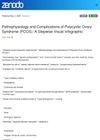
 This infographic reviews the pathophysiology and complications of PCOS, illustrating how genetic and environmental factors contribute to its development, and highlights associated metabolic and neuroendocrine effects.
 491 citations
,
July 2000 in “The Journal of Clinical Endocrinology and Metabolism”
491 citations
,
July 2000 in “The Journal of Clinical Endocrinology and Metabolism” This study found that the prevalence of polycystic ovary syndrome was 6.5% in a minimally biased sample of Caucasian women from Spain.
 February 2024 in “Journal of ayurveda and integrated medical sciences”
 This paper reviews Ayurvedic concepts related to PCOS and compares them with PCOS symptoms, without presenting new clinical findings.
 February 2025 in “Indus journal of bioscience research.”
 In this descriptive cross-sectional study, researchers observed that cutaneous manifestations such as hirsutism, acne, and androgenic alopecia are common in women with PCOS, with obesity significantly worsening hirsutism, highlighting the importance of early dermatological assessment for PCOS diagnosis and management.
 101 citations
,
May 2014 in “PLOS ONE”
101 citations
,
May 2014 in “PLOS ONE” This study found that women with polycystic ovary syndrome have an increased risk of developing depressive disorder, anxiety disorder, and sleep disorder compared to those without the syndrome.

In this study, women with polycystic ovary syndrome showed higher scores in character strengths like hope and judgement compared to those without PCOS.
This study presents the G4 transgenic mouse model, which suggests a direct link between polycystic ovary syndrome and the Gm10800 gene, offering a valuable tool for understanding the disease and testing treatments.