28 citations
,
March 2013 in “Journal of Investigative Dermatology” Kv1.3 blockers may help treat alopecia areata and promote hair regrowth.
17 citations
,
January 2019 in “Annals of Dermatology” This study found that higher serum CXCL10 levels may predict the progression of non-segmental vitiligo, especially in patients also suffering from autoimmune thyroid disease and/or alopecia areata.
12 citations
,
August 2013 in “Journal of Dermatological Science” This article shares the researchers' challenging journey in exploring the pathobiology of alopecia areata and reports no definitive clinical advances.
9 citations
,
December 2023 in “BMC Genomics” This study examined noninvasive tissue samples, including buccal swabs, hair follicles, saliva, and urine cell pellets, and found hair follicles and urine cell pellets promising for transcriptomic and clinical analyses due to their sample quality and performance in disease-relevant applications.
6 citations
,
November 2018 in “American journal of transplantation” This study reported that using UVB preirradiation and anti-CD154 antibody treatment in a humanized mouse model prolonged hair follicle allograft survival and reduced immune cell infiltration without needing generalized immunosuppression.
3 citations
,
October 2024 in “Experimental Dermatology” This study found that patients with alopecia areata exhibited increased CRHR1 expression on circulating monocytes compared to controls, suggesting that stress-related factors like CRH and CRHR1 may contribute to the development and progression of the condition, particularly in chronic cases and those with larger lesions.
 2 citations
,
February 2022 in “Biology”
2 citations
,
February 2022 in “Biology” This study found that blue laser irradiation reduced ATP levels and cell viability in mouse skin by increasing oxidative stress through the production of reactive oxygen species.
1 citations
,
February 2025 in “Photodermatology Photoimmunology & Photomedicine” This study found that 830 nm LED light effectively treated post-inflammatory erythema and hyperpigmentation, while both 830 nm and 590 nm LEDs prevented post-inflammatory erythema.
 1 citations
,
January 2022 in “Open Access Macedonian Journal of Medical Sciences”
1 citations
,
January 2022 in “Open Access Macedonian Journal of Medical Sciences” This study observed that PRP treatment resulted in greater improvement in hair thickness and density in alopecia areata patients compared to LLLT, with benefits sustained over 12 weeks.
March 2026 in “IntechOpen eBooks” This chapter explores the promising use of low-power laser irradiation for post-hysterectomy reconstructive care, emphasizing enhancements like a flexible fiber optic module, to potentially improve genitourinary rehabilitation in cervical cancer patients.
November 2025 in “Urology” This study found that the Mark Cuban Cost Plus Drug Company offers significant cost savings on men's health medications compared to both Medicare and GoodRx, particularly for erectile dysfunction treatments.
August 2025 in “Marine Drugs” This study evaluated a new composite material made from PLA, ALG, ZnS, and HT for blood-contacting applications, finding it improved surface characteristics and displayed anticoagulant properties and high biocompatibility with no genotoxic effects on blood and skin cells.
May 2025 in “American Journal of Veterinary Research” Photobiomodulation did not significantly improve hair density in dogs with alopecia X.
 March 2024 in “Journal of Cosmetic Dermatology”
 This study found that pretreating concentrated growth factor with a 640 nm laser increased CD34+ stem cell activation and improved hair growth outcomes in androgenetic alopecia patients compared to non-pretreated CGF.
January 2026 in “Immunological Reviews” This review discusses sex differences in immune responses and highlights mechanisms involving sex hormones, X-linked genes, and X-Chromosome Inactivation, but reports no new clinical findings.
December 2025 in “American journal of microbiological research” This study found that Marantochloa species leaves have antimicrobial and anti-inflammatory properties and help preserve the quality of corn-based foods, suggesting their potential nutritional benefits and encouraging their use in Greater Lomé.
 November 2025 in “Stem Cell Research & Therapy”
 This study suggests that human DSCCs may aid in hair follicle regeneration and reduce microinflammation, with potential applications in regenerative medicine evaluated through a new morphometric analysis.
 September 2024 in “Current Oncology”
 This review discusses the common occurrence of docetaxel-induced hair loss in cancer patients, including permanent cases, and highlights current and experimental strategies like scalp cooling, minoxidil, and new clinical trials for managing and preventing this side effect.
 July 2024 in “Chinese Medical Journal”
 This study concluded that ACT injections, alone or combined with finasteride, have significant therapeutic effects and safety in treating androgenic alopecia, with promising clinical potential.
This study found that prophylactically administering amotosalen-treated allogeneic donor T cells at transplantation significantly improved immune reconstitution and protection against murine cytomegalovirus infection without inducing graft-versus-host disease.
August 2003 in “Journal of Investigative Dermatology” Phosphatidic acid may promote hair growth like minoxidil.
 176 citations
,
January 2003 in “Journal of Investigative Dermatology”
176 citations
,
January 2003 in “Journal of Investigative Dermatology” This review summarizes the roles of bone morphogenetic proteins in the development and regulation of normal and diseased skin, but it does not provide new clinical results.
September 2017 in “The journal of investigative dermatology/Journal of investigative dermatology” This study found weak epidemiological associations between male pattern baldness and coronary heart disease, but no significant genetic link, though specific loci shared risks with other conditions.
 3 citations
,
July 2021 in “Life science alliance”
3 citations
,
July 2021 in “Life science alliance” This study observed that disrupting the Pnkp gene in adult mice resulted in a premature aging-like phenotype, suggesting PNKP's vital role in maintaining normal growth and survival of certain progenitor cell populations.
 77 citations
,
January 1980 in “Carcinogenesis”
77 citations
,
January 1980 in “Carcinogenesis” This study found that TPA was significantly more effective than mezerein in inducing dark basal keratinocytes in mouse skin, which may be important in early tumor promotion stages.
1 citations
,
May 2017 in “Journal of Clinical Oncology” This study found that applying BPM 31543 twice daily was safe, well-tolerated, and showed signs of reducing chemotherapy-induced alopecia in women receiving taxane-based chemotherapy.
 1 citations
,
January 2018 in “Acta dermato-venereologica”
1 citations
,
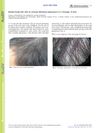
January 2018 in “Acta dermato-venereologica” A teenager's hair with alternating white and dark bands, known as Pili annulati, is a genetic condition that is usually harmless and often considered attractive.
June 2021 in “Faculty Opinions – Post-Publication Peer Review of the Biomedical Literature” The researchers reported that basement membrane heterogeneity, especially laminin α5 composition, plays a critical role in distinct inter-tissue interactions and hair cycle regulation in mouse hair follicles.
This study presents the G4 transgenic mouse model, which suggests a direct link between polycystic ovary syndrome and the Gm10800 gene, offering a valuable tool for understanding the disease and testing treatments.
 September 2019 in “Journal of Investigative Dermatology”
 This study found that a history of smoking significantly predicted a more refractory course of palmoplantar pustulosis, with associated comorbidities often including hypertension, type 2 diabetes mellitus, and thyroid diseases.