
In this study, six types of cold-pressed oils commonly found in the Polish market were analyzed for their health-promoting compounds and antioxidant activity, revealing them as valuable sources of bioactive compounds like polyunsaturated fatty acids, tocopherols, sterols, and polyphenols, without exceeding recommended deterioration parameters.
May 2025 in “Preprints.org” This review discusses the dermatological potential of olive mill wastewater as a sustainable source of high-value cosmeceutical ingredients but reports no new clinical results.
 7 citations
,
October 2018 in “Dermatology practical & conceptual”
7 citations
,
October 2018 in “Dermatology practical & conceptual” This study found that topical oxygen therapy may be a beneficial adjuvant treatment for hair loss, acne, and chronic dermatological conditions, though further research is needed to confirm its effectiveness.
May 2025 in “Preprints.org” This review highlights the potential of olive mill wastewater as a sustainable source of cosmeceutical ingredients with antioxidant, anti-inflammatory, and dermatological benefits but reports no new clinical findings.
1 citations
,
January 2021 in “Elsevier eBooks” This study found that olive and olive oil may significantly reduce cardiovascular disease risk, cholesterol, and blood pressure, while offering antioxidant protection through bioactive metabolites like oleuropein.
10 citations
,
February 1976 in “The Journal of Dermatology” This study found that topical γ‐Oryzanol significantly stimulated sebaceous gland cell activity and sebum production in rats.
In this review, researchers highlighted the use of essential oils, praised for their antimicrobial and anti-inflammatory effects, in treating a variety of conditions, and noted their emerging role in dermocosmetics for issues like hyperpigmentation, acne, and skin aging.
December 2012 in “한국피부미용향장학회지” This study suggests that aroma oils categorized by scalp type have similar chemical compositions, potentially enhancing their effectiveness in aromatherapy for scalp issues.
 December 2025 in “International Journal of Pharmaceutical Sciences Review and Research”
 In this study, a newly developed polyherbal hair oil exhibited promising characteristics, including a beneficial pH and antimicrobial activity against Staphylococcus aureus, with preliminary tests suggesting it supports scalp and hair health without adverse effects.
2 citations
,
April 2021 in “International Journal of Cosmetic Science” This study found that a sunscreen with oxothiazolidine and δ-tocopheryl glucoside provided complementary oxidative protection, with immediate but brief effects from oxothiazolidine and prolonged effects from the slower-absorbing δ-tocopheryl glucoside.
 12 citations
,
January 2009 in “Journal of Oleo Science”
12 citations
,
January 2009 in “Journal of Oleo Science” The researchers reported that sterol surfactants with a bulky planar structure effectively solubilized ultraviolet ray absorbers, offering a stable solution more efficiently than other surfactants.
4 citations
,
July 2025 in “Cosmetics” This review discusses the potential of olive mill wastewater as a valuable source of dermatological ingredients, highlighting its antioxidant and anti-inflammatory properties, but reports no new clinical results.
May 2025 in “Preprints.org” This review discusses the potential of olive mill wastewater as a sustainable source of dermatological ingredients with antioxidant and regenerative properties but reports no new clinical findings.
 21 citations
,
January 2012 in “Biological and Pharmaceutical Bulletin”
21 citations
,
January 2012 in “Biological and Pharmaceutical Bulletin” This study found that using a combination of iontophoresis and liposomal delivery facilitated the effective intradermal administration of superoxide dismutase in rats, reducing oxidative skin damage from UV exposure.

This study found that a combination of photoprotector and nighttime formulations with essential oils improved skin barrier function and structural characteristics in young men's oily, acne-prone, and photoaged skin.
18 citations
,
May 2024 in “Pharmaceutics” This review discusses advances in drug delivery systems to enhance oleanolic acid's bioavailability and therapeutic potential but reports no new clinical results.
 6 citations
,
January 1998 in “Journal of Investigative Dermatology”
6 citations
,
January 1998 in “Journal of Investigative Dermatology” This study found that oxybenzone is very stable under light exposure, contradicting previous findings of its oxidation to semiquinone after solar irradiation.
17 citations
,
August 2010 in “International Journal of Cosmetic Science” This study found that a cosmetic formula containing 2% Orthosiphon stamineus leaf extract significantly reduced skin oiliness and pore size, showing better results than a formula with 1% zinc gluconate.
September 2023 in “Journal of the American Academy of Dermatology” In this study, a cleanser gel with salicylic acid, vitamin C, and Lens esculenta seed extract reduced facial oiliness by 44.9% after 2 hours and by 19.1% after 4 hours in subjects with oily skin, using a novel facial oiliness mapping method.
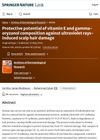 May 2026 in “Archives of Dermatological Research”
 This study found that treating human hair with vitamin E and γ-oryzanol significantly reduced UV-B-induced structural damage, with γ-oryzanol providing greater protection, especially in female hair samples. The findings highlight these compounds' potential as cost-effective solutions for preserving hair integrity against UV damage.
2 citations
,
March 2025 in “Industrial Crops and Products” This study found that peach kernel oil extracted via supercritical fluid extraction had higher quality and antioxidant properties than oil obtained by other methods, effectively protecting human hair follicle keratinocytes from oxidative damage.
19 citations
,
January 2020 in “Journal of Biophotonics” This study found that using a PEG-400/oleic acid mixture as an optical clearing agent enhanced the detection depth of particles in skin without causing dehydration, based on tests in rats and further testing in vivo.
 December 2022 in “Journal of Tropical Pharmacy and Chemistry”
 This study evaluated a hair tonic formulated from oil palm leaf extract, finding it demonstrated very strong antioxidant activity and could prevent hair decolorization from sun exposure, with effective concentrations ranging from 25 to 200 ppm.
 December 2023 in “Journal of materials chemistry. B”
 This study found that a nanoemulsion containing perfluorooctyl bromide effectively increased oxygen levels in an anoxic environment, enhancing hair dermal papilla cell growth and significantly promoting hair organ elongation.
 September 2017 in “Journal of Investigative Dermatology”
 This study found that mackerel fermented fish oil protected human keratinocyte cells from UVB-induced oxidative stress by scavenging free radicals and reducing cellular damage.
January 2026 in “International Journal of Pharmacy and Pharmaceutical Science” This study found that flaxseed-olive oil-based herbal formulations may be effective and multifunctional for scalp protection and hair health, showing strong antioxidant and antibacterial properties.
 December 2025 in “Applied Sciences”
 This study examined argan oil inclusion complexes with β-CD, finding that these complexes improve the antibacterial efficacy, uniformity, and mechanical performance of hair treatment formulations while enhancing the durability of bleached hair, suggesting their potential as stable and effective cosmetic ingredients.
17 citations
,
September 2024 in “Cosmetics” This study assessed the antioxidant properties and contents of carotenoids and chlorophylls in 10 plant oils, finding fenugreek seed oil to be highest in carotenoids and pomegranate oil most active against free radicals, highlighting their potential as natural materials with antioxidant benefits.
1 citations
,
July 2024 in “International Journal of Cosmetic Science” This study found that para rubber seed oil, rich in specific fatty acids, effectively protected human epidermal coculture cells from UV-induced damage by reducing inflammatory markers and enzymes linked to photoaging, indicating its potential as a safe and innovative photoaging treatment.
 3 citations
,
September 2005 in “International Journal of Cosmetic Science”
3 citations
,
September 2005 in “International Journal of Cosmetic Science” This study found that monounsaturated oils like olive oil penetrate hair fibers effectively, whereas polyunsaturated oils typically do not penetrate beyond the cuticle.