 March 2026 in “Inflammopharmacology”
 This study found that ursolic acid at 50 mg/kg improved biochemical, hormonal, and ovarian histopathological markers in a rat model of PCOS, suggesting its potential as a therapeutic option.
 2 citations
,
March 2022 in “Portuguese Journal of Nephrology & Hypertension”
2 citations
,
March 2022 in “Portuguese Journal of Nephrology & Hypertension” This manuscript describes two case reports of preterm newborns with a rare homozygous mutation in the epidermal growth factor receptor, leading to severe health issues and early mortality despite supportive care.
 1 citations
,
July 1990 in “PubMed”
1 citations
,
July 1990 in “PubMed” This case report describes a patient with eosinophilia-myalgia syndrome related to L-tryptophan use, detailing the specific symptoms and laboratory abnormalities observed.
 4 citations
,
August 2017 in “The Nurse Practitioner”
4 citations
,
August 2017 in “The Nurse Practitioner” This article discusses the systematic diagnostic evaluation of secondary amenorrhea and provides guidance for referral considerations; it reports no new research findings.
 April 2020 in “Journal of the Endocrine Society”
 This case report describes the first known instance of a testosterone-secreting steroid cell ovarian tumor causing pulmonary embolism and erythrocytosis in a postmenopausal woman, highlighting its potential role as a rare cause of hypercoagulable state.
January 2025 in “Veterinary Record Case Reports” In this case report, a young male beagle diagnosed with canine eosinophilic dermatitis, characterized by intraepidermal pustules and itchy skin, showed significant improvement with prednisolone treatment without recurrence, contrasting with common reports of recurrence in similar cases.
1 citations
,
March 2024 in “Genes & Diseases” EBF1 controls hair type and length.
 22 citations
,
March 2000 in “Clinical endocrinology”
22 citations
,
March 2000 in “Clinical endocrinology” This study found that while ethinyl oestradiol and cyproterone acetate effectively treated hirsutism in 90% of patients, 80% experienced relapse within six months after stopping treatment, suggesting long-term use is necessary.
 173 citations
,
May 2001 in “Human reproduction update”
173 citations
,
May 2001 in “Human reproduction update” This review discusses the role of oestrogens in stimulating growth hormone secretion and influencing linear bone growth in children, and reports no new clinical results; the authors suggest that oestrogens play a key role in pubertal growth spurts for both genders.
4 citations
,
February 2011 in “Annals of internal medicine” This article discusses polycystic ovary syndrome, outlining its prevalence, diagnostic criteria, and the progress made in understanding this underdiagnosed condition, but reports no new clinical findings.
32 citations
,
April 2020 in “BMC Developmental Biology” This study found that ocu-miR-205 influences hair follicle density and signaling pathways in Rex rabbits by promoting dermal papilla cell apoptosis and altering hair follicle phases.
 1 citations
,
November 2001 in “Acc Current Journal Review”
1 citations
,
November 2001 in “Acc Current Journal Review” This review found that 5α‐reductase inhibitors were associated with slightly increased rates of decreased libido, erectile and ejaculatory dysfunction, gynecomastia, and mood disorders compared to placebo, though their long-term effects remain unclear.
 8 citations
,
December 2021 in “International Journal of Family Studies, Food Science and Nutrition Health”
8 citations
,
December 2021 in “International Journal of Family Studies, Food Science and Nutrition Health” This review discusses the potential health benefits and applications of extra virgin olive oil as a nutritional therapeutic immune-enhancer, but reports no new clinical findings.
 14 citations
,
July 2012 in “Journal of the American Academy of Dermatology”
14 citations
,
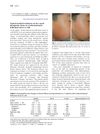
July 2012 in “Journal of the American Academy of Dermatology” This study found that topical tacalcitol improved roughness and scaling in erythromelanosis follicularis faciei et colli, although it was less effective for facial erythema.
64 citations
,
March 2004 in “Journal of Clinical Investigation” This study found that inhibiting the enzyme ornithine decarboxylase (ODC) prevented UVB-induced basal cell carcinomas in a mouse model, suggesting ODC is a potential target for chemoprevention strategies.
 April 2016 in “Journal of The American Academy of Dermatology”
 A child on life support experienced rapid hair loss due to severe illness affecting hair growth.
![Distribution of 1,25-Dihydroxyvitamin D3[22-Oxa] In Vivo Receptor Binding in Adult and Developing Skin](/images/assets/d9b990e6-6243-4abe-b868-68801a5844f7/small/35023.jpg) 15 citations
,
January 1995 in “Archives of dermatological research”
15 citations
,
January 1995 in “Archives of dermatological research” In this study, OCT showed strong nuclear binding in certain skin cells, suggesting similar genomic effects to vitamin D with potential therapeutic benefits due to its lower calcaemic effect.
 8 citations
,
September 2022 in “Human genomics”
8 citations
,
September 2022 in “Human genomics” This study identified a coexpression network and key genes associated with thyroid eye disease, potentially aiding in its treatment and diagnosis.
This study found that premenopausal exercising women with oligomenorrhea had lower triiodothyronine levels and truncal fat percentage compared to other groups, suggesting distinct energetic and reproductive profiles.
 March 2023 in “Journal of Applied Biomedicine”
 This study suggests that oleanolic acid may promote hair growth in mice with testosterone-induced androgenetic alopecia by activating the Wnt/β-catenin pathway and influencing various molecular levels.

This chapter reports that essential oil-based therapy, or aromatherapy, poses potential benefits for managing various disorders, such as pain, psychological issues, and skin conditions, although toxicity risks necessitate careful use under professional supervision.
8 citations
,
August 2014 in “Biochemical and Biophysical Research Communications” The study found that over-expressing ornithine decarboxylase in the outer root sheath of the hair follicle in mice increases UVB-induced tumor growth and invasive squamous cell carcinoma compared to inter-follicular epidermal keratinocytes.
1 citations
,
January 1989 in “Carcinogenesis” This study found that dexamethasone treatment inhibited the inflammatory response and the induction of ornithine decarboxylase activity in mouse skin after TPA application, although the effect on ODC was weaker during the hyperplastic stage.
 2 citations
,
January 2022 in “Skin research and technology”
2 citations
,
January 2022 in “Skin research and technology” In this study, optical coherence tomography detected hair follicles at the dermoepidermal junction not visible on the scalp surface in alopecia areata patients, suggesting OCT may help monitor treatment response.

This abstract contains subscription and access information for Wolters Kluwer Health journals but reports no research findings.
 April 2026 in “Amino Acids”
 This study reviews prior research using transgenic K6/ODC mice and demonstrates that elevated polyamines in epithelial cells contribute significantly to skin tumor development and progression by stimulating proliferation, altering cell signaling and chromatin remodeling, and affecting immune functionality, amongst other mechanisms.
1 citations
,
January 2024 in “International Journal of Applied Biochemistry and Molecular Biology.” In this case-control study, EGF levels were significantly higher in patients with alopecia areata than in healthy controls, and these elevated levels positively correlated with the severity and extent of the disease, suggesting EGF as a potential marker for alopecia areata severity.
44 citations
,
June 1967 in “The journal of nutrition/The Journal of nutrition” This study found that essential fatty acid deficiency in rabbits leads to significant degeneration of gonadal tissue, possibly due to impaired anterior pituitary gland function.
 29 citations
,
August 2007 in “Annals of Oncology”
29 citations
,
August 2007 in “Annals of Oncology” Docetaxel and oxaliplatin are effective and have manageable side effects for recurrent platinum-sensitive ovarian cancer.
11 citations
,
November 2018 in “British Journal of Dermatology” In this study, adults with persistent facial erythema of rosacea showed significantly greater improvement when treated with once-daily oxymetazoline cream compared to a vehicle, and using baseline photographs in assessments enhanced the accuracy by reducing perceived vehicle effects.