April 2025 in “Dermatologic Surgery” This article reports no new research findings and corrects the affiliation for Dr. Shao-Wen Li in a previous publication.
 September 2024 in “Journal of the American Academy of Dermatology”
 This review discusses the limited evidence on the efficacy of platelet-rich plasma for treating endocrine therapy-induced and permanent chemotherapy-induced alopecia and reports no new clinical results.
 December 2024 in “Surgery and Clinical Practice”
 This study suggests that Low-level Laser Therapy may improve pain and quality of life in women with Chronic Pelvic Pain Syndrome, though larger studies are needed to confirm these findings.
 10 citations
,
January 2019 in “The Nurse Practitioner”
10 citations
,
January 2019 in “The Nurse Practitioner” This article reviews diagnostic and treatment guidelines for polycystic ovary syndrome, discussing how nurse practitioners can enhance patients' quality of life through education; it reports no new clinical results.
 42 citations
,
February 1998 in “The Journal of Steroid Biochemistry and Molecular Biology”
42 citations
,
February 1998 in “The Journal of Steroid Biochemistry and Molecular Biology” This study found that PNU 157706 is a highly potent inhibitor of human 5α-reductase enzymes, showing a stronger and longer-lasting antiprostatic effect in rats compared to finasteride.
 18 citations
,
April 2021 in “PLOS ONE”
18 citations
,
April 2021 in “PLOS ONE” This systematic review found that most level I/II clinical studies on platelet-rich plasma therapy have focused on musculoskeletal injuries, but inconsistent reporting of PRP composition complicates comparisons across medical specialties.
September 2019 in “The journal of investigative dermatology/Journal of investigative dermatology” This study found that the PPARγ modulator NAC-GED-0507-Levo may protect hair follicles from chemotherapy-induced damage, potentially offering a strategy to address irreversible hair loss in cancer patients.
 1 citations
,
April 2018 in “Journal of Investigative Dermatology”
1 citations
,
April 2018 in “Journal of Investigative Dermatology” This study found that Polycomb repressive complex 1 is crucial for skin development and stem cell specification, influencing gene activity beyond its known repressor functions.
 5 citations
,
November 2024 in “Journal of Clinical Immunology”
5 citations
,
November 2024 in “Journal of Clinical Immunology” This study reports that a 9-week-old infant with Netherton syndrome showed rapid and sustained symptom improvement, including skin microbiome normalization and developmental progress, after off-label dupilumab treatment, without adverse reactions.
117 citations
,
April 2008 in “Developmental biology” This study identified that Eda-A1 unexpectedly induces placode inhibitors dkk4 and lrp4, indicating the importance of tightly regulated signaling for proper ectodermal organ development.
 11 citations
,
February 2020 in “Dermatology and therapy”
11 citations
,
February 2020 in “Dermatology and therapy” This study reported that four patients with lichen planopilaris showed dramatic improvement, including symptom reduction and hair regrowth, after treatment with low-level light therapy.
 4 citations
,
September 2022 in “Indian Journal of Pharmaceutical Education and Research”
4 citations
,
September 2022 in “Indian Journal of Pharmaceutical Education and Research” This study found that methanolic leaf extract of Plumbago zeylanica L. demonstrates strong thrombolytic and antioxidant activities and shows promise as a source of such agents.
39 citations
,
January 2006 in “Journal of Cosmetic and Laser Therapy” This study found that pneumatic skin flattening (PSF) significantly reduces pain and post-treatment erythema during high-energy IPL and laser hair removal while enhancing treatment efficacy.
 105 citations
,
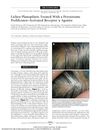
December 2009 in “Archives of dermatology”
105 citations
,
December 2009 in “Archives of dermatology” This overview discusses primary cicatricial alopecias, focusing on lichen planopilaris, and highlights the challenges in treatment and the progressive nature of hair loss despite symptom management, without providing new clinical results.
In this study, PDLLA treatment in middle-aged mice was observed to enhance hair growth by increasing macrophage M2 polarization and hair follicle stem cell proliferation, potentially rejuvenating the skin's microenvironment and offering a novel approach for age-related hair loss.
May 2023 in “Pharmaceuticals” In this in silico study, researchers analyzed nonsynonymous SNPs in the LIPH gene linked to hypotrichosis and identified three potentially harmful variants (W108R, C246S, and H248N) out of 215 total, using sequence- and architecture-based bioinformatics techniques to differentiate between harmful and benign SNPs.
 1 citations
,
February 2014 in “Analytical Letters”
1 citations
,
February 2014 in “Analytical Letters” This study developed a fast and sensitive ultra-high performance liquid chromatography method to quantify ketoconazole in antidandruff emulsions, showing comparable results to labeled concentrations.
 1 citations
,
November 2025 in “Clinical and Experimental Medicine”
1 citations
,
November 2025 in “Clinical and Experimental Medicine” This review highlights the emerging role of long non-coding RNAs (lncRNAs) in dermatology, suggesting that lncRNAs significantly impact signaling pathways involved in normal skin functions and skin diseases, offering potential as biomarkers and therapeutic targets.
 8 citations
,
August 2020 in “PLOS Computational Biology”
8 citations
,
August 2020 in “PLOS Computational Biology” This study presents a computational approach, CATNIP, which repurposes drugs using only their biological and chemical information, predicting new uses like adrenergic uptake inhibitors for Parkinson's and vandetanib for Type 2 Diabetes.
 April 2021 in “BMJ Case Reports”
 This case report discusses a rare instance of pseudolymphomatous folliculitis in a 19-year-old man, highlighting the challenge in diagnosing PLF due to its low clinical suspicion index and variable initial clinical diagnoses.
 January 2025 in “Advances in Clinical Medicine”
 This review summarizes research on the use of Platelet-Rich Plasma for treating discogenic low back pain, showing potential therapeutic benefits but indicating varied results across studies and a need for more objective evaluation methods.
13 citations
,
June 2011 in “International Journal of Dermatology” This study found that a new lecithinized coal tar formulation did not stain different types of mammalian hair, suggesting it may be promising for treating scalp psoriasis without the drawback of staining.
 7 citations
,
December 2016 in “Journal of The Taiwan Institute of Chemical Engineers”
7 citations
,
December 2016 in “Journal of The Taiwan Institute of Chemical Engineers” This study found that porcine platelet-rich plasma can be a commercially viable replacement for fetal bovine serum with similar effectiveness in promoting human hair follicle cell growth.
60 citations
,
July 1997 in “Journal of Wildlife Diseases” This study observed that northern elephant seals with skin disease had elevated pollutants like PCBs in their bodies, suggesting a potential link to the condition's unknown etiology.
10 citations
,
January 2020 in “Journal of Materials Chemistry B” This study developed a biodegradable nanofibrous biofilm that attracts skin-related cells and accelerates blood vessel formation, potentially improving skin wound healing.
78 citations
,
May 2019 in “Frontiers in Cellular and Infection Microbiology” This study found that the antimicrobial peptide DPK-060 effectively reduced bacterial counts of Staphylococcus aureus and was safe for topical use in preclinical models, although nanocarrier encapsulation did not enhance its efficacy.
 7 citations
,
August 2020 in “Journal of The American Academy of Dermatology”
7 citations
,
August 2020 in “Journal of The American Academy of Dermatology” This letter comments on a randomized controlled trial by Shapiro et al that found no significant benefits of platelet-rich plasma compared to placebo for male androgenetic alopecia, highlighting issues with PRP protocol variations.
January 2026 in “Chemistry & Biodiversity” This study found that the chemical composition and biological activity of Platycladus orientalis fruit extracts varied with the extraction method, revealing potent antioxidant and enzyme inhibitory properties, particularly in the n-hexane extract, which suggests potential applications for managing dysregulated enzyme conditions.
 September 2021 in “VNU Journal of Science: Medical and Pharmaceutical Sciences”
 This review discusses the diverse applications of platelet-rich plasma (PRP) across various medical fields and reports no new clinical results, advocating PRP as a promising therapy for future use.
1 citations
,
July 2019 in “Small ruminant research” This study suggests that the NGF/TrkA/CREB system plays a crucial role in promoting outer root sheath cell proliferation in cashmere goats, which may aid in marker-assisted breeding.