 September 2021 in “VNU Journal of Science: Medical and Pharmaceutical Sciences”
 This review discusses the diverse applications of platelet-rich plasma (PRP) across various medical fields and reports no new clinical results, advocating PRP as a promising therapy for future use.
 March 1998 in “Journal of dermatological science”
 Diphencyprone initially increases mouse hair growth, then slows it, possibly due to changes in specific protein levels.

This study found that activating Toll-like receptor 3 signaling in periodontal ligament stem cells may enhance their immunomodulatory properties, suggesting potential implications for future stem cell therapy applications.
7 citations
,
January 2025 in “Journal of Experimental & Clinical Cancer Research” This study found that PRMT5 inhibitors showed potent anti-tumor activity in models of adenoid cystic carcinoma and that combining these inhibitors with lenvatinib may have additional growth-inhibitory effects.
 87 citations
,
August 2017 in “Scientific Reports”
87 citations
,
August 2017 in “Scientific Reports” This study found that PCL-based nanofiber scaffolds enhanced cell proliferation and extracellular matrix deposition, suggesting they show promise as a cell delivery system for improving skin wound healing.
January 2003 in “Pharmaceutical Journal of Chinese People's Liberation Army” This study developed a simple and accurate HPLC method to determine the dissolution of finasteride tablets, achieving a high recovery rate and linear calibration for finasteride detection.
 October 2025 in “Infection Control and Hospital Epidemiology”
 This article discusses developing a standardized operating procedure for PRP administration to align with infection prevention regulatory standards and reports no new clinical results.

In this case report, a 65-year-old woman with lichen planopilaris achieved stabilization of her condition through early recognition and systemic corticosteroid therapy, emphasizing the critical role of coordinated management between primary care and dermatology.
 May 2025 in “Frontiers in Genetics”
 This study reported discovering a novel missense variant in a case of autosomal recessive woolly hair in a 31-year-old Chinese woman, which significantly reduced secretion of the encoded protein, likely leading to disease by impairing its hydrolytic function.
18 citations
,
May 2006 in “Journal of Cutaneous Medicine and Surgery” This study reports the first known case of linear lichen planopilaris following Blaschko's lines in a nonfacial region.
28 citations
,
September 2020 in “International Journal of Molecular Sciences” This study concluded that leucocyte-rich PRP has a continuous stimulatory effect on human fibroblast cells, enhancing their proliferation, migration, and impacting gene expression of the extracellular matrix and adhesion molecules.
 5 citations
,
November 2014 in “Hair transplant forum international”
5 citations
,
November 2014 in “Hair transplant forum international” This article introduces a series on low level laser light therapy, focusing on its science, regulatory aspects, and controlled trial methodologies, but reports no new clinical results.
9 citations
,
July 2022 in “Journal of Clinical Oncology” This study found that oral paclitaxel combined with encequidar improved tumor response rates compared to intravenous paclitaxel in women with metastatic breast cancer, while also reducing neuropathy but increasing certain gastrointestinal and neutropenic side effects.
June 2026 in “British Journal of Dermatology” This case study documented the first known instance of biopsy-confirmed lichen planopilaris occurring after hairline-lowering surgery in a patient without prior history, highlighting a potential complication where surgical trauma may trigger immune-mediated hair loss.
 3 citations
,
February 2018 in “Vigilância Sanitária em Debate”
3 citations
,
February 2018 in “Vigilância Sanitária em Debate” This review discusses the characteristics and potential clinical applications of platelet-rich plasma in Brazil, emphasizing the need for standardized protocols and regulatory oversight to ensure safety and efficacy.
20 citations
,
November 2020 in “Stem Cell Research & Therapy” This study found that placenta-derived mesenchymal stem cells overexpressing PRL-1 inhibited adipogenesis in orbital fibroblasts from Graves’ ophthalmopathy patients by modulating specific signaling pathways, suggesting a potential therapeutic strategy.
January 2025 in “JAAD Case Reports” In this study, researchers noted that while Poly-L-lactic acid dermal fillers boost collagen synthesis to add volume and reduce wrinkles, there is no established link between these fillers and hair loss according to existing literature.
 12 citations
,
December 2020 in “Frontiers in Cell and Developmental Biology”
12 citations
,
December 2020 in “Frontiers in Cell and Developmental Biology” This review covers the variability in methods for preparing platelet-rich plasma and reports no new clinical results, suggesting that this variability may contribute to inconsistent efficacy in clinical trials.
January 2026 in “ACS Applied Bio Materials” This study developed nanoliposomes embedding AR-PROTAC and NFKBIZ siRNA to target androgen receptors and reduce oxidative stress, which improved the follicular microenvironment and enhanced hair regrowth in androgenetic alopecia, suggesting a promising multi-target therapeutic strategy.
 April 2017 in “Journal of Investigative Dermatology”
 In this pilot study, researchers observed a correlation between clinical severity and histologic severity of lichen planopilaris, suggesting that an immunohistochemical scoring system could aid in grading disease activity.
 16 citations
,
July 2018 in “Dermatologic Surgery”
16 citations
,
July 2018 in “Dermatologic Surgery” In this study, iL-PRF injections produced significantly better clinical scores for androgenetic alopecia patients compared to controls, especially in those with more severe baseline conditions.
research News
February 2023 in “Chemistry & Industry” July 2025 in “Journal of Investigative Dermatology” Scarring alopecia involves increased immune cells and specific gene changes near damaged hair follicles.
This chapter reviews procedural hair restoration techniques, including platelet-rich plasma and hair transplantation, and reports no new clinical findings.
June 2026 in “Journal of Cosmetic Dermatology” PDRN may help with female hair loss, but more research is needed.
12 citations
,
March 2021 in “JAAD Case Reports” This study reported that immunotherapy in cancer patients can lead to skin-related immune adverse events, such as rashes, pruritus, and vitiligo, affecting a substantial proportion of patients.

This chapter reviews current and future strategies for identifying ligands and functions of orphan G protein-coupled receptors, but it reports no new experimental results.
In this study, Norwegian researchers followed over 350 patients with porphyria cutanea tarda for an average of 7 years and found that 25% experienced biochemical relapse, suggesting the importance of routine follow-up for early detection and management.
 May 2017 in “Journal of The American Academy of Dermatology”
 PLAU and SerpinB2 affect cell death differently in various forms of leprosy and could be targets for new treatments.
 1 citations
,
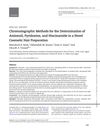
June 2020 in “Journal of AOAC INTERNATIONAL”
1 citations
,
June 2020 in “Journal of AOAC INTERNATIONAL” This study reports that two novel chromatographic methods demonstrated high sensitivity and selectivity for determining aminexil, niacinamide, and pyridoxine HCl in a laboratory-prepared mixture and hair tonic preparation.