35 citations
,
December 2008 in “PubMed” In this study, researchers reported that specific immunoreactivity patterns observed in hair follicle stem cell markers suggest different origins for trichilemmoma, basal cell carcinoma, and squamous cell carcinoma in human skin tissues.
37 citations
,
January 2010 in “Human Molecular Genetics” In this study using mice with specific gene knockouts, both farnesyltransferase and geranylgeranyltransferase-I were found to be essential for the proliferation and survival of skin keratinocytes.
11 citations
,
November 1998 in “Journal of dermatological science” This review summarizes studies on knockout mouse models revealing abnormalities in skin and hair follicle development but reports no new experimental results; the authors highlight the utility of these models for understanding hereditary skin disorders.
48 citations
,
July 1988 in “PubMed” In this study, researchers observed that rhino mice exhibit significant ductal hyperkeratinization in the meibomian gland, which may represent the first naturally occurring disorder of this gland in mice.
18 citations
,
January 2013 in “Veterinary Dermatology” This study found that K15 is a useful marker for investigating the role of stem cells in canine hair follicle tumours, while nestin is not optimal.
 7 citations
,
November 2007 in “Annales de Dermatologie et de Vénéréologie”
7 citations
,
November 2007 in “Annales de Dermatologie et de Vénéréologie” A man was diagnosed with a rare form of lupus after showing unique skin symptoms that responded well to treatment.
 January 2025 in “Medical Research Archives”
 This review highlights the multifaceted roles of hair follicles in skin health, emphasizing their contribution to skin tumorigenesis, homeostasis, and wound healing, and how dysregulation in associated pathways like Wnt, Hedgehog, and Notch may contribute to skin cancer development.
 September 2019 in “Journal of Investigative Dermatology”
 This study found that a new formulation using short chain esters and ethanol can selectively deliver hydrogen peroxide to hair follicles during epilation, causing follicular damage without affecting epidermal keratinocytes.
This study found that the nail immune system is similar to the hair follicle immune system, with both showing a relative "immune privilege" that may protect against autoimmunity.
 140 citations
,
April 2004 in “The journal of investigative dermatology/Journal of investigative dermatology”
140 citations
,
April 2004 in “The journal of investigative dermatology/Journal of investigative dermatology” This study found that mice lacking the 1αOHase enzyme, which is responsible for producing a key vitamin D metabolite, showed impaired epidermal differentiation and delayed recovery of skin barrier function after disruption.
 81 citations
,
September 2005 in “The American journal of pathology”
81 citations
,
September 2005 in “The American journal of pathology” This study found that activin affects both stromal cells and keratinocytes in skin morphogenesis and repair, with dose-dependent effects on keratinocytes demonstrated through transgenic mouse models.
35 citations
,
September 2009 in “Development” This study found that overexpression of the intercellular adhesion protein Necl2 in hair follicle stem cells was associated with reduced cell proliferation and delayed wound healing in both cultured cells and transgenic mice.
 17 citations
,
January 2010 in “Acta Dermato Venereologica”
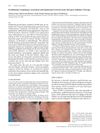
17 citations
,
January 2010 in “Acta Dermato Venereologica” This report details a case of a 43-year-old woman developing yellowish papular eruptions alongside typical acneiform skin reactions on her cheeks and chest following a switch from cetuximab to panitumumab treatment.
 9 citations
,
August 2017 in “Journal of comparative pathology”
9 citations
,
August 2017 in “Journal of comparative pathology” This study suggests that uncontrolled embryonic trichogenesis may play a role in the development of trichoblastoma in rabbits.
4 citations
,
January 2020 in “Dermatology Online Journal” In this report, a 1-year-old boy with congenital atrichia with papular lesions was found to have a complete absence of scalp and body hair and keratin-filled cysts due to a mutation in the hairless gene.
 2 citations
,
November 2018 in “Cell Stem Cell”
2 citations
,
November 2018 in “Cell Stem Cell” This study reported that wound-resident mesenchymal cells can be reprogrammed to generate epithelial tissues, aiding in the closure of large, non-healing ulcers without signs of malignant transformation.
2 citations
,
March 2014 in “The Egyptian Journal of Histology” The study concluded that local administration of in-vitro-expanded bone marrow-derived mesenchymal stem cells accelerates and promotes healing in full-thickness excisional wounds in adult male albino rats.
58 citations
,
November 2004 in “The journal of investigative dermatology/Journal of investigative dermatology” This study found that mutations in the Foxn1 gene in nude mice affect not only hair but also nail structure and differentiation, offering insights into nail hypergranulosis pathogenesis relevant to human nail diseases.
46 citations
,
July 2015 in “Wound repair and regeneration” This study found that keloid tissues exhibit epithelial-mesenchymal transition-related changes and alterations in gene expression, implicating these processes in the pathogenesis of keloids.
36 citations
,
June 1988 in “Australian Journal of Biological Sciences” This study found that twice-daily intradermal injections of mouse epidermal growth factor in Merino sheep resulted in dose-dependent changes in wool follicles and fibres, including induction of catagen and subsequent regeneration.
 29 citations
,
February 2007 in “Hormone and metabolic research”
29 citations
,
February 2007 in “Hormone and metabolic research” This study found that antisense oligonucleotides can significantly reduce androgen receptor expression in cultured human sebocytes and may offer new therapeutic possibilities for androgen-associated skin diseases.
25 citations
,
September 1995 in “Biochemistry and Cell Biology” This study found that high levels of human cytokeratin 16 expression in transgenic mice lead to skin lesions and altered keratinocyte structure, suggesting potential implications for human skin disorders and wound healing.
11 citations
,
January 2005 in “Brazilian Journal of Medical and Biological Research” This study found no qualitative skin differences during development between mutant hairless USP mice and BALB/c mice, except for enlarged cysts in the hairless strain.
5 citations
,
January 1993 in “PubMed” In this study, retinoic acid treatments induced glandular and feather formation in embryos by altering positional values and activating specific retinoic acid nuclear receptor gene expression.
2 citations
,
June 2019 in “The Journal of Dermatology” This report describes two cases of aplasia cutis congenita with hair collar signs and hemangioma, which may suggest neural tube defects, although imaging showed no bone or neural tissue abnormalities.
1 citations
,
February 2015 in “Revista Acadêmica Ciência Animal” This case report describes the presence of a teratoma within an equine antral follicle and suggests that the ovary maintained functionality despite the teratoma, as indicated by active antral follicles and recent ovulation.
 April 2018 in “Journal of Investigative Dermatology”
 In this study, the authors identified a role for hair follicles in regulating the formation and sympathetic innervation of arrector pili muscles, influencing hair follicle stem cell activity and potentially explaining hair loss associated with beta-blockers and androgenic alopecia.
 28 citations
,
July 2007 in “Development”
28 citations
,
July 2007 in “Development” In this study, inactivating the TAF4 subunit of transcription factor TFIID in mouse epidermis disrupted gene expression linked to skin and hair function, and increased tumor risk.
 80 citations
,
March 2008 in “Contact Dermatitis”
80 citations
,
March 2008 in “Contact Dermatitis” This study found that scalp sensitivity frequently occurs in the French population and is associated with various symptoms and triggers, differing from facial skin sensitivity.
 363 citations
,
March 2017 in “Nature Communications”
363 citations
,
March 2017 in “Nature Communications” This study found that, in mouse tail epidermis, stem cells rapidly activate and regenerate new progenitors to repair wounds, with mechanisms affecting their proliferation, differentiation, and migration.