54 citations
,
May 2001 in “Journal of Investigative Dermatology” This study suggests that increased putrescine levels may disrupt normal hair follicle development in transgenic mice, leading to hair loss and altered skin structure, yet these mice appear more resistant to skin tumorigenesis.
50 citations
,
December 2017 in “British Journal of Dermatology” This study found that ECMs from papillary and dermal papilla fibroblasts support normal basement membrane formation, suggesting potential improvements for therapeutic biomaterials in skin engineering.
39 citations
,
November 2005 in “The journal of investigative dermatology/Journal of investigative dermatology” The study concluded that fatty acid transport protein 4 in epidermal keratinocytes is crucial for maintaining normal skin structure, as its deficiency led to hyperkeratosis and epidermal barrier disruption in mice.
 18 citations
,
January 2004 in “Dermatologic Clinics”
18 citations
,
January 2004 in “Dermatologic Clinics” This article discusses nutritional contributions to hair health and highlights the need for identifying risk factors for deficiencies but reports no new clinical findings.
17 citations
,
November 2001 in “Journal of Investigative Dermatology Symposium Proceedings” This study found that Stat3 removal in keratinocytes of mice impairs healing and disrupts the normal hair cycle, leading to skin ulcers and hair loss as they age.
13 citations
,
July 2016 in “Indian Journal of Dermatology” This report describes two Saudi brothers with dermatopathia pigmentosa reticularis who exhibited normal hair shafts despite their condition.
2 citations
,
December 2020 in “Developmental cell” In this study, DNA cross-linking agents used in cancer therapy were found to cause unintended hyperplasia and fate mis-specification in normal epithelial stem cells through inflammasome activation in dermal fibroblasts.
2 citations
,
February 2018 This study found that Raman spectroscopy has potential for detecting biophysical differences in basal cell carcinoma compared to normal skin structures, supporting its future use in Mohs surgery.
2 citations
,
April 2002 in “The journal of investigative dermatology/Journal of investigative dermatology” This study found that vitamin D receptor presence is vital for normal hair growth in mice, as shown by vitamin D receptor-null mice developing alopecia, while transgenic expression of human vitamin D receptor in these mice restored normal hair growth.
January 2022 in “Springer eBooks” This review discusses the potential of the hair follicle dermis to direct hair development and explores concepts related to hair growth and androgenetic alopecia, without reporting new clinical results.
193 citations
,
May 2008 in “Development” This study found that activating β-catenin signaling in embryonic epidermis promoted hair follicle characteristics at the expense of normal epidermal differentiation, leading to early pigmentation and innervation.
166 citations
,
July 1999 in “American Journal Of Pathology” This study found that the loss of a functional hr gene in mice leads to premature and abnormal hair follicle regression, disrupting normal hair cycling and architecture.
 58 citations
,
November 2012 in “PLoS ONE”
58 citations
,
November 2012 in “PLoS ONE” This study found that dermal fibroblast cultures, especially those with higher alpha-smooth muscle actin expression, can be used to produce skin-derived precursor cells, unlike human hair follicle dermal papilla cultures.
39 citations
,
June 2018 in “Burns” This study found that the spiny mouse can regenerate tissues such as skeletal muscle, dermis, and hair without scarring after full thickness thermal burns, unlike the lab mouse.
38 citations
,
June 2016 in “Journal of Tissue Engineering and Regenerative Medicine” This study demonstrated that implanting μm-scale full-thickness columns of human skin tissue into immunodeficient mice restored key features of normal human skin, suggesting potential for human wound repair with minimal donor site morbidity.
22 citations
,
June 2010 in “Experimental Dermatology” This study reported that patients with alopecia areata have reduced expression of the melanocortin receptor MC2R in their scalp tissues compared to normal scalp, indicating potential involvement in the condition's pathophysiology.
 12 citations
,
February 1997 in “British Journal of Dermatology”
12 citations
,
February 1997 in “British Journal of Dermatology” This study found that 5α–reductase activity is higher in infrainfundibular keratinocytes compared to interfollicular epidermal keratinocytes, suggesting a potential role in acne-related follicular changes.
 10 citations
,
July 2021 in “Archiv für Pathologische Anatomie und Physiologie und für Klinische Medicin”
10 citations
,
July 2021 in “Archiv für Pathologische Anatomie und Physiologie und für Klinische Medicin” This study found that the expression of LRIG1 in Merkel cell carcinoma tumors was associated with improved overall and cancer-specific survival.
 9 citations
,
November 2013 in “Dermatologic Surgery”
9 citations
,
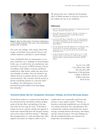
November 2013 in “Dermatologic Surgery” Hair transplant complications were likely due to deep graft placement and rough handling.
 87 citations
,
February 2004 in “Plastic and Reconstructive Surgery”
87 citations
,
February 2004 in “Plastic and Reconstructive Surgery” In this study, researchers achieved complete reepithelialization and hair growth on a burn-injured scalp using a tissue-engineered dermal template with early micrograft hair follicle implantation.
 249 citations
,
April 2002 in “The FASEB journal”
249 citations
,
April 2002 in “The FASEB journal” This study provides evidence that human skin contains genes and enzymes necessary for producing serotonin and melatonin.
170 citations
,
November 2007 in “The journal of investigative dermatology/Journal of investigative dermatology” This study found that in the absence of hair follicles, cutaneous wounds in mice showed delayed reepithelialization but eventually achieved normal wound closure after expanding the activated epidermis region.
148 citations
,
May 2008 in “The journal of investigative dermatology/Journal of investigative dermatology” This study found that mice lacking the vitamin D receptor (VDR) developed skin tumors more rapidly than those with normal VDR activity, regardless of 1,25-dihydroxyvitamin D(3) presence.
 143 citations
,
September 2008 in “Experimental gerontology”
143 citations
,
September 2008 in “Experimental gerontology” This review discusses the diverse roles and characteristics of epidermal and dermal stem cells in skin regeneration and aging, highlighting their potential applications in regenerative medicine and reports no new clinical results.
99 citations
,
January 2002 in “Plastic & Reconstructive Surgery” In this study, fetal rat wounds at gestational age 16 days healed without scar formation and resembled normal skin architecture, unlike those at 18 days which resulted in scarring and lack of hair follicles.
 75 citations
,
January 2011 in “Plastic and Reconstructive Surgery”
75 citations
,
January 2011 in “Plastic and Reconstructive Surgery” This review discusses the use of dermal regeneration templates for treating burn injuries and other wounds, highlighting their effectiveness in reducing scars and aiding in regenerative processes, but reports no new clinical results.
 49 citations
,
September 2007 in “Journal of Investigative Dermatology”
49 citations
,
September 2007 in “Journal of Investigative Dermatology” The study found that bioengineered hair follicles work when using cells from the same species but have issues when combining human and mouse cells.
 36 citations
,
November 1961 in “Archives of Dermatology”
36 citations
,
November 1961 in “Archives of Dermatology” This abstract discusses the uncertain role of the vascular system in hair loss and highlights the unexplained aspects of various types of alopecias; it reports no new research findings.
 23 citations
,
February 1979 in “Veterinary Clinics of North America: Small Animal Practice”
23 citations
,
February 1979 in “Veterinary Clinics of North America: Small Animal Practice” This review discusses the physicochemical properties, binding mechanisms, and factors affecting corticosteroid-binding globulin (CBG) functions, but reports no new clinical results.
 13 citations
,
January 2011 in “International Journal of Trichology”
13 citations
,
January 2011 in “International Journal of Trichology” CTA is often mistaken for AA but doesn't respond to steroids and may require hair transplantation.