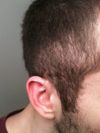
TLDR DPR can show different hair characteristics, as seen in two brothers with normal hair.
Dermatopathia pigmentosa reticularis (DPR) was a rare autosomal dominant ectodermal dysplasia linked to mutations in keratin 14, presenting with generalized reticulate hyperpigmentation, nonscarring alopecia, and onychodystrophy. The study reported on two Saudi brothers with DPR who exhibited normal hair shafts, as confirmed by scanning and transmission electron microscopy, suggesting variability in hair shaft presentation in DPR cases.
5 citations
,
September 2015 in “Nepalese journal of ophthalmology” An 11-year-old girl with a rare skin disorder also had cornea issues and dry eye, needing careful management.
12 citations
,
January 2013 in “Indian dermatology online journal” Dermatopathia pigmentosa reticularis causes skin discoloration, hair loss, and nail problems.
12 citations
,
January 2013 in “Indian dermatology online journal” Dermatopathia pigmentosa reticularis causes skin discoloration, hair loss, and nail problems.
November 2019 in “Harper's Textbook of Pediatric Dermatology” The document is a detailed medical reference on skin and genetic disorders.
November 2019 in “Harper's Textbook of Pediatric Dermatology” Understanding normal hair growth and loss in children is key to diagnosing and treating hair disorders.
40 citations
,
November 2021 in “International Journal of Molecular Sciences” Mutant keratins cause inflammation in Epidermolysis Bullosa Simplex, suggesting targeting them could help treat the disorder.
June 2024 in “British Journal of Dermatology” KRT14 gene variants cause dermatopathia pigmentosa reticularis, affecting nails, teeth, and hair.