 December 2024 in “Pharmaceutics”
 This review systematically examined recent advancements in spironolactone-loaded nanocarriers, revealing that lipid and vesicular nanoparticles enhance bioavailability and skin penetration for treating androgen-dependent disorders, but highlighted the need for further clinical studies to optimize their use.

In this study, researchers developed a novel gel formulation combining zinc oxide nanoparticles and finasteride-loaded nanostructured lipid carriers, which showed promising results for topical delivery and effective skin penetration, potentially offering a new treatment approach for androgenic alopecia.
 January 2023 in “Research Square (Research Square)”
 In this study, CoQ10 and selenium nanoparticles showed potential to alleviate hyperlipidemia and simvastatin-induced side effects in rats, but a triple combination with simvastatin caused intense liver and muscle damage.
 June 2022 in “Al-Azhar International Medical Journal /Al-Azhar International Medical Journal”
 This study found that autologous emulsified fat followed by hair transplantation using FUE was more effective than FUE alone in improving outcomes for patients with cicatricial alopecia after six months.
 July 2019 in “Iconic Research And Engineering Journals”
 This study found that transparent shampoo bars containing high concentrations of aloe vera gel, castor oil, and cinnamon oil exhibited antimicrobial activity, reduced hair loss, and caused no skin irritation.
 July 2018 in “DOAJ (DOAJ: Directory of Open Access Journals)”
 This study found that finasteride delivered through a nano-transferosomal gel showed improved penetration through skin layers compared to a conventional gel, suggesting a potential alternative for oral administration.
This study found that topically applied nano-Zinc oxide accumulated in hair follicles and induced apoptosis in hair follicle stem cells, indicating a potential risk to skin homeostasis.
January 2014 in “Journal of Tissue Engineering and Reconstructive Surgery” This study found that rabbit hair follicle stem cells, combined with electro-spun nano silk fibers, successfully constructed a tissue-engineered urethra, suggesting potential for future in vivo repair studies.
In this study, penetration of FA-PLGA nanoparticles into hair follicles was observed in excised dog, rat, and porcine skin, with the deepest penetration in porcine skin, suggesting its similarity to human skin for drug delivery studies.
19 citations
,
July 2024 in “Drug Delivery” This review discusses how polymer-based nanocarriers can enhance drug delivery targeting hair follicles for acne treatment, focusing on factors affecting this delivery method, combination technologies to improve follicle targeting, and recent advancements in polymer nanodrug-delivery systems.
16 citations
,
August 2021 in “Frontiers in Pharmacology” This study found that a nano-preparation of quercetin, using a self-nanoemulsifying drug delivery system, was more effective than standard quercetin in reducing cardiac complications and tissue damage in rats with metabolic syndrome, although both formulations similarly reduced oxidative and inflammatory markers.
8 citations
,
June 2024 in “Pharmaceutics” This study found that using elastic nano-liposomes to deliver palmitoylethanolamide improved its transdermal delivery and enhanced its skincare effects, with minimal cytotoxicity and no allergic reactions observed.
 March 2025 in “BioNanoScience”
 The new minoxidil hydrogel improves delivery and is safe for treating hair loss.
65 citations
,
October 2015 in “Acta Biomaterialia” This study found that using a pH-sensitive layered double hydroxide nanocarrier to deliver etoposide significantly reduced liver toxicity and enhanced the drug’s effectiveness in targeting and suppressing non-small cell lung cancer.
 43 citations
,
February 2020 in “Clinica chimica acta”
43 citations
,
February 2020 in “Clinica chimica acta” This review discusses the role of phytochemical nanoparticles in cervical cancer therapy and reports no new clinical results; the authors highlight their potential advantages over conventional chemotherapy.
 21 citations
,
July 2017 in “Journal of Cosmetic and Laser Therapy”
21 citations
,
July 2017 in “Journal of Cosmetic and Laser Therapy” This review discusses the research and development of vesicular carriers to enhance the delivery and effectiveness of active ingredients in cosmetic products, reporting no new clinical results.
9 citations
,
July 2025 in “Pharmaceuticals” This review highlights the therapeutic potential of plant-derived exosomes, noting their larger size compared to animal-derived exosomes and usefulness in targeted drug delivery and inter-kingdom communication. It summarizes existing research on their biogenesis, characterization, and engineering for drug delivery, indicating significant opportunities for biotechnological advancements.
9 citations
,
February 2020 in “Materials Express” In a study on female SD rats, the authors found that RADA16-1 short-peptide nano-fiber gel scaffolds improved burn wound healing, hair follicle growth, hair growth length, and expression of bFGF and EGF compared to a NaCl control.
 8 citations
,
May 2022 in “International journal of nanomedicine”
8 citations
,
May 2022 in “International journal of nanomedicine” This study developed a fully natural resveratrol nanoparticle system using lecithin, showing potent anti-cancer activity in vitro and increased tumoral uptake in vivo on breast cancer models.
4 citations
,
September 2022 in “Agronomy” In this study, polyethylene nano-packaging significantly inhibited stipe elongation and maintained the postharvest quality of Flammulina velutipes better than traditional PE packaging by modulating respiration and hormone levels during storage.
 1 citations
,
May 2025 in “International Journal of Applied Pharmaceutics”
1 citations
,
May 2025 in “International Journal of Applied Pharmaceutics” This study formulated a nanogel with Bangkal bark extract that showed moderate antibacterial activity against Propionibacterium acnes, with the F3 formulation (8% extract) achieving the highest inhibition zone of 8 mm, suggesting potential as a natural acne treatment.
1 citations
,
August 2012 in “Research in Pharmaceutical Sciences” July 2026 in “Industrial Crops and Products” This review highlights the potential of Illicium verum in enhancing bioactive compound efficacy and stability through nanotechnology, despite challenges in physicochemical limitations and regulatory hurdles.
 January 2025 in “Nanoscale”
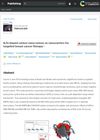
 This study reports that a new boron/nitrogen-doped carbon nano-onion-based delivery system for doxorubicin enhanced its uptake and anticancer effects in specific cancer cell types, while reducing cardiotoxicity in human heart cells.
January 2024 in “Scripta Medica” This review highlights the potential of nanoparticle delivery systems to mitigate doxorubicin's adverse effects and enhance its effectiveness, while discussing the integration of nanotechnology with Streptomyces-derived compounds to potentially advance future cancer therapies.
This study found that finasteride-loaded nanostructured lipid carriers developed for topical application showed satisfactory size, stability, and prolonged drug release, suggesting potential for enhanced delivery in androgenic alopecia treatment.
March 2022 in “Al-Azhar International Medical Journal (Print)” In this study, among individuals with androgenic alopecia, stromal vascular fraction injections led to greater clinical improvement and hair density increases compared to nanofat injections, with 26.7% of participants showing great improvement versus 6.7% in the nanofat group after six months.
513 citations
,
February 2022 in “Advanced Science” This study demonstrated that incorporating PDA@Ag nanoparticles into a cationic guar gum hydrogel significantly enhanced photothermal conversion efficiency, achieving superior antibacterial efficacy both in vitro and in vivo, advancing the potential of PDA as a photothermal antibacterial agent.
12 citations
,
January 2023 in “AAPS PharmSciTech” 11 citations
,
July 2023 in “Applied Nanoscience”