August 2019 in “Carolina Digital Repository (University of North Carolina at Chapel Hill)” This study indicates that MAGE-11 modulates androgen receptor transcriptional activity through F-box interactions, independent of the activation function 2 pathway, revealing a novel mechanism for androgen receptor regulation.
7 citations
,
December 2006 In this study, oral Tribulus terrestris extract significantly increased MSH expression in mouse hair follicle melanocytes, suggesting enhanced melanocyte activity and migration.
 35 citations
,
March 2012 in “Experimental and Clinical Endocrinology & Diabetes”
35 citations
,
March 2012 in “Experimental and Clinical Endocrinology & Diabetes” This article discusses various causes of hyperandrogenism in women and highlights diagnostic considerations for conditions such as PCOS, NCCAH, Cushing's disease, and androgen-secreting tumors, without reporting new clinical results.

A 73-year-old woman's unusual hair loss and growth led to the discovery of a rare condition causing too much testosterone, which improved after her ovaries were removed.
 37 citations
,
May 2016 in “JAAD case reports”
37 citations
,
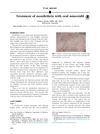
May 2016 in “JAAD case reports” This abstract describes monilethrix, an autosomal dominant genodermatosis with symptoms like hair fragility and keratosis pilaris, and does not report new experimental results.
 8 citations
,
May 2013 in “Journal of Investigative Dermatology”
8 citations
,
May 2013 in “Journal of Investigative Dermatology” This review explores the molecular processes behind hair follicle stem cell activation and suggests new potential targets for designing therapies for various types of alopecia, but it reports no clinical results.
June 2002 in “Science of aging knowledge environment” This study suggests that the oncogene c-Myc can induce DNA damage by increasing reactive oxygen species, potentially overriding p53 and contributing to genetic instability in cancer cells.
 2 citations
,
December 2022 in “Pharmaceutics”
2 citations
,
December 2022 in “Pharmaceutics” This study found that activating both PKM2 and Wnt/β-catenin signaling pathways significantly enhanced hair regrowth and hair follicle neogenesis in mice, suggesting a potential strategy for treating alopecia.
1 citations
,
April 2018 in “Journal of Investigative Dermatology” The Trichodysplasia spinulosa virus protein can cause abnormal hair growth in mice.
 2 citations
,
August 2023 in “Autophagy”
2 citations
,
August 2023 in “Autophagy” In this study, researchers found that keratinocyte-specific deletion of the autophagy mediator Atg16l1 in mice heightened skin inflammation and cancer responses, altered hair follicle stem cell activity, and sensitized keratinocytes to cell death.
 19 citations
,
January 2017 in “Hormone Molecular Biology and Clinical Investigation”
19 citations
,
January 2017 in “Hormone Molecular Biology and Clinical Investigation” This study found a high prevalence of hyperandrogenemia in women with PCOS, with distinct biochemical differences according to BMI and presence of hyperandrogenemia.
11 citations
,
March 1991 in “PubMed” This study found that in female patients with androgenic hair loss and hirsutism, complex hormonal disturbances include elevated cortisol and thyroid hormone imbalances, rather than elevated androgen levels alone.
April 2019 in “Journal of the Endocrine Society” In this case report, significantly elevated testosterone levels were documented in a young female with Type A Insulin Resistance Syndrome, marking a clinical finding beyond what is typically associated with the disorder's known mutations.
338 citations
,
April 2001 in “Current Biology” This study found that transient activation of c-Myc in transgenic mice stimulates keratinocyte proliferation and sebocyte differentiation, affecting normal epidermal and hair follicle development.
26 citations
,
April 2007 in “Journal of clinical oncology” March 2016 in “Experimental Dermatology” This study reported that EGFR activation leads to suppression of Stathmin, which may promote synchronized entry into catagen in hair follicles, highlighting potential mechanisms involving EGFR in hair cycle transitions.
January 2024 in “Arquivos de Neuro-Psiquiatria” This case study reported on a 49-year-old male with muscle weakness and low potassium levels, suggesting a diagnosis of thyrotoxic hypokalemic periodic paralysis.
 2 citations
,
January 2014 in “International Journal of Endocrinology”
2 citations
,
January 2014 in “International Journal of Endocrinology” In this study, women with a complete hydatidiform mole had significantly higher pre-evacuation levels of hCG, free testosterone, and DHEA-S compared to controls, which declined after HM evacuation.
5 citations
,
June 2020 in “Medicine” This report discusses a 22-year-old patient with MELAS syndrome carrying the m.10158T>C mutation, and highlights the need for extensive genetic testing when initial hot-spot mutation tests are negative.
 22 citations
,
February 2008 in “Journal of Neurochemistry”
22 citations
,
February 2008 in “Journal of Neurochemistry” This study found that minoxidil prevents long-term serotonergic toxicity induced by MDMA in rats, primarily by opening mitochondrial KATP channels and involving Akt and MAP kinases in its neuroprotective mechanism.
January 2020 in “Korean journal of ophthalmology/Korean Journal of Ophthalmology” This study found that minoxidil increases trabecular meshwork cell permeability, possibly via the downregulation of tight junction proteins and the generation of reactive oxygen species.
56 citations
,
July 2014 in “PloS one” This study found that selective androgen receptor modulators (SARMs) significantly inhibited tumor growth and metastasis-promoting factors in AR-positive triple-negative breast cancer models.
10 citations
,
March 2022 in “Frontiers in Oncology” This study found that the overexpression of the lncRNA HOTTIP in glioma cells increased resistance to the chemotherapy drug temozolomide, suggesting a key role for miR-10b and EMT processes in this resistance.
 42 citations
,
December 2016 in “Cell Death & Differentiation”
42 citations
,
December 2016 in “Cell Death & Differentiation” This study found that transient mtDNA double strand breaks in mice accelerated aging in certain tissues through increased reactive oxygen species, independent of p21/p53 pathway mediation.
 September 2023 in “Journal of the American Academy of Dermatology”
 This study discusses calcinosis cutis and alopecia totalis, highlighting the need for thyroid disease screening in children with alopecia areata, especially those with a history of Down syndrome or signs of potential thyroid dysfunction.
 7 citations
,
February 2025 in “Stem Cell Research & Therapy”
7 citations
,
February 2025 in “Stem Cell Research & Therapy” In a study using a mouse model, HF-MSCs were reported to enhance ovarian function in cyclophosphamide-induced premature ovarian failure more effectively than HU-MSCs, potentially by preventing ferroptosis in granulosa cells via the KEAP1/NRF2/HO-1 pathway.
 May 2019 in “Journal of Clinical Dermatology”
 This study found that metformin, an AMPK activator, promoted hair growth in vitro by enhancing the AMPK/β-catenin signaling pathway in dermal papilla and outer root sheath cells.
 19 citations
,
July 2013 in “The obstetrician & gynaecologist”
19 citations
,
July 2013 in “The obstetrician & gynaecologist” This review discusses diagnostic criteria for polycystic ovary syndrome and highlights the challenges and risks of misdiagnosing women with other hyperandrogenism causes; it reports no clinical results.
 2 citations
,
November 2011 in “InTech eBooks”
2 citations
,
November 2011 in “InTech eBooks” This article reviews the types and characteristics of adrenal cortex tumors, including their hormone secretion and detection as incidental findings, but presents no new research results.
 February 2025 in “International Journal of Molecular Sciences”
 This study found that melatonin may enhance hair follicle stem cell viability by downregulating the nuclear receptor RORA, which otherwise inhibits cell proliferation and promotes apoptosis.