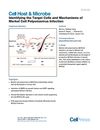
 133 citations
,
May 2016 in “Cell Host & Microbe”
133 citations
,
May 2016 in “Cell Host & Microbe” In this study, human dermal fibroblasts were identified as natural host cells that support productive Merkel cell polyomavirus infection, and the MEK antagonist trametinib was introduced as an effective inhibitor to control the virus.
 April 2024 in “Cellular signalling”
 This study on mice found that activating TRPML channels with MLSA1 promoted hair regeneration, accelerated hair cycle transition, and influenced human dermal papilla cells to secrete hair growth promoting factors while reducing hair growth inhibitors and oxidative damage.
 12 citations
,
October 2017 in “Radiation Research”
12 citations
,
October 2017 in “Radiation Research” This study observed that mTORC1 signaling is activated and crucial for hair follicle regeneration and hair growth in irradiated mice, facilitating recovery within 96 hours without significant hair loss.
 9 citations
,
September 2017 in “Nanoscale Research Letters”
9 citations
,
September 2017 in “Nanoscale Research Letters” This study found that combining TIMP-1 with graphene oxide promoted skin tissue regeneration in rats and provided sustained release of TIMP-1 over 40 days.
 May 2024 in “Cell proliferation”
 This study found that melatonin supplementation significantly promoted hair regeneration in a hair depilation mouse model by up-regulating the Wnt/β-catenin signaling pathway in dermal papillae and hair follicle stem cells, suggesting potential implications for human hair loss treatments.
 38 citations
,
January 2016 in “Cell Death and Disease”
38 citations
,
January 2016 in “Cell Death and Disease” This review discusses the role of the TCL1 transgenic mouse model in understanding chronic lymphocytic leukemia biology and highlights the importance of exploring new pathogenetic and therapeutic targets.

This study suggests that Tenebrio molitor larvae extract may promote hair growth and prevent hair loss by enhancing cell proliferation and protecting against cytotoxicity in laboratory settings.
1 citations
,
January 2018 in “Indian dermatology online journal” This case report presents a 14-year-old girl with both type I diabetes and monilethrix, detailing her symptoms and treatment with topical minoxidil, while exploring a possible genetic link between the conditions.
7 citations
,
December 2006 In this study, oral Tribulus terrestris extract significantly increased MSH expression in mouse hair follicle melanocytes, suggesting enhanced melanocyte activity and migration.
6 citations
,
May 2022 in “Pharmaceutics” This study demonstrates that MPM-FLIM multimodal imaging can effectively assess the delivery and dissolution of zinc pyrithione particles in human skin follicles using different application techniques.
3 citations
,
April 2025 in “Science Advances” This study found that mice with a homozygous knockout of the Ten1 gene, developed through CRISPR-Cas9-mediated exon 3 deletion, exhibited telomere shortening and symptoms consistent with accelerated aging, such as reduced lifespan, skin changes, aplastic anemia, and cerebellar hypoplasia.
 9 citations
,
December 2023 in “Journal of Neuroimmune Pharmacology”
9 citations
,
December 2023 in “Journal of Neuroimmune Pharmacology” This study found that systemic administration of NDP-MSH, a melanocortin receptor agonist, provided neuroprotective effects on dopaminergic nigrostriatal neurons in a mouse model of Parkinson's disease, reducing neuroinflammation and suggesting a role for regulatory T cells in these neuroprotective effects.
 4 citations
,
February 2012 in “Chinese Science Bulletin”
4 citations
,
February 2012 in “Chinese Science Bulletin” In this study, overexpression of the MtAnn3 gene in Medicago truncatula roots was associated with altered root hair growth polarity in a calcium-free environment.
41 citations
,
December 2011 in “The journal of investigative dermatology/Journal of investigative dermatology” This study reported that deleting the MED1 subunit from the MED complex in keratinocytes resulted in disrupted hair differentiation and cycling, leading to hair loss in mice.
 3 citations
,
September 2022 in “Animal biotechnology”
3 citations
,
September 2022 in “Animal biotechnology” This study found that knocking down lncRNA MTC in Liaoning Cashmere goat skin fibroblasts inhibited cell proliferation and increased apoptosis, suggesting its role in facilitating cell growth by regulating specific proteins.
 April 2016 in “Journal of Investigative Dermatology”
 This study found that trametinib and vemurafenib increased sebum production and gene expression related to lipid accumulation in hamster sebocytes, which may help explain certain side effects in patients.
 32 citations
,
April 2006 in “The Journal of Urology”
32 citations
,
April 2006 in “The Journal of Urology” Using finasteride with TIP extends time off period for prostate cancer patients.
January 2014 in “www.virtualization.info” This study found that skin wound healing was accelerated in young but delayed in older Med1(epi-/-) mice compared to wild-type mice, suggesting age-dependent roles of MED1 in epidermal regeneration.
1 citations
,
January 1981 in “Elsevier eBooks” Melatonin stops melanin production after tyrosinase action, with cyclic GMP mimicking this effect.
23 citations
,
July 2022 in “Nature Cell Biology” Targeting THY1 can improve skin repair and healing.
 28 citations
,
July 2007 in “Development”
28 citations
,
July 2007 in “Development” In this study, inactivating the TAF4 subunit of transcription factor TFIID in mouse epidermis disrupted gene expression linked to skin and hair function, and increased tumor risk.
 77 citations
,
January 1980 in “Carcinogenesis”
77 citations
,
January 1980 in “Carcinogenesis” This study found that TPA was significantly more effective than mezerein in inducing dark basal keratinocytes in mouse skin, which may be important in early tumor promotion stages.
January 2022 in “Figshare” This study found that knocking down lncRNA MTC in Liaoning Cashmere goat skin fibroblasts reduced cell proliferation and altered protein expression, suggesting its role in hair growth and regulatory pathways.
 56 citations
,
February 2006 in “American journal of physiology. Cell physiology”
56 citations
,
February 2006 in “American journal of physiology. Cell physiology” This study observed that in hormone-starved prostate cancer cells, the androgen 5alpha-dihydrotestosterone rapidly induces matriptase activation and shedding, which involves androgen receptor signaling and requires both transcription and protein synthesis.
March 2022 in “Oncology Times” In this study, tebentafusp-tebn improved overall survival in patients with metastatic uveal melanoma compared to standard therapies, despite higher rates of significant adverse events.
12 citations
,
May 2010 in “Journal of Clinical Oncology” This study found that MK-5108 is well tolerated at high doses as monotherapy in cancer patients, showing stable disease and some antitumor activity, particularly in combination with docetaxel.
 2 citations
,
January 2023 in “Sexual Medicine”
2 citations
,
January 2023 in “Sexual Medicine” This study found that the MTCK, a masturbation aid, significantly improved intravaginal ejaculation latency time and some related sexual function scores in men with premature ejaculation after 8 weeks of use.
May 2019 in “CINECA IRIS Institutial Research Information System (University of Genoa)” This study found that patients with the MITF p.E318K variant are more likely to develop multiple primary melanomas and dysplastic nevi with uncommon dermoscopic patterns compared to non-carriers.
2 citations
,
May 2022 in “Advanced therapeutics” This study reported that a novel vasodilator drug called TOP-M119, when delivered using a specially designed dissolving microneedle system, showed enhanced targeting of hair follicles and effectiveness in treating alopecia, demonstrated through in vitro, ex vivo, and in vivo studies involving mouse skin.
 3 citations
,
March 2019 in “Case Reports”
3 citations
,
March 2019 in “Case Reports” This report highlights a case of possible association between myotonic dystrophy type 1 and basal cell carcinoma, urging clinicians to consider this link despite negative genetic testing for known hereditary BCC syndromes.