14 citations
,
January 2022 in “Evidence-based Complementary and Alternative Medicine” This study found that cryptotanshinone improved bone mass, inhibited osteoclast differentiation, and protected against kidney damage in ovariectomized rats, suggesting potential benefits for clinical use.
December 2010 in “대한미용학회지” This study found that Polygoni multiflori Radix water extracts stimulated hair growth and hair follicle development in mice, suggesting it may be safer than minoxidil.
January 1996 in “Studia iuridica” This study identified two novel point mutations in the hHb6 gene associated with monilethrix, suggesting these mutations could serve as diagnostic markers for this genetic hair disorder.
1 citations
,
September 2024 in “Cosmetics” This study found that permanent makeup pigments were applied at similar depths as traditional tattoo inks in mice but faded over time due to larger inorganic pigments.
1 citations
,
July 2024 in “Journal of Investigative Dermatology” MPZL3 protein affects hair growth cycles and could help manage hair loss.
4 citations
,
January 2009 in “International journal of trichology” Minoxidil topical foam is a better, less irritating treatment for hair loss.
 1 citations
,
December 2016 in “Journal of Pakistan Association of Dermatology”
1 citations
,
December 2016 in “Journal of Pakistan Association of Dermatology” In this study, iontophoresis of medroxyprogesterone acetate significantly reduced hair growth rate in women with idiopathic facial hirsutism, without affecting serum androgen levels, and was well-tolerated as a treatment option.
April 2012 in “Cancer research” In this study, the authors found that targeting mTORC1 with rapamycin inhibited TPA-induced skin tumor promotion by affecting keratinocyte proliferation, including critical stem cell populations in the mouse epidermis.
 December 2022 in “theses.fr (ABES)”
 This study found that microplastics on the Lebanese Mediterranean coast transport various organic and inorganic pollutants, posing threats to marine organisms and potentially human health.
 August 2026 in “Clinical Cosmetic and Investigational Dermatology”
 In this study, combining Polynucleotides High Purification Technology with hyaluronic acid significantly reduced atrophic post-acne scar areas and improved Goodman-Baron scores in a majority of treated patients over six months, reaffirming the approach's beneficial effects in a real-world outpatient setting.
September 2023 in “International journal of molecular sciences” In this study involving ICR mice, researchers found that Korean red pine bark extract improved cognitive functions impaired by TMT through mechanisms like antioxidant system protection, cholinergic and synaptic support, mitochondrial regulation, and reduction of neuro-inflammation and apoptosis.
21 citations
,
May 2016 in “Experimental and Therapeutic Medicine” In this study, the researchers observed that MMP-2 and MMP-9 significantly fluctuated with the hair growth cycle in mice, suggesting their important role in hair development.
9 citations
,
September 2022 in “Frontiers in Physics” This study found that Mueller Matrix microscopy can accurately identify, detect, and evaluate hair follicles in mouse skin tissue, suggesting its potential for skin structure research and dermatological applications.
 6 citations
,
July 2013 in “Archives of Plastic Surgery”
6 citations
,
July 2013 in “Archives of Plastic Surgery” This article explains that proliferating trichilemmal tumors, originating in the hair follicle, can exhibit low-grade malignant potential, and recommends wide excision to minimize recurrence risk, but reports no new clinical findings.
September 2018 in “Translational andrology and urology” This study explored the effects of MOTILIPERM on infertility in a rat model with varicocele and oxidative stress, reporting its potential therapeutic efficacy.
 29 citations
,
October 2016 in “Cell death and differentiation”
29 citations
,
October 2016 in “Cell death and differentiation” This study found that in squamous cell carcinomas, the inhibition of the tumor-suppressor function of TAp73β by ΔNp63α occurs through promoter squelching, not direct protein interaction.
21 citations
,
February 1988 in “Toxicology” This study found that high doses of TCB caused severe toxicity in cotton top marmoset monkeys, with clinical and histological changes similar to those in humans and other primates exposed to PCBs.
 30 citations
,
February 2017 in “Histochemistry and Cell Biology”
30 citations
,
February 2017 in “Histochemistry and Cell Biology” This study found that applying TPA to mice accelerated hair follicle regeneration by activating Akt and Wnt/ß-catenin signaling pathways, involving hair follicle stem cell proliferation.
August 2025 in “Y HOC TP HO CHI MINH” In this study on Swiss albino mice, researchers reported that perilla leaf extract stimulated hair growth similarly to minoxidil, counteracting hair loss induced by testosterone injections.

This study suggests that Tenebrio molitor larvae extract may promote hair growth and prevent hair loss by enhancing cell proliferation and protecting against cytotoxicity in laboratory settings.
 133 citations
,
May 2016 in “Cell Host & Microbe”
133 citations
,
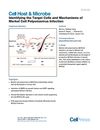
May 2016 in “Cell Host & Microbe” In this study, human dermal fibroblasts were identified as natural host cells that support productive Merkel cell polyomavirus infection, and the MEK antagonist trametinib was introduced as an effective inhibitor to control the virus.
December 2025 in “eTheses of Maulana Malik Ibrahim State Islamic University (Maulana Malik Ibrahim State Islamic University)” This study concluded that the combination 3 of the Nusa Tenggara Timur Ethnomedicinal Formula shows strong antioxidant activity and significantly increases hair follicle thickness in a chemotherapy-induced alopecia model in mice.
5 citations
,
January 2015 in “Case reports in medicine” In this case report, a novel missense mutation c.1360G>C (p.Ala454Pro) in the MBTPS2 gene was identified in a boy with typical IFAP syndrome and severe atopic features, although no phenotype/genotype correlation was established.
 15 citations
,
June 2019 in “Journal of Neuroendocrinology”
15 citations
,
June 2019 in “Journal of Neuroendocrinology” This study found that isoallopregnanolone reduced stress-induced tic-like behaviors and sensorimotor gating deficits in a mouse model of Tourette syndrome, suggesting potential therapeutic properties comparable to existing treatments like haloperidol and finasteride.
159 citations
,
July 2014 in “Molecular pharmaceutics” This study found that MPEG-dihexPLA micelles significantly improved the skin deposition of tacrolimus compared to a marketed ointment, suggesting better targeted delivery with reduced systemic absorption.
 3 citations
,
July 2021 in “Life science alliance”
3 citations
,
July 2021 in “Life science alliance” This study observed that disrupting the Pnkp gene in adult mice resulted in a premature aging-like phenotype, suggesting PNKP's vital role in maintaining normal growth and survival of certain progenitor cell populations.
March 2005 in “Journal of the American Academy of Dermatology” Recognizing minor skin lesions can help identify serious cancer syndromes.
January 2012 in “Hacettepe University Institutional Repository (hacettepe.edu.tr)” This study found that using a contrast agent in Microbeam Radiation Therapy simulations increased the target dose but concluded that using a linear accelerator as an X-ray source did not preserve MRT advantages.
This article reviews approved treatments for androgenetic alopecia and reports no new research findings, highlighting the need for further studies.
 March 2024 in “Cytologia”
 In this study, researchers observed that melatonin-mediated LncRNA MTC in Liaoning cashmere goat skin fibroblasts enhances cell proliferation by interacting with the GSTM1 protein, affecting its complex formation with ASK1 and thereby inhibiting apoptosis, which may be relevant for improving cashmere growth.