 June 2026 in “Zenodo (CERN European Organization for Nuclear Research)”
 In this study, researchers formulated a herbal hair dye using Eclipta alba and evaluated it for various parameters, finding it provided satisfactory coloring, conditioning, and stability without irritation, supporting its potential as a safer alternative to synthetic dyes.
 4 citations
,
August 2022 in “The Scientific World Journal”
4 citations
,
August 2022 in “The Scientific World Journal” This study found that bufotalinin, derived from Merremia peltata leaves, may enhance hair growth by acting as a potential androgen receptor antagonist in rabbits.
3 citations
,
December 2022 in “Clinical Cosmetic and Investigational Dermatology” This study found that over half of participants used complementary and alternative medicine, with nearly half reporting satisfactory results, while almost one-fifth did not take their prescribed medications.
January 2010 in “Research and Practice on Chinese Medicines” This study found that coffee extraction and its active compound, caffeotannic acid, showed high enzyme inhibition activity against 5a-reductase in an in vitro model.
 3 citations
,
July 2018 in “Journal of Cosmetic Dermatology”
3 citations
,
July 2018 in “Journal of Cosmetic Dermatology” This study found that the sharp scissor technique in hair transplant surgery resulted in a lower hair transection rate without significantly increasing operation time compared to tissue spreader and skin hooks techniques.
 September 2025 in “Frontiers in Genetics”
 This study developed a non-invasive, partially automated protocol for extracting high-quality DNA from hair follicles of marmosets, significantly reducing chimerism rates compared to blood, and proving reliable for whole genome sequencing in low-input DNA scenarios.
 June 2025 in “Jurnal Pemberdayaan Ekonomi dan Masyarakat”
 This study concluded that there is a significant market potential for rosemary oil-based hair care products in Indonesia, though consumer education and market penetration remain challenges.
11 citations
,
March 2023 in “Life” This study found that the aerial parts (leaves and flowers) of Scorzonera undulata from southwest Tunisia demonstrated higher antioxidant activity and beneficial biological properties compared to its tubers.
 January 2026 in “Zenodo (CERN European Organization for Nuclear Research)”
 In this study, a herbal hair wax stick incorporating extracts of Tulsi, Amla, and Bhringraj was formulated and evaluated, with the F3 formulation showing the best balance of pH, spreadability, antimicrobial, and antioxidant activity, suggesting it as a natural alternative to synthetic hair styling products.
December 2024 in “Brazilian Journal of Development” This study evaluated the quality of 5% Minoxidil samples and found that only one out of three magistral formulations met acceptance criteria, highlighting the need for stricter quality control in custom pharmacy preparations to ensure their therapeutic efficacy.
1 citations
,
May 2025 in “Analytical Science Advances” This study presented a new method for accurately measuring Fe3+ in small serum samples, achieving high recovery rates and agreement with established testing methods, while offering advantages such as cost-effectiveness, simplicity, and enhanced sensitivity.
 June 2026 in “Zenodo (CERN European Organization for Nuclear Research)”
 This study evaluated a polyherbal Ayurvedic hair regrowth oil containing various plant extracts and found that the F2 formulation significantly enhanced hair growth in albino rats, suggesting potential for promoting hair growth and scalp health in humans, though further clinical testing is needed.
January 2011 in “Dialnet (Universidad de la Rioja)” This study found that the "After Minoxidil" spray improved hair styling and decreased greasiness after using topical minoxidil, which may enhance compliance and effectiveness.
4 citations
,
January 2006 in “International Journal of Cosmetic Science” This study found that scanning electron microscopy with argon sputter etching visualizes hair lipids at the cell membrane complex as distinctive convex structures, shedding light on their role and localization in human hair.
December 2022 in “Zenodo (CERN European Organization for Nuclear Research)” In this study, herbal hair oil formulated from Murraya koenigii, Hibiscus rosasinensis, and Lawsonia inermis showed promising properties such as good pH, acceptable viscosity, and stability at room temperature, suggesting potential for hair growth promotion in future formulations.
 October 2023 in “Jurnal Farmasi Galenika (Galenika Journal of Pharmacy)”
 This study explored the ethnopharmacological use of traditional plants by the Amarasi community in Indonesia for treating dandruff and hair loss, identifying 18 plants with potential anti-dandruff and hair-nourishing properties used by local healers for scalp care.
 January 2023 in “Han'gug mi'saengmul saengmyeong gong haghoeji/Han-guk misaengmul saengmyeong gonghak hoeji”
 This study found that a mixed extract of N. jatamansi, O. basilicum, and C. sativus, particularly when extracted via steaming and ultrasonic methods, increased antioxidant content, stimulated melanin production for black hair, and promoted hair growth in mouse models, while maintaining high cell viability.
 4 citations
,
November 2011 in “Archives of Dermatology”
4 citations
,
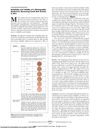
November 2011 in “Archives of Dermatology” This study describes a simple, noninvasive hair counting method used in a hair growth prevention trial, assessing its reliability and validity.
 March 2026 in “Zenodo (CERN European Organization for Nuclear Research)”
 This study reviews the use of a polyherbal hair oil formulation, highlighting its potential benefits for treating common hair issues like baldness, alopecia, and dandruff due to its nutrient-rich ingredients, including Amla, Almond, and Neem.
 8 citations
,
March 2022 in “Journal of Cosmetic Dermatology”
8 citations
,
March 2022 in “Journal of Cosmetic Dermatology” This study concluded that mesotherapy appears effective for treating pattern hair loss, but emphasizes a need for more research comparing it to other treatments due to limited sample sizes.
 December 2024 in “Biological and Pharmaceutical Bulletin”
 In this study, researchers found that minoxidil nanocrystals delivered using MG-MXD@NP, containing methylcellulose and gum arabic, significantly improved hair growth in mice compared to a standard minoxidil lotion, with enhanced delivery to skin tissues and increased markers of hair follicle stem cell activity.
 24 citations
,
October 2024 in “Process Biochemistry”
24 citations
,
October 2024 in “Process Biochemistry” In this study, Gaussian process regression models combined with Grey Wolf optimization were used to predict and optimize phenolic and flavonoid content extraction from Carthamus caeruleus L. rhizomes, showing high accuracy and helping improve understanding and extraction processes through a new interactive tool.
 July 2024 in “Jurnal Pengabdian Masyarakat Putri Hijau”
 This study involved educating Dewantara Husada Health Vocational High School students about using meniran leaf extract in pomade formulations as a hair growth stimulant, demonstrating high engagement and interest in the topic.
 May 2025 in “International Journal Of Science Technology & Management”
 This study focused on developing a pomade called "Hyung Hair" made from rambutan leaf extract, which showed potential benefits such as reducing hair loss and slowing gray hair growth, with a feasibility analysis indicating the business's viability.
 January 2026 in “Sciences and Clinical Pharmacy Research Journal”
 In this study, a 15% ethanol extract of Moringa oleifera leaves was most effective in improving wound healing, scab formation, and hair growth in hyperglycemic rats, compared to povidone iodine and lower extract concentrations.
 13 citations
,
January 2011 in “Journal of natural pharmaceuticals”
13 citations
,
January 2011 in “Journal of natural pharmaceuticals” This study suggests that extract from Musa paradisiaca unripe fruit may promote hair growth in mice, indicating potential as a hair growth treatment.
 1 citations
,
January 2023 in “Indian Journal of Animal Research”
1 citations
,
January 2023 in “Indian Journal of Animal Research” The researchers developed a technique for processing and staining free hair samples using paraffin embedded blocks, revealing that routine staining does not color the enucleated cuticle, while the cortex and medulla show distinct colorations when stained.
 February 2025 in “Journal of Pharmaceutical and Health Research”
 This study examined the cytotoxic effects of arumanis mango rind extract and its fractions on T47D breast cancer cells, with results showing that ethanol extract and ethyl acetate fraction exhibited significant potential in reducing cell viability, similar to the effects of doxorubicin.
January 2026 in “Zenodo (CERN European Organization for Nuclear Research)” This study formulated a herbal hair growth serum with rosemary oil, demonstrating satisfactory physicochemical and microbiological characteristics, but further research is needed to confirm its stability and efficacy.
 June 2026 in “International Journal of Drug Delivery Technology”
 In this study, researchers developed a polyherbal hair growth oil using botanical substances and base oils like coconut and castor oil, finding it to be stable, non-irritating, and suggesting potential hair-growing properties through mechanisms such as scalp blood flow improvement and anti-inflammatory effects.