 6 citations
,
May 2013 in “PloS one”
6 citations
,
May 2013 in “PloS one” This study found that the Foxn1(-/-) nude phenotype significantly influences epithelial progeny in skin, with notable changes in stem cell niches not achievable in other models.
5 citations
,
November 2025 in “Cells” This review summarizes the roles of various cells and signaling pathways in skin wound healing, highlights deviations leading to pathological outcomes like chronic wounds, and evaluates cutting-edge approaches such as biomaterials and precision medicine to improve healing and intervention strategies.
 5 citations
,
January 2017 in “Endocrinology”
5 citations
,
January 2017 in “Endocrinology” This chapter reviews the biosynthesis, mechanism of action, and therapeutic effects of testosterone and related androgens, but reports no new research findings.
4 citations
,
September 2025 in “International Journal of Molecular Sciences” This review discusses the dermatological applications and potential health benefits of Epigallocatechin-gallate (EGCG) from green tea, but provides no new clinical findings.
 3 citations
,
April 2022 in “International Journal of Molecular Sciences”
3 citations
,
April 2022 in “International Journal of Molecular Sciences” This study showed that treating mouse fibroblasts with TTNPB can efficiently convert them into dermal-papilla-cell-like cells with strong hair-inducing capacity, suggesting potential for hair follicle regeneration therapies.
 2 citations
,
October 2022 in “Journal of structural biology”
2 citations
,
October 2022 in “Journal of structural biology” This study found that age-related hair thinning in Caucasian women over 50 involves significant structural changes within the hair follicle, suggesting an "aged hair program" rather than just producing thinner hairs.
 1 citations
,
January 2024 in “Curēus”
1 citations
,
January 2024 in “Curēus” This study identified significant trends in interest around selective androgen receptor modulators, with increasing attention contrasting stagnant or declining interest in post-cycle therapies and anabolic steroids, and calls for clinicians to use social and prescription data to adjust treatment protocols accordingly.
 February 2026 in “Cosmetics”
 This study found that bovine milk-derived exosomes (MEV-miRNAs) significantly increased hair follicle dermal papilla cell viability and up-regulated key WNT signaling components in human hair follicles, suggesting potential therapeutic benefits for androgenetic alopecia and telogen effluvium through modulation of hair growth pathways.
January 2026 in “Metabolites” This study analyzed gene expression profiles from multiple tissues to explore the molecular connections between obesity and immune-related processes, identifying potential links and pathways that may require further experimental validation to understand their roles in obesity fully.
January 2026 in “Burns & Trauma” This review synthesizes evidence on how RNA modifications affect wound healing, particularly in skin, bone, and corneal injuries, emphasizing potential therapeutic strategies for burns and trauma in relation to these cellular processes.
November 2025 in “International Journal of Molecular Sciences” This review covers the diverse clinical applications of platelet-rich plasma in regenerative medicine but provides no new clinical results.
September 2025 in “International Journal of Molecular Sciences” This study found that injecting nu/nu mice with aqueous dispersion of unmodified fullerene C60 significantly stimulated hair growth compared to controls, suggesting its potential as a new therapeutic approach for alopecia.
August 2025 in “Current Issues in Molecular Biology” This review highlights the role of various signalling pathways, particularly the inhibitory BMP pathway, in regulating feather follicle development in poultry and discusses the application of biotechnology for enhancing poultry aesthetics, emphasizing the increasing importance of feather follicles in ice-fresh poultry sales in China.

This study explored the molecular mechanisms by which Polygonum multiflorum may treat androgenic alopecia, suggesting it influences cell apoptosis and inflammation through specific pathways, with potential application value pending further testing.
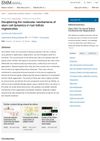
This study reviews the regulatory mechanisms and molecular processes governing stem cell activity in hair follicles, highlighting their roles in hair regeneration and potential implications for treating hair and skin disorders.
September 2023 in “Middle East Fertility Society Journal” This study found that nicotine may have a therapeutic role in mitigating the exacerbation of infertility conditions connected with alpha-synuclein-related Parkinson’s disease through molecular interactions identified via pathway analysis.
This article from BJU International discusses the slow progress in prostate cancer research and reports no new findings.
May 2004 in “Biochimica et Biophysica Acta (BBA) - Molecular Basis of Disease” This study found that dietary vitamin E influenced gene expression in rat livers, altering genes related to metabolism, coagulation, and steroid processing, and confirmed its effects on related biological endpoints.
908 citations
,
July 2015 in “British Journal of Dermatology” This article reviews the cellular and molecular processes of acute and chronic wound healing, emphasizing the need for collaboration between researchers and clinicians to advance therapeutic solutions; it presents no new clinical results.
365 citations
,
March 2021 in “Frontiers in Bioengineering and Biotechnology” This review discusses the potential of nanocarriers to enhance transdermal drug delivery and the combination of these carriers with physical methods, but it reports no new experimental results.
151 citations
,
August 2011 in “The EMBO Journal” The enzyme PA-PLA1α is important for proper hair follicle development.
44 citations
,
September 2020 in “International Journal of Molecular Sciences” This review discusses the disruption of hormonal and metabolic rhythms in polycystic ovary syndrome and explores potential drug targets to address its molecular causes, without providing new clinical results.
 22 citations
,
November 2011 in “Journal of Analytical Toxicology”
22 citations
,
November 2011 in “Journal of Analytical Toxicology” This review discusses the relevance of human androgen receptor action in sports doping and examines the potential of cell-based biological assays for detecting androgenic anabolic steroid use, without presenting new research findings.
18 citations
,
May 2022 in “Stem Cell Research & Therapy” This study found that irradiating human adipose-derived stem cells with green OLEDs enhanced their wound healing capability and increased cell proliferation, migration, and adhesion in preclinical models.
11 citations
,
April 2023 in “Frontiers in Pharmacology” This study reported that the Computational Analysis of Novel Drug Opportunities platform effectively uses integrated biological data, including side effects and pathways, to generate potential drug candidates for colon cancer and migraine disorders.
5 citations
,
February 2022 in “Seminars in cell & developmental biology” This review discusses the complexities of hidradenitis suppurativa pathogenesis, highlighting issues with Notch signaling, immune dysregulation, and the role of keratinocytes and ECM, but reports no new clinical results.
4 citations
,
December 2024 in “International Journal of Molecular Sciences” This study found that extracts from Hom Thong banana peels, rich in phenolic compounds, may inhibit melanin production in human and mouse melanoma cells, showing potential as anti-melanogenic agents comparable to standard treatments like arbutin and kojic acid.
 2 citations
,
February 2023 in “BMC women's health”
2 citations
,
February 2023 in “BMC women's health” In this study, oral contraceptive use in women with PCOS increased the expression of certain inflammatory gene markers, which were positively associated with metabolic abnormalities.
 1 citations
,
April 2023 in “Science Advances”
1 citations
,
April 2023 in “Science Advances” This study found that sustained ERK activity during tissue regeneration in spiny mice is linked to fibroblast growth factor and ErbB signaling, while inhibiting ERK shifted regeneration toward scarring.

This study found that the Lim-homeodomain transcription factor Lhx2 regulates Sonic Hedgehog signaling during early retinal neurogenesis in mice by controlling the expression of pathway genes in retinal progenitor cells.